
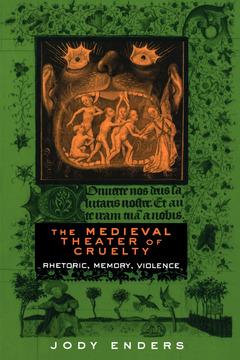
Why did medieval dramatists weave so many scenes of torture into their plays? Exploring the cultural connections among rhetoric, law, drama, literary creation, and violence, Jody Enders addresses an issue that has long troubled students of the Middle Ages. Theories of rhetoric and law of the time reveal, she points out, that the ideology of torture was a widely accepted means for exploiting such essential elements of the stage and stagecraft as dramatic verisimilitude, pity, fear, and catharsis to fabricate truth.
Analyzing the consequences of torture for the history of aesthetics in general and of drama in particular, Enders shows that if the violence embedded in the history of rhetoric is acknowledged, we are better able to understand not only the enduring "theater of cruelty" identified by theorists from Isidore of Seville to Antonin Artaud, but also the continuing modern devotion to the spectacle of pain.
Betal nemt med kort, Klarna, Apple Pay eller Google Pay. Ikke tilfreds? Du har altid 14 dages fortrydelsesret. Læs mere i vores vilkår. Har du spørgsmål, så send os en mail på hello@memmo.org.
Memmo gør det nemmere at studere – uanset hvor du er i verden. Hos os samler du dine kursusbøger og smarte studieværktøjer ét sted: resuméer, quizzer, podcasts og flashcards. Og så er der Ted, din studieven, der svarer på alt, du undrer dig over. Over 50 000 studerende studerer allerede her – bygget til at hjælpe dig med at lære hurtigere og stresse mindre.