
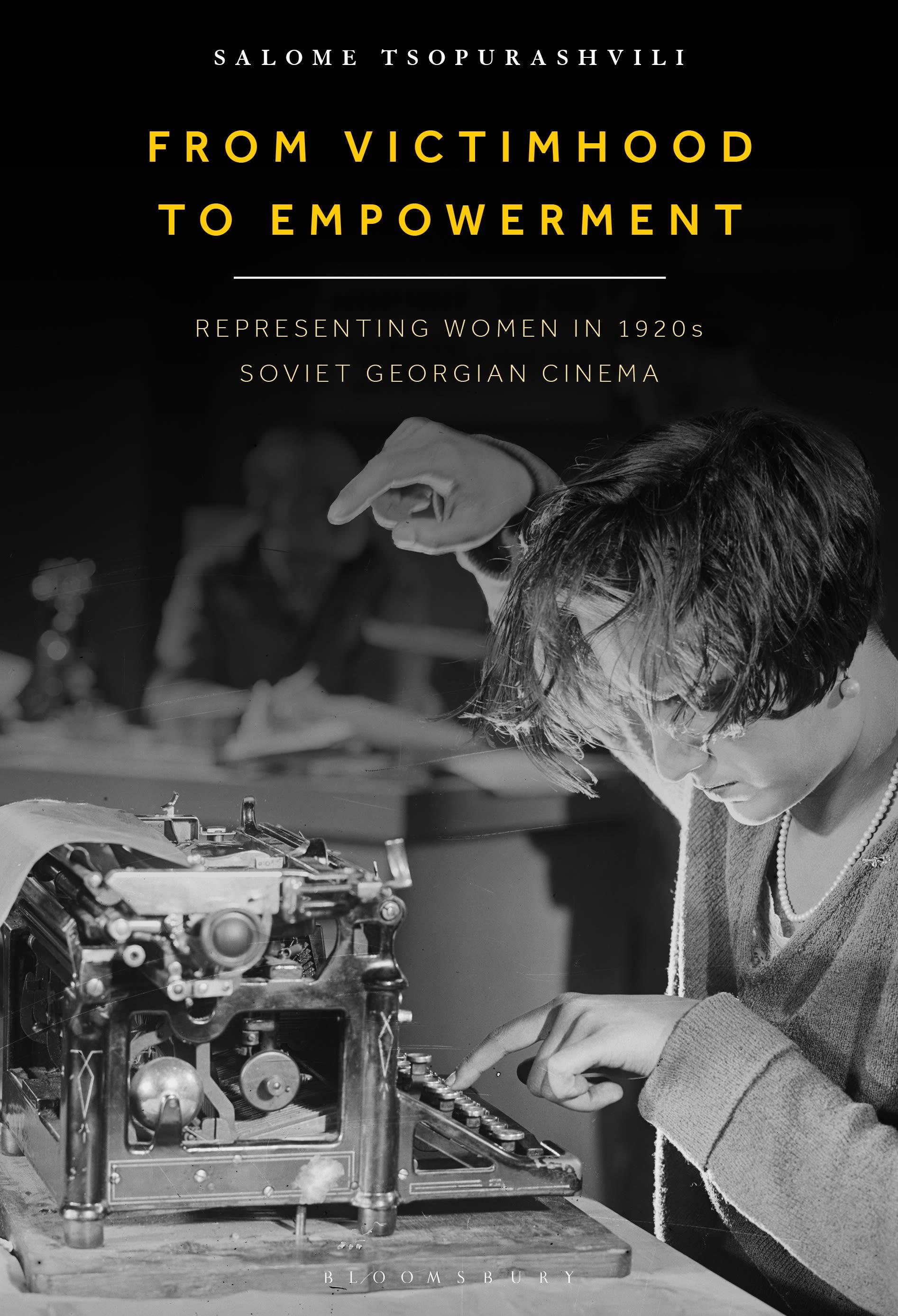
From Victimhood to Empowerment: Representing Women in 1920s Soviet Georgian Cinema brings the cinematographic works of Georgia's State Film Industry from the margins of the Soviet film studies to the centre. The book focuses on women's representations and explores how the gender roles were modified throughout the decade according to the new social and political ideals employing the discourse analysis, postcolonial perspectives and psychoanalytical feminist film theories.
Bringing together Soviet Georgia's most important films of the period, the book inspects the female body's symbolic function in the aspects of class dichotomy and ethnic hierarchies. It analyzes the construction of the 'Oriental other' by the Russian colonial imagination and its subsequent dismantling in the context of the Caucasus's de-Orientalization. It also examines the characteristics embodied by the 'heroine' and 'villain' of the new social order-the New Soviet Woman and the NEPwoman-and explores women's transformation within the revolutionary setting during the decade.
In the light of Bolsheviks' preoccupation and endeavour to improve 'woman question', the book surveys to what extent women's screen images were emancipated and whatthe functional meaning of this emancipation was in the given context; how the new ideals of the New Soviet woman were inscribed in the period's films and how these ideals were combined with Georgian nationality.
Bringing together Soviet Georgia's most important films of the period, the book inspects the female body's symbolic function in the aspects of class dichotomy and ethnic hierarchies. It analyzes the construction of the 'Oriental other' by the Russian colonial imagination and its subsequent dismantling in the context of the Caucasus's de-Orientalization. It also examines the characteristics embodied by the 'heroine' and 'villain' of the new social order-the New Soviet Woman and the NEPwoman-and explores women's transformation within the revolutionary setting during the decade.
In the light of Bolsheviks' preoccupation and endeavour to improve 'woman question', the book surveys to what extent women's screen images were emancipated and whatthe functional meaning of this emancipation was in the given context; how the new ideals of the New Soviet woman were inscribed in the period's films and how these ideals were combined with Georgian nationality.
Sider: 264
Kategori: Kultur-, Genus- & Postkoloniala studier
e-ISBN: 9781501383168
Forsendelsesvægt: 1.2 kg
Sendes inden for: 1-2 dage
Betal nemt med kort, Klarna, Apple Pay eller Google Pay. Ikke tilfreds? Du har altid 14 dages fortrydelsesret. Læs mere i vores vilkår. Har du spørgsmål, så send os en mail på hello@memmo.org.
Memmo gør det nemmere at studere – uanset hvor du er i verden. Hos os samler du dine kursusbøger og smarte studieværktøjer ét sted: resuméer, quizzer, podcasts og flashcards. Og så er der Ted, din studieven, der svarer på alt, du undrer dig over. Over 50 000 studerende studerer allerede her – bygget til at hjælpe dig med at lære hurtigere og stresse mindre.