
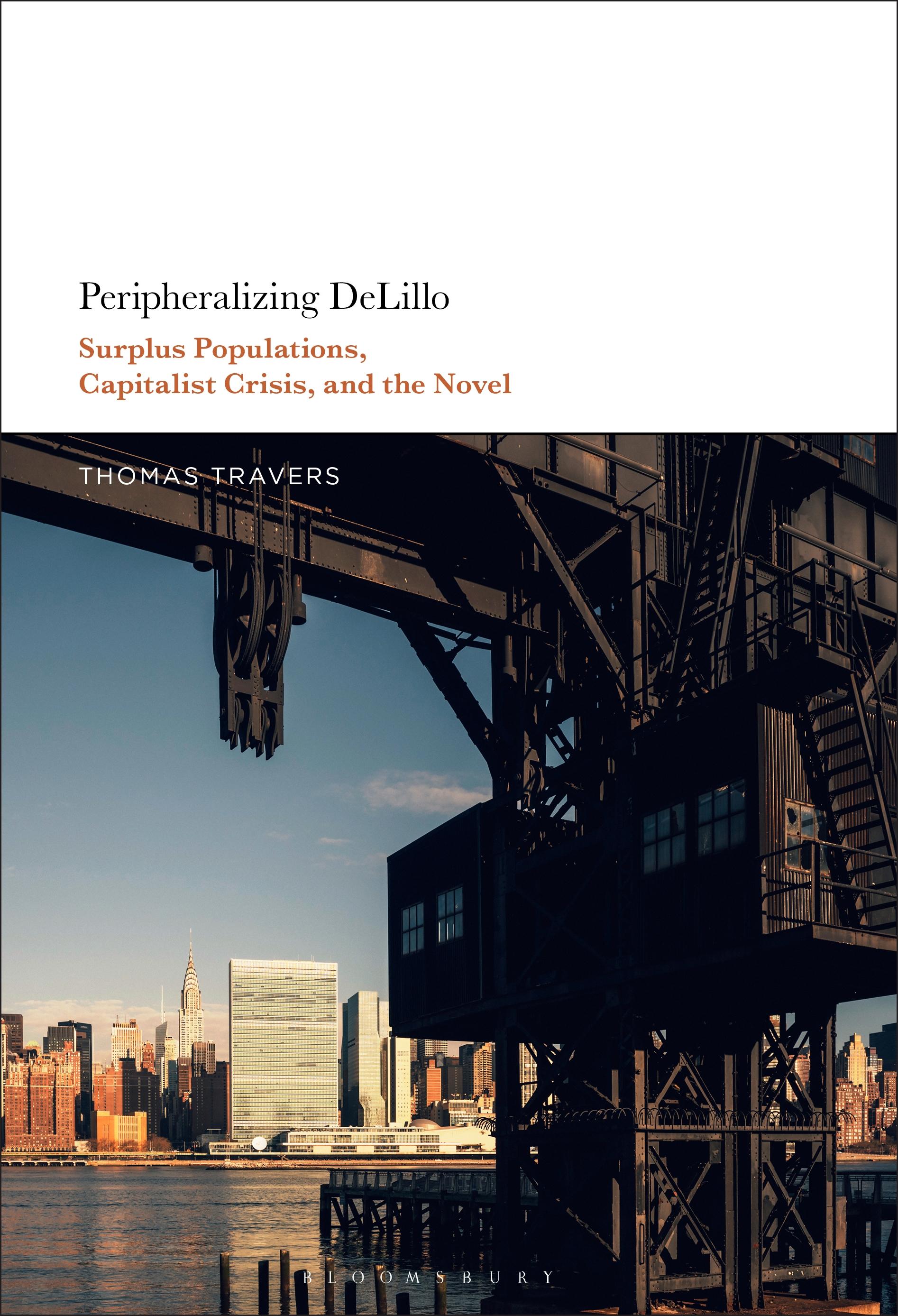
Peripheralizing DeLillo tracks the historical arc of Don DeLillo's poetics as it recomposes itself across the genres of short fiction, romance, the historical novel, and the philosophical novel of time.
Drawing on theories that capital, rather than the bourgeoisie, is the displaced subject of the novel, Thomas Travers investigates DeLillo's representation of fully commodified social worlds and re-evaluates Marxist accounts of the novel and its philosophy of history. Deploying an innovative re-periodisation, Travers considers the evolution of DeLillo's aesthetic forms as they register and encode one of the crises of contemporary historicity: the secular dynamics through which a society organised around waged work tends towards conditions of under- and unemployment.
Situating DeLillo within global histories of uneven and combined development, Travers explores how DeLillo's treatment of capital and labour, affect and narration, reconfigures debates around realism and modernism. The DeLillo that emerges from this study is no longer an exemplary postmodern writer, but a composer of capitalist epics, a novelist drawn to peripheral zones of accumulation, zones of social death whose surplus populations his fiction strives to re-historicise, if not re-dialecticise as subjects of history.
Drawing on theories that capital, rather than the bourgeoisie, is the displaced subject of the novel, Thomas Travers investigates DeLillo's representation of fully commodified social worlds and re-evaluates Marxist accounts of the novel and its philosophy of history. Deploying an innovative re-periodisation, Travers considers the evolution of DeLillo's aesthetic forms as they register and encode one of the crises of contemporary historicity: the secular dynamics through which a society organised around waged work tends towards conditions of under- and unemployment.
Situating DeLillo within global histories of uneven and combined development, Travers explores how DeLillo's treatment of capital and labour, affect and narration, reconfigures debates around realism and modernism. The DeLillo that emerges from this study is no longer an exemplary postmodern writer, but a composer of capitalist epics, a novelist drawn to peripheral zones of accumulation, zones of social death whose surplus populations his fiction strives to re-historicise, if not re-dialecticise as subjects of history.
Sider: 240
Kategori: Litteraturvetenskap & Teori
e-ISBN: 9781501378423
Forsendelsesvægt: 1.2 kg
Sendes inden for: 1-2 dage
Betal nemt med kort, Klarna, Apple Pay eller Google Pay. Ikke tilfreds? Du har altid 14 dages fortrydelsesret. Læs mere i vores vilkår. Har du spørgsmål, så send os en mail på hello@memmo.org.
Memmo gør det nemmere at studere – uanset hvor du er i verden. Hos os samler du dine kursusbøger og smarte studieværktøjer ét sted: resuméer, quizzer, podcasts og flashcards. Og så er der Ted, din studieven, der svarer på alt, du undrer dig over. Over 50 000 studerende studerer allerede her – bygget til at hjælpe dig med at lære hurtigere og stresse mindre.