
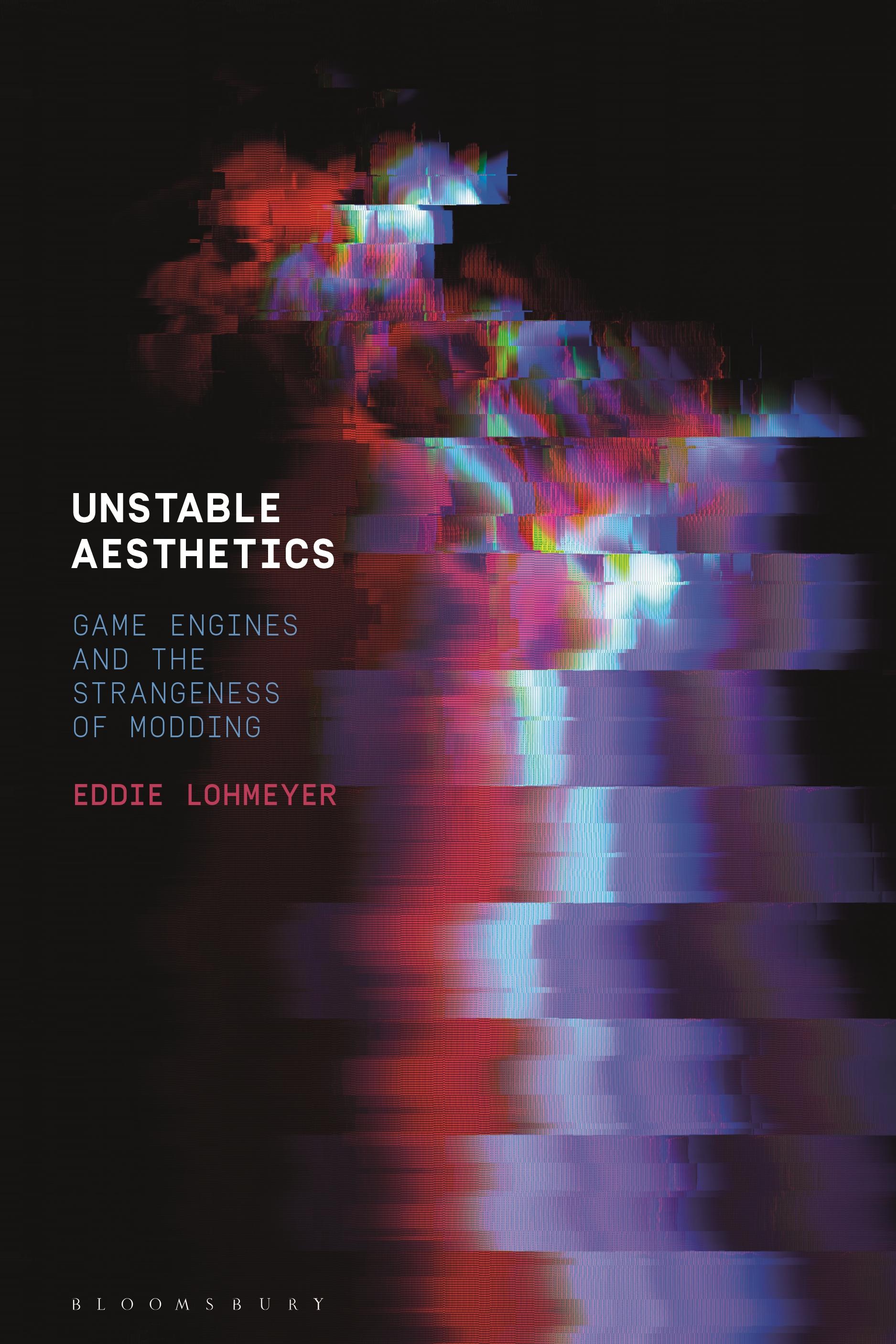
Throughout the 1990s, artists experimented with game engine technologies to disrupt our habitual relationships to video games. They hacked, glitched, and dismantled popular first-person shooters such as Doom (1993) and Quake (1996) to engage players in new kinds of embodied activity. In Unstable Aesthetics: Game Engines and the Strangeness of Art Modding, Eddie Lohmeyer investigates historical episodes of art modding practices-the alteration of a game system's existing code or hardware to generate abstract spaces-situated around a recent archaeology of the game engine: software for rendering two and three-dimensional gameworlds.
The contemporary artists highlighted throughout this book-Cory Arcangel, JODI, Julian Oliver, Krista Hoefle, and Brent Watanabe, among others –- were attracted to the architectures of engines because they allowed them to explore vital relationships among abstraction, technology, and the body. Artists employed a range of modding techniques-hacking the ROM chips on Nintendo cartridges to produce experimental video, deconstructing source code to generate psychedelic glitch patterns, and collaging together surreal gameworlds-to intentionally dissect the engine's operations and unveil illusions of movement within algorithmic spaces. Through key moments in game engine history, Lohmeyer formulates a rich phenomenology of video games by focusing on the liminal spaces of interaction among system and body, or rather the strangeness of art modding.
The contemporary artists highlighted throughout this book-Cory Arcangel, JODI, Julian Oliver, Krista Hoefle, and Brent Watanabe, among others –- were attracted to the architectures of engines because they allowed them to explore vital relationships among abstraction, technology, and the body. Artists employed a range of modding techniques-hacking the ROM chips on Nintendo cartridges to produce experimental video, deconstructing source code to generate psychedelic glitch patterns, and collaging together surreal gameworlds-to intentionally dissect the engine's operations and unveil illusions of movement within algorithmic spaces. Through key moments in game engine history, Lohmeyer formulates a rich phenomenology of video games by focusing on the liminal spaces of interaction among system and body, or rather the strangeness of art modding.
Sider: 216
Kategori: Film- & Medievetenskap
e-ISBN: 9781501364891
Forsendelsesvægt: 1.2 kg
Sendes inden for: 1-2 dage
Betal nemt med kort, Klarna, Apple Pay eller Google Pay. Ikke tilfreds? Du har altid 14 dages fortrydelsesret. Læs mere i vores vilkår. Har du spørgsmål, så send os en mail på hello@memmo.org.
Memmo gør det nemmere at studere – uanset hvor du er i verden. Hos os samler du dine kursusbøger og smarte studieværktøjer ét sted: resuméer, quizzer, podcasts og flashcards. Og så er der Ted, din studieven, der svarer på alt, du undrer dig over. Over 50 000 studerende studerer allerede her – bygget til at hjælpe dig med at lære hurtigere og stresse mindre.