
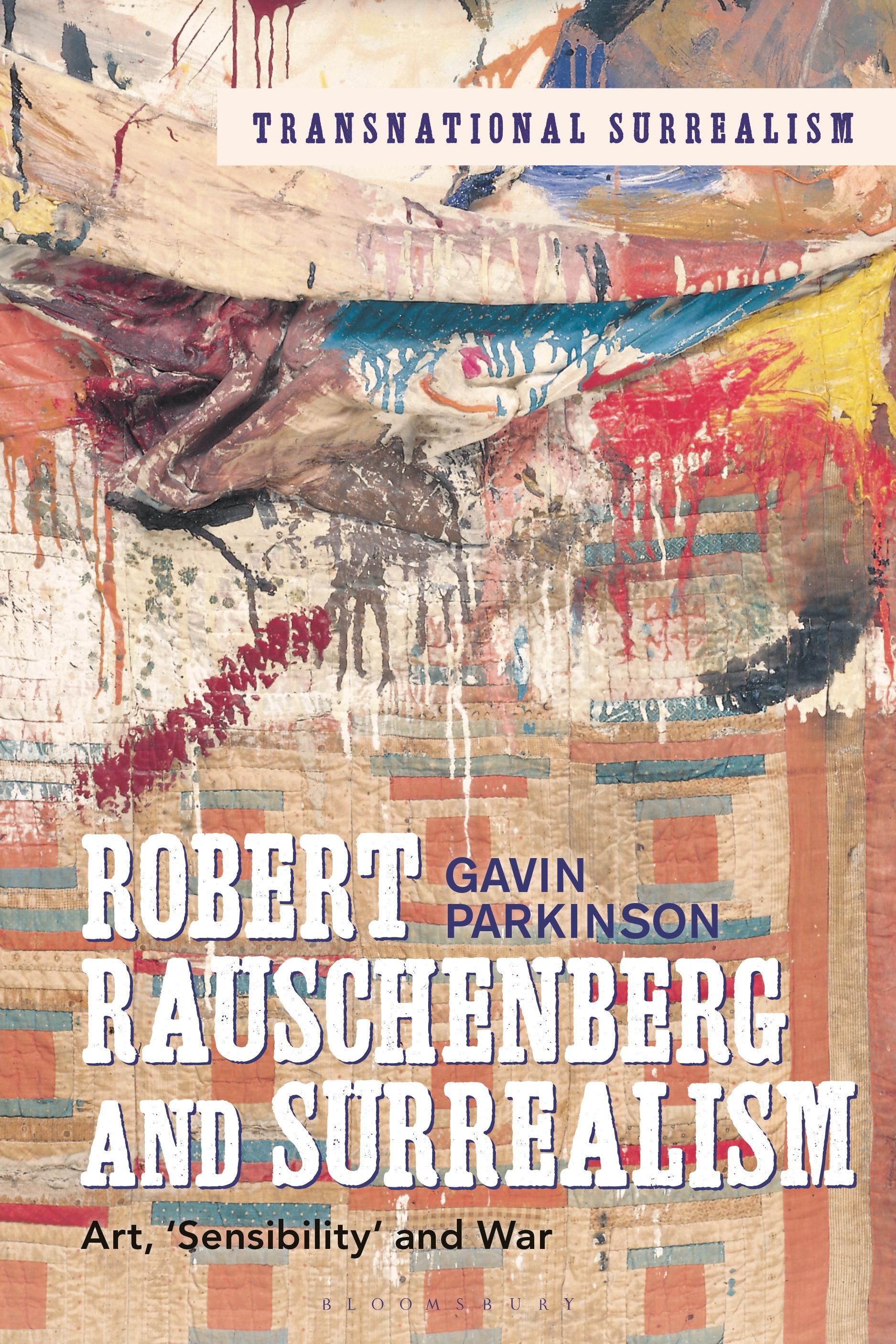
The art of Robert Rauschenberg (1925-2008) is usually viewed as quite distinct from Surrealism, a movement which the artist himself displayed some hostility towards. However, Rauschenberg had a very positive reception among Surrealists, particularly across the period 1959-69.
In the face of Rauschenberg's avowals of his own 'literalism' and insistence on his art as 'facts,' this book gathers generous evidence of the poetic, metaphorical, allusive, associative and connotative dimensions of the artist's oeuvre as identified by Surrealists, and thus extrapolates new readings from Rauschenberg's key works on that basis. By viewing Rauschenberg's art against the expansion of the cultural influence of the United States in Europe in the period after the Second World War and the increasingly politicized activities of the Surrealists in the era of the Algerian War of Independence (1954-62), Robert Rauschenberg and Surrealism shows how poetic inference of the artist's work was turned towards political interpretation. By analysing Rauschenberg's art in the context of Surrealism, and drawing from it new interpretations and perspectives, this volume simultaneously situates the Surrealist movement in 1960s American art criticism and history.
In the face of Rauschenberg's avowals of his own 'literalism' and insistence on his art as 'facts,' this book gathers generous evidence of the poetic, metaphorical, allusive, associative and connotative dimensions of the artist's oeuvre as identified by Surrealists, and thus extrapolates new readings from Rauschenberg's key works on that basis. By viewing Rauschenberg's art against the expansion of the cultural influence of the United States in Europe in the period after the Second World War and the increasingly politicized activities of the Surrealists in the era of the Algerian War of Independence (1954-62), Robert Rauschenberg and Surrealism shows how poetic inference of the artist's work was turned towards political interpretation. By analysing Rauschenberg's art in the context of Surrealism, and drawing from it new interpretations and perspectives, this volume simultaneously situates the Surrealist movement in 1960s American art criticism and history.
Betal nemt med kort, Klarna, Apple Pay eller Google Pay. Ikke tilfreds? Du har altid 14 dages fortrydelsesret. Læs mere i vores vilkår. Har du spørgsmål, så send os en mail på hello@memmo.org.
Memmo gør det nemmere at studere – uanset hvor du er i verden. Hos os samler du dine kursusbøger og smarte studieværktøjer ét sted: resuméer, quizzer, podcasts og flashcards. Og så er der Ted, din studieven, der svarer på alt, du undrer dig over. Over 50 000 studerende studerer allerede her – bygget til at hjælpe dig med at lære hurtigere og stresse mindre.