
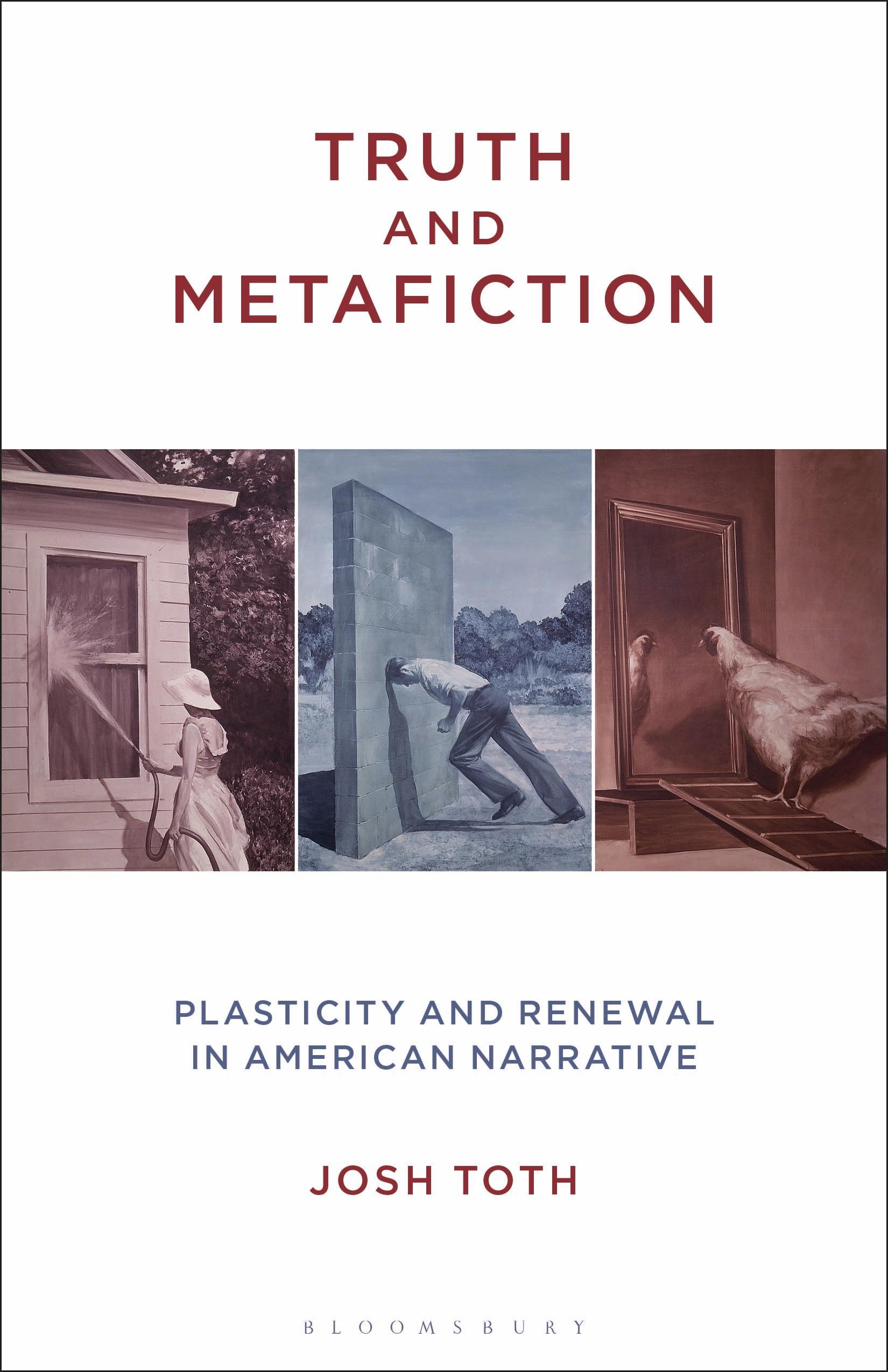
Metafiction has long been associated with the heyday of literary postmodernism-with a certain sense of irresponsibility, political apathy, or outright nihilism. Yet, if (as is now widely assumed) postmodernism has finally run its course, how might we account for the proliferation of metafictional devices in contemporary narrative media? Does this persistence undermine the claim that postmodernism has passed, or has the function of metafiction somehow changed?
To answer these questions, Josh Toth considers a broad range of recent metafictional texts-bywriters such as George Saunders and Jennifer Egan and directors such as Sofia Coppola and Quentin Tarantino. At the same time, he traverses a diffuse theoretical landscape: from the rise of various new materialisms (in philosophy) and the turn to affect (in literary criticism) to the seemingly endless efforts to name postmodernism's ostensible successor.
Ultimately, Toth argues that much contemporary metafiction moves beyond postmodern skepticism to reassert the possibility of making true claims about real things. Capable of combating a “post-truth” crisis, such forms assert or assume a kind of Hegelian plasticity; they actively and persistently confront the trauma of what is infinitely mutable, or perpetually other. What is outside or before a given representation is confirmed and endured as that which exceeds the instance of its capture. The truth is thereby renewed; neither denied nor simply assumed, it is approached as ethically as possible. Its plasticity is grasped because the grasp, the form of its narrative apprehension, lets slip.
To answer these questions, Josh Toth considers a broad range of recent metafictional texts-bywriters such as George Saunders and Jennifer Egan and directors such as Sofia Coppola and Quentin Tarantino. At the same time, he traverses a diffuse theoretical landscape: from the rise of various new materialisms (in philosophy) and the turn to affect (in literary criticism) to the seemingly endless efforts to name postmodernism's ostensible successor.
Ultimately, Toth argues that much contemporary metafiction moves beyond postmodern skepticism to reassert the possibility of making true claims about real things. Capable of combating a “post-truth” crisis, such forms assert or assume a kind of Hegelian plasticity; they actively and persistently confront the trauma of what is infinitely mutable, or perpetually other. What is outside or before a given representation is confirmed and endured as that which exceeds the instance of its capture. The truth is thereby renewed; neither denied nor simply assumed, it is approached as ethically as possible. Its plasticity is grasped because the grasp, the form of its narrative apprehension, lets slip.
Sider: 264
Kategori: Litteraturvetenskap & Teori
e-ISBN: 9781501351747
Forsendelsesvægt: 1.2 kg
Sendes inden for: 1-2 dage
Betal nemt med kort, Klarna, Apple Pay eller Google Pay. Ikke tilfreds? Du har altid 14 dages fortrydelsesret. Læs mere i vores vilkår. Har du spørgsmål, så send os en mail på hello@memmo.org.
Memmo gør det nemmere at studere – uanset hvor du er i verden. Hos os samler du dine kursusbøger og smarte studieværktøjer ét sted: resuméer, quizzer, podcasts og flashcards. Og så er der Ted, din studieven, der svarer på alt, du undrer dig over. Over 50 000 studerende studerer allerede her – bygget til at hjælpe dig med at lære hurtigere og stresse mindre.