
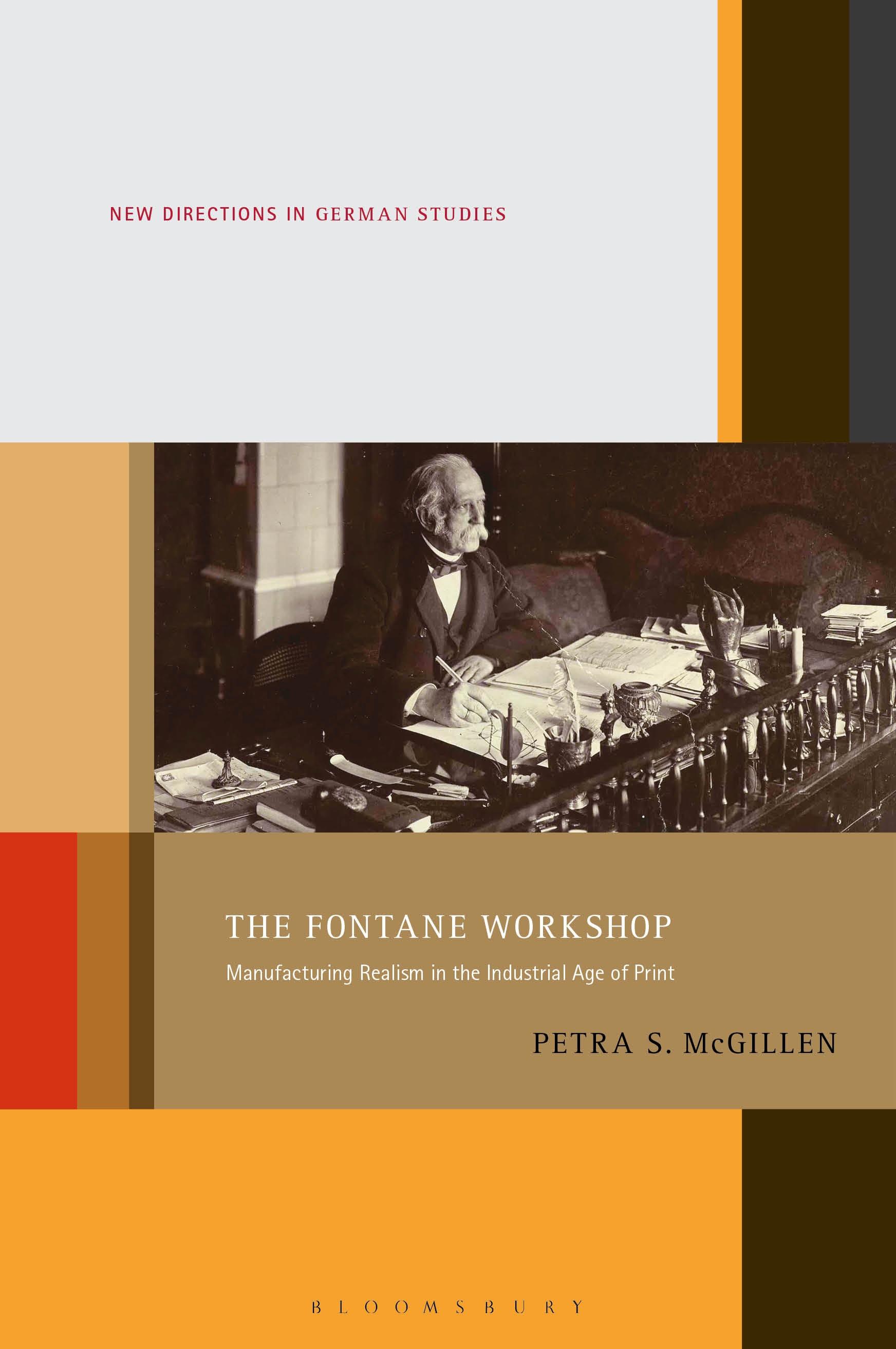
Winner of the Aldo and Jeanne Scaglione Prize for Studies in Germanic Languages and Literatures (Awarded by the MLA)
With an innovative approach that combines material media history, media theory, and literary poetics, this book reconstructs the great German writer Theodor Fontane's creative process.
Petra McGillen follows Fontane into the engine room of his text production. Analyzing a wealth of unexplored archival evidence--which includes a collection of the author's 67 extant notebooks, along with an array of other "paper tools," such as cardboard boxes, envelopes, and slips--McGillen demonstrates how Fontane compiled his realist prose works. That is, he assembled them from premediated sources, literally with scissors and glue, in an extraordinarily inorganic and radically intertextual manner that turned "writing" into a process of ongoing remix. By exploring the far-reaching implications of Fontane's creative practices for our understanding of his authorship, originality, and poetics, this book opens up a completely new way to think about his works and, by extension, 19th-century literary realism.
This conceptualization of authors' notebooks as creative tools makes a substantial contribution to scholarship on the history of writing media in several disciplines, from German studies and literary studies to media history, and to our understanding of the relationship between mass media and literary creativity in the late 19th century.
With an innovative approach that combines material media history, media theory, and literary poetics, this book reconstructs the great German writer Theodor Fontane's creative process.
Petra McGillen follows Fontane into the engine room of his text production. Analyzing a wealth of unexplored archival evidence--which includes a collection of the author's 67 extant notebooks, along with an array of other "paper tools," such as cardboard boxes, envelopes, and slips--McGillen demonstrates how Fontane compiled his realist prose works. That is, he assembled them from premediated sources, literally with scissors and glue, in an extraordinarily inorganic and radically intertextual manner that turned "writing" into a process of ongoing remix. By exploring the far-reaching implications of Fontane's creative practices for our understanding of his authorship, originality, and poetics, this book opens up a completely new way to think about his works and, by extension, 19th-century literary realism.
This conceptualization of authors' notebooks as creative tools makes a substantial contribution to scholarship on the history of writing media in several disciplines, from German studies and literary studies to media history, and to our understanding of the relationship between mass media and literary creativity in the late 19th century.
Sider: 328
Kategori: Litteraturvetenskap & Teori
e-ISBN: 9781501351570
Forsendelsesvægt: 1.2 kg
Sendes inden for: 1-2 dage
Betal nemt med kort, Klarna, Apple Pay eller Google Pay. Ikke tilfreds? Du har altid 14 dages fortrydelsesret. Læs mere i vores vilkår. Har du spørgsmål, så send os en mail på hello@memmo.org.
Memmo gør det nemmere at studere – uanset hvor du er i verden. Hos os samler du dine kursusbøger og smarte studieværktøjer ét sted: resuméer, quizzer, podcasts og flashcards. Og så er der Ted, din studieven, der svarer på alt, du undrer dig over. Over 50 000 studerende studerer allerede her – bygget til at hjælpe dig med at lære hurtigere og stresse mindre.