
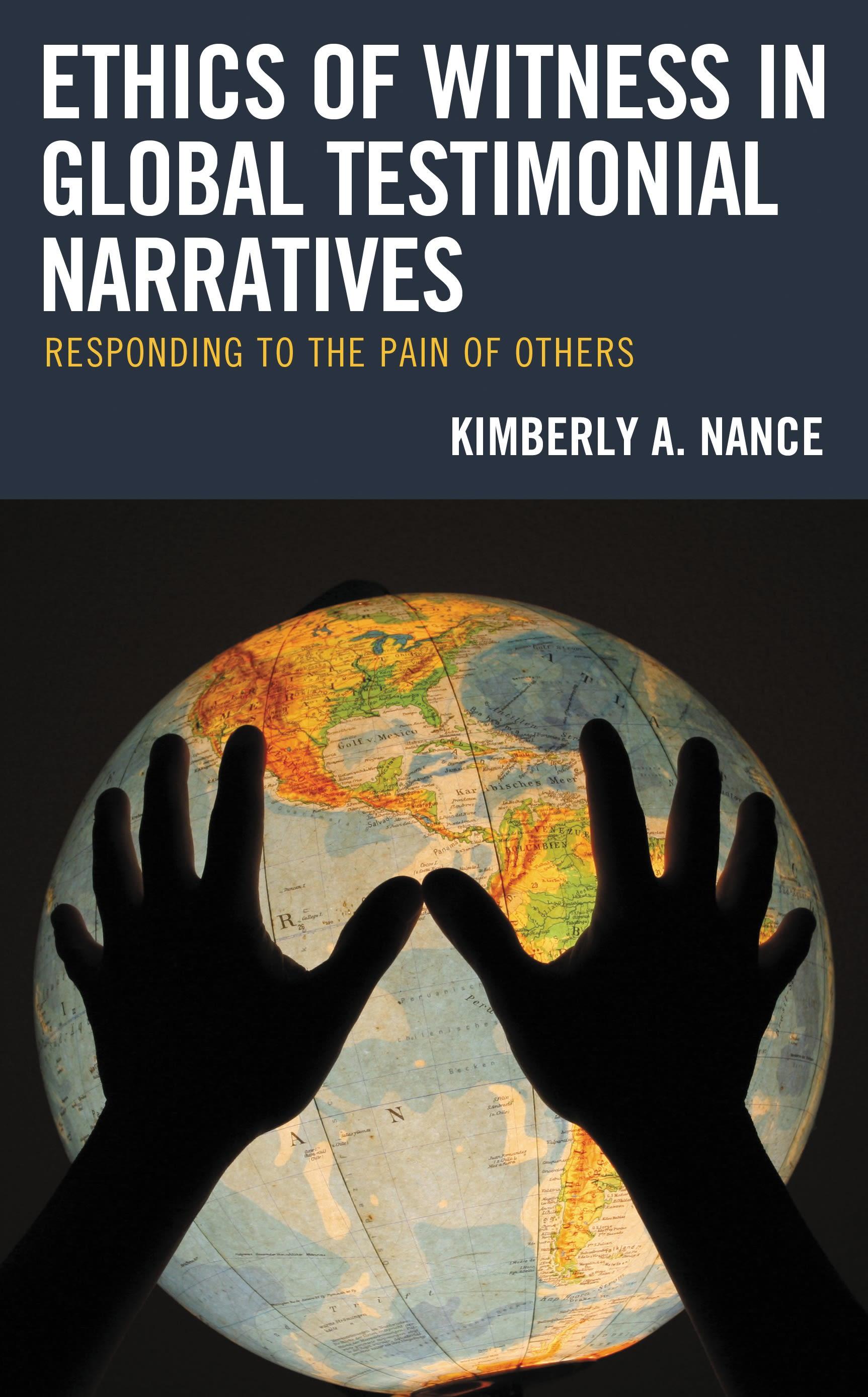
Inspired by Susan Sontag’s examination of the impact of “photography of conscience” in Regarding the Pain of Others, Kimberly A. Nance’s Responding to the Pain of Others: Ethics of Witness in Global Testimonial Narratives takes as its point of departure Sontag’s speculation that in combatting human rights abuse, “a narrative seems likely to be more effective than an image.” Building on her own earlier research on Aristotelian rhetorical theory and testimony, along with other interdisciplinary approaches, Nance analyzes the socio-literary narratives of Elvia Alvarado, Medea Benjamin, Peter Dickinson, Benjamin Alire Sáenz, Clea Koff, Delia Jarrett-Macauley, Valentino Achak Deng, Dave Eggers, Uwem Akpan, and Alicia Partnoy. Each of them, she finds, confronts a human rights discourse in which words—and witnesses—have become disconnected from actions. Recognizing that the genre’s own conventions have become an obstacle to its projects, these testimonialists draw on humor, irony, satire, parody, and innovative literary techniques, alongside strategies rooted in real-life organizing, in an effort to reactivate the discourse of human rights. They seek to persuade readers to exchange a solidarity of sentiment, a state Michael Vander Weele calls “an aesthetics in which the engine revs but the clutch is never engaged,” for actual social action.
Betal nemt med kort, Klarna, Apple Pay eller Google Pay. Ikke tilfreds? Du har altid 14 dages fortrydelsesret. Læs mere i vores vilkår. Har du spørgsmål, så send os en mail på hello@memmo.org.
Memmo gør det nemmere at studere – uanset hvor du er i verden. Hos os samler du dine kursusbøger og smarte studieværktøjer ét sted: resuméer, quizzer, podcasts og flashcards. Og så er der Ted, din studieven, der svarer på alt, du undrer dig over. Over 50 000 studerende studerer allerede her – bygget til at hjælpe dig med at lære hurtigere og stresse mindre.