
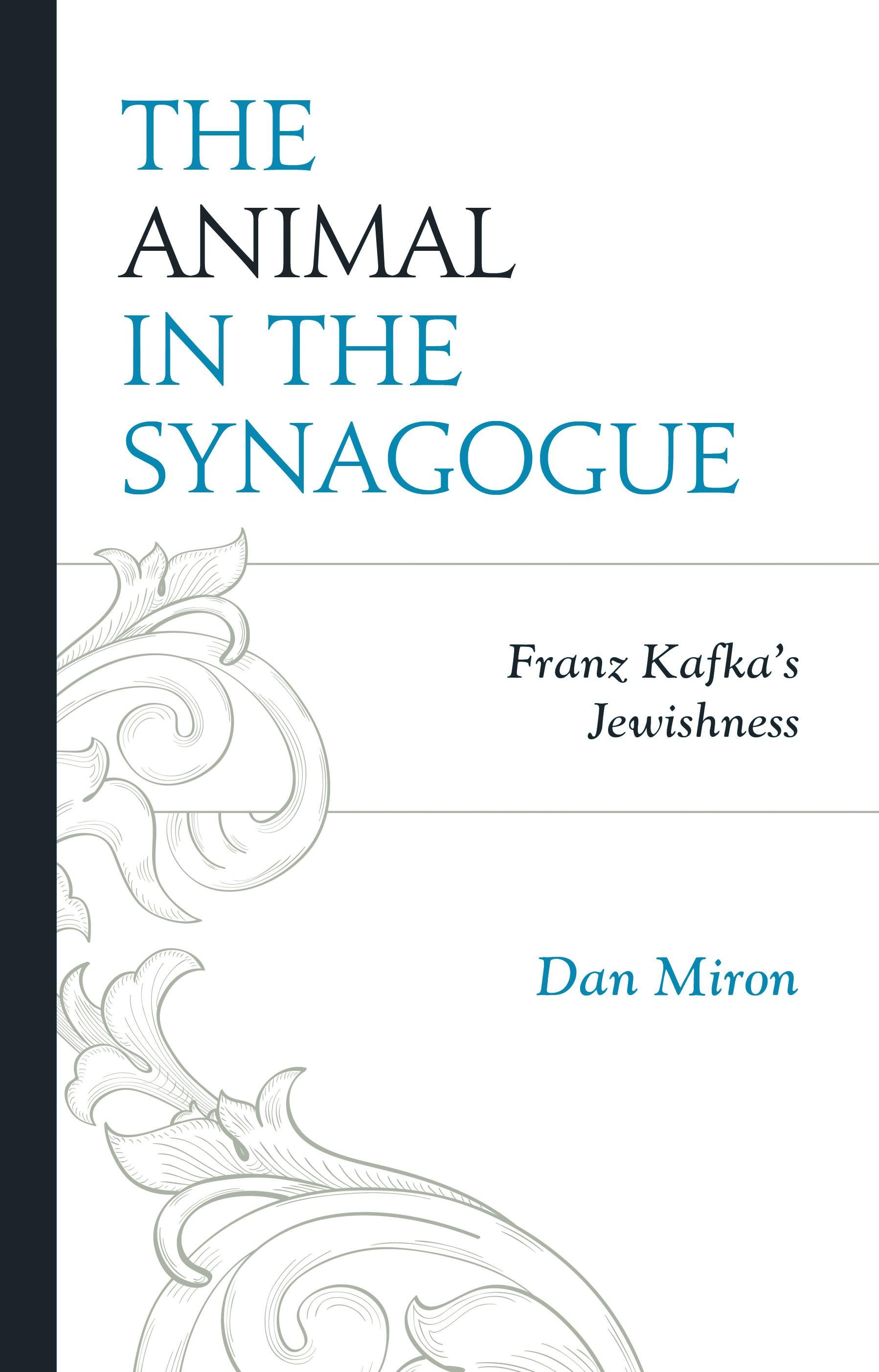
The Animal in the Synagogue explores Franz Kafka’s sense of being a Jew in the modern world and its literary and linguistic ramifications. It falls into two parts. The first is organized around the theme of Kafka’s complex and often self-derogatory understanding and assessment of his own Jewishness and of the place the modern Jew occupies in “the abyss of the world” (Martin Buber). That part is based on a close reading of Kafka’s correspondence with his Czech lover, Milena Jesenska, and on a meticulous analysis, thematic, stylistic, and structural, of Kafka’s only short story touching openly and directly upon Jewish social and ritual issues, and known as “In Our Synagogue” (the title—not by the author). In both the letters and the short story images of small animals—repulsive, dirty, or otherwise objectionable—are used by Kafka as means of exploring his own manhood and the Jewish tradition at large as he understood it.
The second part of the book focuses on Kafka’s place within the complex of Jewish writing of his time in all its three linguistic forms: Hebrew writing (essentially Zionist), Yiddish writing (essentially nationalistic but not committed to Zionism), and the writing, like his, in non-Jewish languages (mainly German) and within the non-Jewish religious and artistic traditions which inhered in them. The essay deals in detail with Kafka’s responses to contemporary Jewish literatures, and his pessimistic evaluation of those literatures’ potential. Essentially, Kafka doubted the sheer possibility of a genuine and culturally tenable compromise (let alone synthesis) between Jewishness and modernity.
The book deals with topics and some texts that the flourishing, ever expanding Kafka scholarship has either neglected or misunderstood because most scholars had no real background in either Hebrew or Yiddish studies, and were unable to grasp the nuances and subtle intentions in Kafka’s attitudes toward modern Hebrew and Yiddish literature and their paragons, such as the major Zionist Hebrew poet H.N. Bialik or the Yiddish master Sholem Aleichem.
The second part of the book focuses on Kafka’s place within the complex of Jewish writing of his time in all its three linguistic forms: Hebrew writing (essentially Zionist), Yiddish writing (essentially nationalistic but not committed to Zionism), and the writing, like his, in non-Jewish languages (mainly German) and within the non-Jewish religious and artistic traditions which inhered in them. The essay deals in detail with Kafka’s responses to contemporary Jewish literatures, and his pessimistic evaluation of those literatures’ potential. Essentially, Kafka doubted the sheer possibility of a genuine and culturally tenable compromise (let alone synthesis) between Jewishness and modernity.
The book deals with topics and some texts that the flourishing, ever expanding Kafka scholarship has either neglected or misunderstood because most scholars had no real background in either Hebrew or Yiddish studies, and were unable to grasp the nuances and subtle intentions in Kafka’s attitudes toward modern Hebrew and Yiddish literature and their paragons, such as the major Zionist Hebrew poet H.N. Bialik or the Yiddish master Sholem Aleichem.
Sider: 164
Kategori: Litteraturvetenskap & Teori
e-ISBN: 9781498595148
Forsendelsesvægt: 1.2 kg
Sendes inden for: 1-2 dage
Betal nemt med kort, Klarna, Apple Pay eller Google Pay. Ikke tilfreds? Du har altid 14 dages fortrydelsesret. Læs mere i vores vilkår. Har du spørgsmål, så send os en mail på hello@memmo.org.
Memmo gør det nemmere at studere – uanset hvor du er i verden. Hos os samler du dine kursusbøger og smarte studieværktøjer ét sted: resuméer, quizzer, podcasts og flashcards. Og så er der Ted, din studieven, der svarer på alt, du undrer dig over. Over 50 000 studerende studerer allerede her – bygget til at hjælpe dig med at lære hurtigere og stresse mindre.