
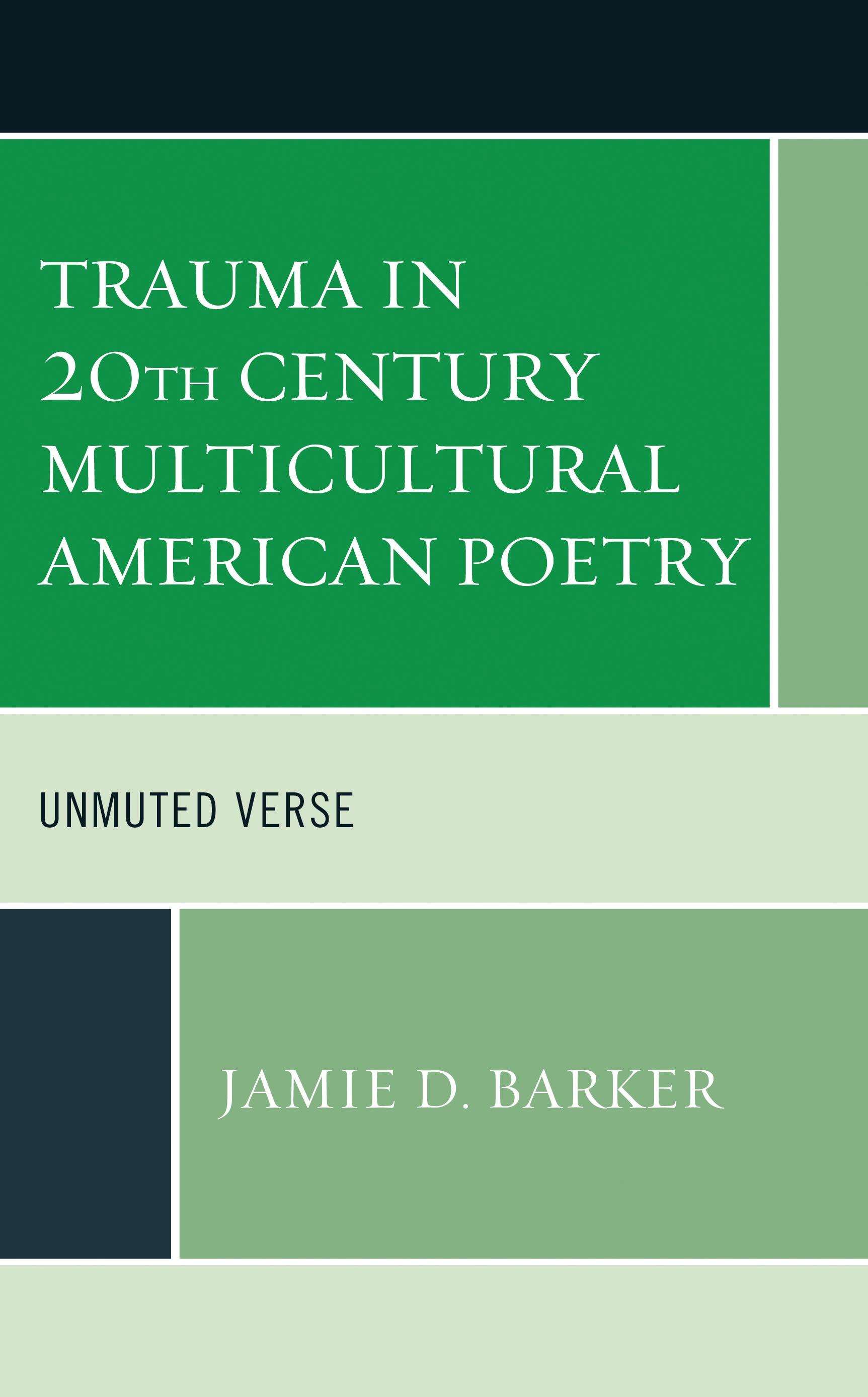
In Trauma in 20th Century Multicultural American Poetry, Jamie D. Barker argues that by using literary trauma theory in conjunction with a reader response approach, readers can gain a better understanding of how poetry can work towards building community and encouraging empowerment over oppression by establishing collectives of people who may share similar stories and experiences connected to trauma. Rather than demonstrating how the poetry may fail or trying to establish what traumatic events the speaker (or poet, in some studies) may have encountered and the significance thereof, this study focuses on how the reader may find community with the ideas represented within the poem. The poetry of various ethnicities are examined, including African American poets Amiri Baraka and Lucille Clifton, Native American poets Robin Coffee, Linda Hogan, and Peter Blue Cloud, as well as Japanese American poets Mitsuye Yamada, Keiho Soga, and Lawson Fusao Inada. Although many of these poets have had their poems examined in the past, none have been explored through this type of approach. Furthermore, very few studies have expanded upon the ideas of literary trauma theory by using reader response, and no writings have examined the idea of ambivalence in poetry as this study does.
Betal nemt med kort, Klarna, Apple Pay eller Google Pay. Ikke tilfreds? Du har altid 14 dages fortrydelsesret. Læs mere i vores vilkår. Har du spørgsmål, så send os en mail på hello@memmo.org.
Memmo gør det nemmere at studere – uanset hvor du er i verden. Hos os samler du dine kursusbøger og smarte studieværktøjer ét sted: resuméer, quizzer, podcasts og flashcards. Og så er der Ted, din studieven, der svarer på alt, du undrer dig over. Over 50 000 studerende studerer allerede her – bygget til at hjælpe dig med at lære hurtigere og stresse mindre.