
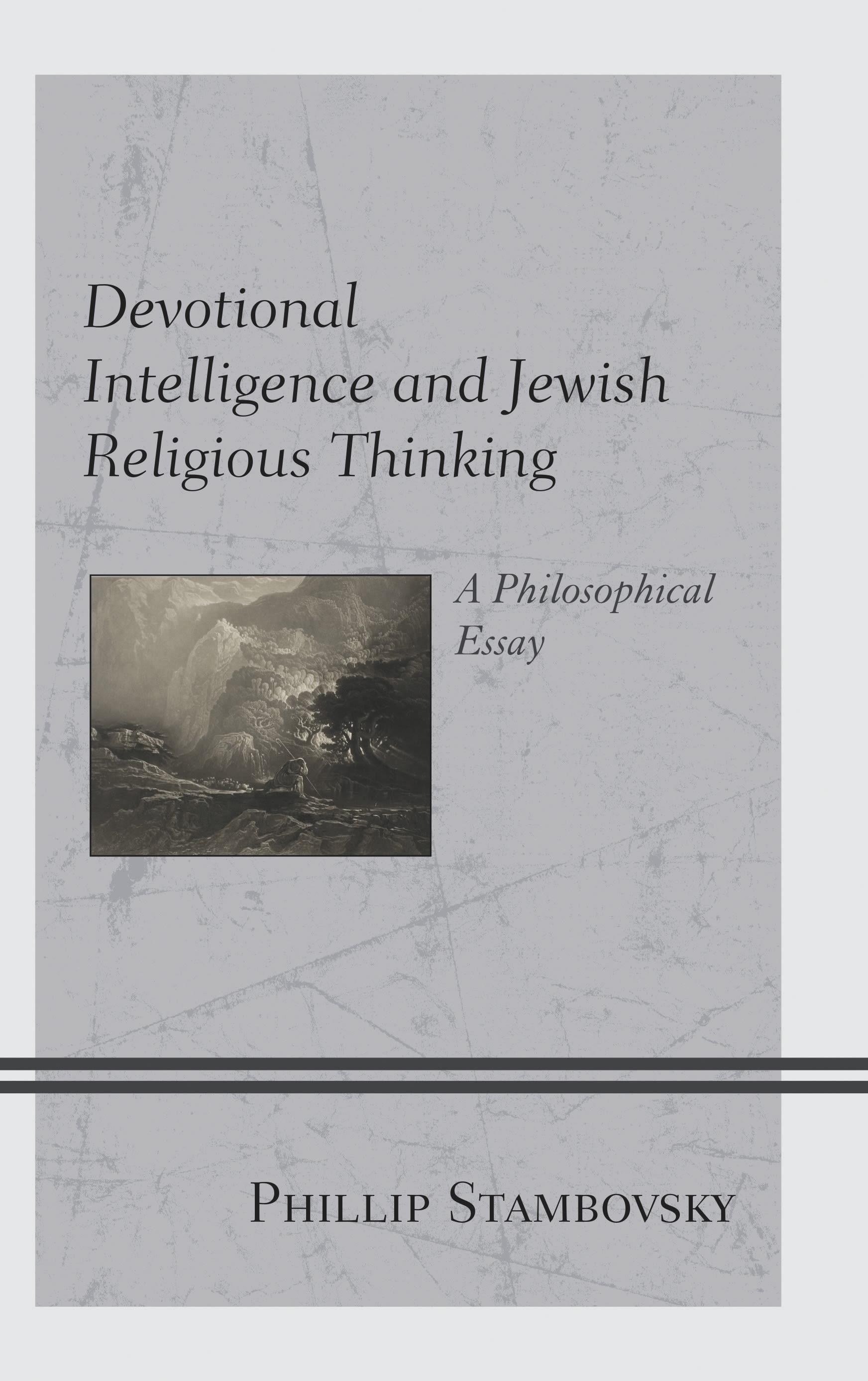
This groundbreaking neo-Maimonidean work establishes, on independently philosophical grounds, the intellectual warrant of Jewish religious thinking as “devotional intelligence.” It demonstrates the purchase and intellectual authority of such thinking by appeal to two dialectically interrelated principles: on the one hand, the metaphysical principle that knowing is of being; and, on the other, “sacral attunement,” a normative principle.
Part I distinguishes this study from leading work in contemporary philosophy of Judaism. It introduces the game-changing bid to privilege “intelligence” in the onto-epistemological Aristotelian sense, over epistemologically orchestrated, post-Enlightenment “reason” when it comes to assessing the intellectual soundness of religious thinking.
Part II distills contemporary elements of Aristotle’s onto-epistemological psychology of intelligence that Maimonides incorporated in his philosophy of Jewish religious thinking. Further, it finds in Hegel a bridge between Maimonides’ account of devotional intelligence and a modern Maimonidean “science of knowing” dedicated to religious thinking.
Part III turns to “sacral attunement,” foregrounding the normative “devotional” aspect of devotional intelligence. It probes the intentionality of both onto-epistemological attunement and the “sacred” relative to “the factor of the transcendent.” In the process it identifies and applies elements of an existential phenomenology of “fundamental attunement” that thematize defining realities of the sacral attunement unique to normative Jewish covenantal praxis. A related analysis of “the sacred” in religious thinking follows, which segues to a chapter on the “factor of the transcendent” as a seminal constituent of meaning in both the sciences and religion.
Part IV applies and amplifies key findings in light of a signature Jewish devotional theme: the divine names, approached from a signally Maimonidean, apophatic position indexed to the factor of the transcendent as the “unconditioned condition” (Kant) of intelligible meaning as such. Distinguishing what the divine names indicate from what they refer to, the essay concludes by substantiating the intellectual warrant of Jewish religious thinking as a devotional intelligence of the relation—of identity-in-difference—between the attributive names and the Tetragrammaton.
Part I distinguishes this study from leading work in contemporary philosophy of Judaism. It introduces the game-changing bid to privilege “intelligence” in the onto-epistemological Aristotelian sense, over epistemologically orchestrated, post-Enlightenment “reason” when it comes to assessing the intellectual soundness of religious thinking.
Part II distills contemporary elements of Aristotle’s onto-epistemological psychology of intelligence that Maimonides incorporated in his philosophy of Jewish religious thinking. Further, it finds in Hegel a bridge between Maimonides’ account of devotional intelligence and a modern Maimonidean “science of knowing” dedicated to religious thinking.
Part III turns to “sacral attunement,” foregrounding the normative “devotional” aspect of devotional intelligence. It probes the intentionality of both onto-epistemological attunement and the “sacred” relative to “the factor of the transcendent.” In the process it identifies and applies elements of an existential phenomenology of “fundamental attunement” that thematize defining realities of the sacral attunement unique to normative Jewish covenantal praxis. A related analysis of “the sacred” in religious thinking follows, which segues to a chapter on the “factor of the transcendent” as a seminal constituent of meaning in both the sciences and religion.
Part IV applies and amplifies key findings in light of a signature Jewish devotional theme: the divine names, approached from a signally Maimonidean, apophatic position indexed to the factor of the transcendent as the “unconditioned condition” (Kant) of intelligible meaning as such. Distinguishing what the divine names indicate from what they refer to, the essay concludes by substantiating the intellectual warrant of Jewish religious thinking as a devotional intelligence of the relation—of identity-in-difference—between the attributive names and the Tetragrammaton.
Sider: 298
Kategori: Religion & Teologi
e-ISBN: 9781498590624
Forsendelsesvægt: 1.2 kg
Sendes inden for: 1-2 dage
Betal nemt med kort, Klarna, Apple Pay eller Google Pay. Ikke tilfreds? Du har altid 14 dages fortrydelsesret. Læs mere i vores vilkår. Har du spørgsmål, så send os en mail på hello@memmo.org.
Memmo gør det nemmere at studere – uanset hvor du er i verden. Hos os samler du dine kursusbøger og smarte studieværktøjer ét sted: resuméer, quizzer, podcasts og flashcards. Og så er der Ted, din studieven, der svarer på alt, du undrer dig over. Over 50 000 studerende studerer allerede her – bygget til at hjælpe dig med at lære hurtigere og stresse mindre.