
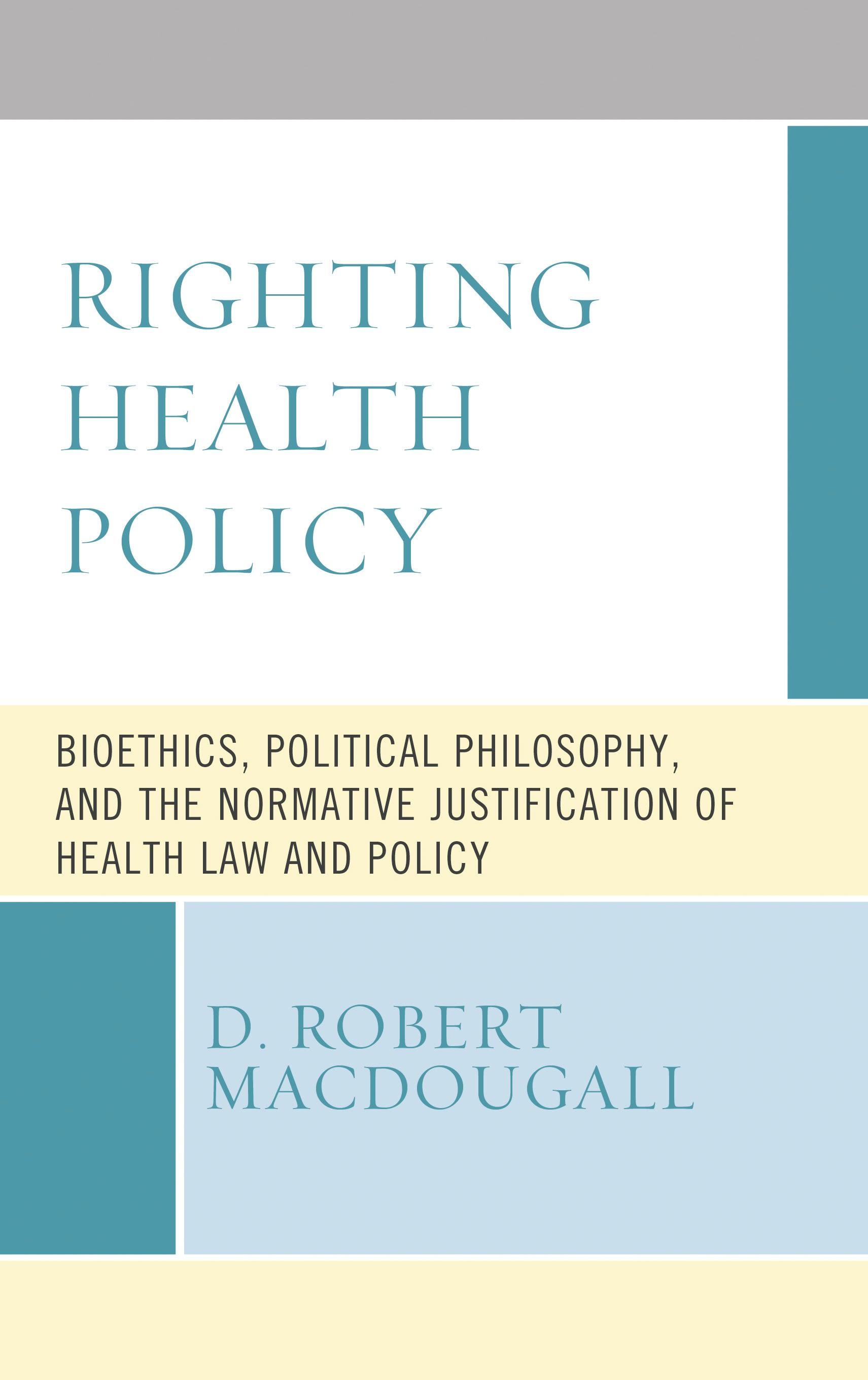
In Righting Health Policy, D. Robert MacDougall argues that bioethics needs but does not have adequate tools for justifying law and policy. Bioethics’ tools are mostly theories about what we owe each other. But justifying laws and policies requires more; at a minimum, it requires tools for explaining the legitimacy of actions intended to control or influence others. It consequently requires political, rather than moral, philosophy. After showing how bioethicists have consistently failed to use tools suitable for achieving their political aims, MacDougall develops an interpretation of Kant’s political philosophy. On this account, the legitimacy of health laws does not derive from the morality of the behaviors they require but derives instead from their role in securing our equal freedom from each other. MacDougall uses this Kantian account to show the importance of political philosophy for bioethics. First, he shows how evaluating kidney markets in terms of the legitimacy of prohibiting sales rather than the morality of selling kidneys reverses the widely accepted view that Kantian philosophy supports legally prohibiting markets. Second, MacDougall argues that an account of political authority is necessary for settling longstanding bioethics debates about the legal and even moral standards that should govern informed consent.
Betal nemt med kort, Klarna, Apple Pay eller Google Pay. Ikke tilfreds? Du har altid 14 dages fortrydelsesret. Læs mere i vores vilkår. Har du spørgsmål, så send os en mail på hello@memmo.org.
Memmo gør det nemmere at studere – uanset hvor du er i verden. Hos os samler du dine kursusbøger og smarte studieværktøjer ét sted: resuméer, quizzer, podcasts og flashcards. Og så er der Ted, din studieven, der svarer på alt, du undrer dig over. Over 50 000 studerende studerer allerede her – bygget til at hjælpe dig med at lære hurtigere og stresse mindre.