
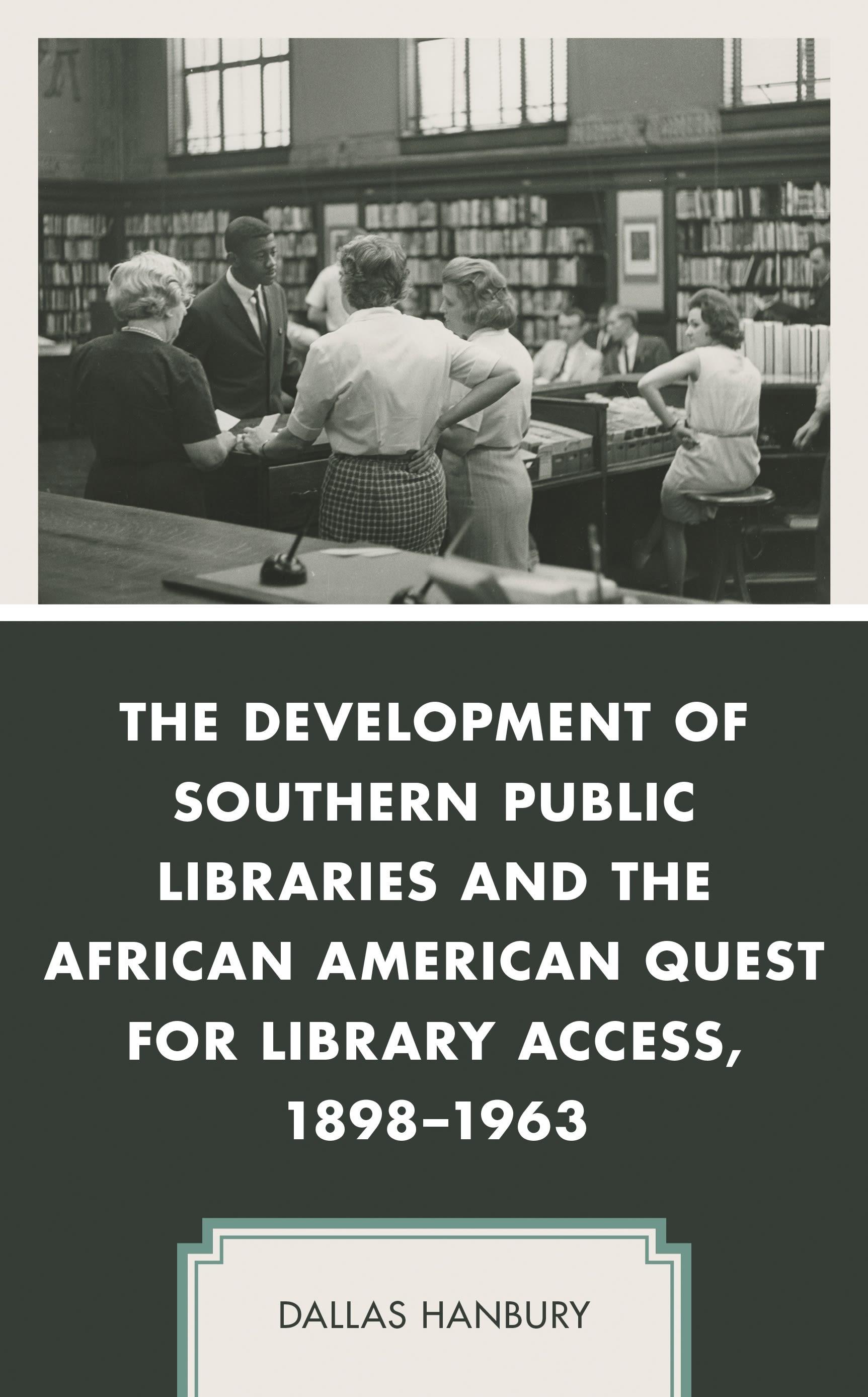
Using the Atlanta, Birmingham, and Nashville Public Libraries as case studies, The Development of Southern Public Libraries and the African American Quest for Library Access, 1898-1963 argues that public libraries played an integral role in Southern cities’ economic and cultural boosterism efforts during the New South and Progressive Eras. First, Southern public libraries helped institutionalize segregation during the early twentieth century by refusing to serve African Americans, or only to a limited degree. Yet, the Progressive Era’s emphasis on self-improvement and moral uplift influenced Southern public libraries to the extent that not all embraced total segregation. It even caused Southern public libraries to remain open to the idea of slowly expanding library service to African Americans. Later, libraries’ social mission and imperfect commitment to segregation made them prime targets for breaking down the barriers of segregation in the post- World War II era. In this study, Dallas Hanbury concludes that dealing with the complicated and unexpected outcomes of having practiced segregation constituted a difficult and lengthy process for Southern public libraries.
Betal nemt med kort, Klarna, Apple Pay eller Google Pay. Ikke tilfreds? Du har altid 14 dages fortrydelsesret. Læs mere i vores vilkår. Har du spørgsmål, så send os en mail på hello@memmo.org.
Memmo gør det nemmere at studere – uanset hvor du er i verden. Hos os samler du dine kursusbøger og smarte studieværktøjer ét sted: resuméer, quizzer, podcasts og flashcards. Og så er der Ted, din studieven, der svarer på alt, du undrer dig over. Over 50 000 studerende studerer allerede her – bygget til at hjælpe dig med at lære hurtigere og stresse mindre.