
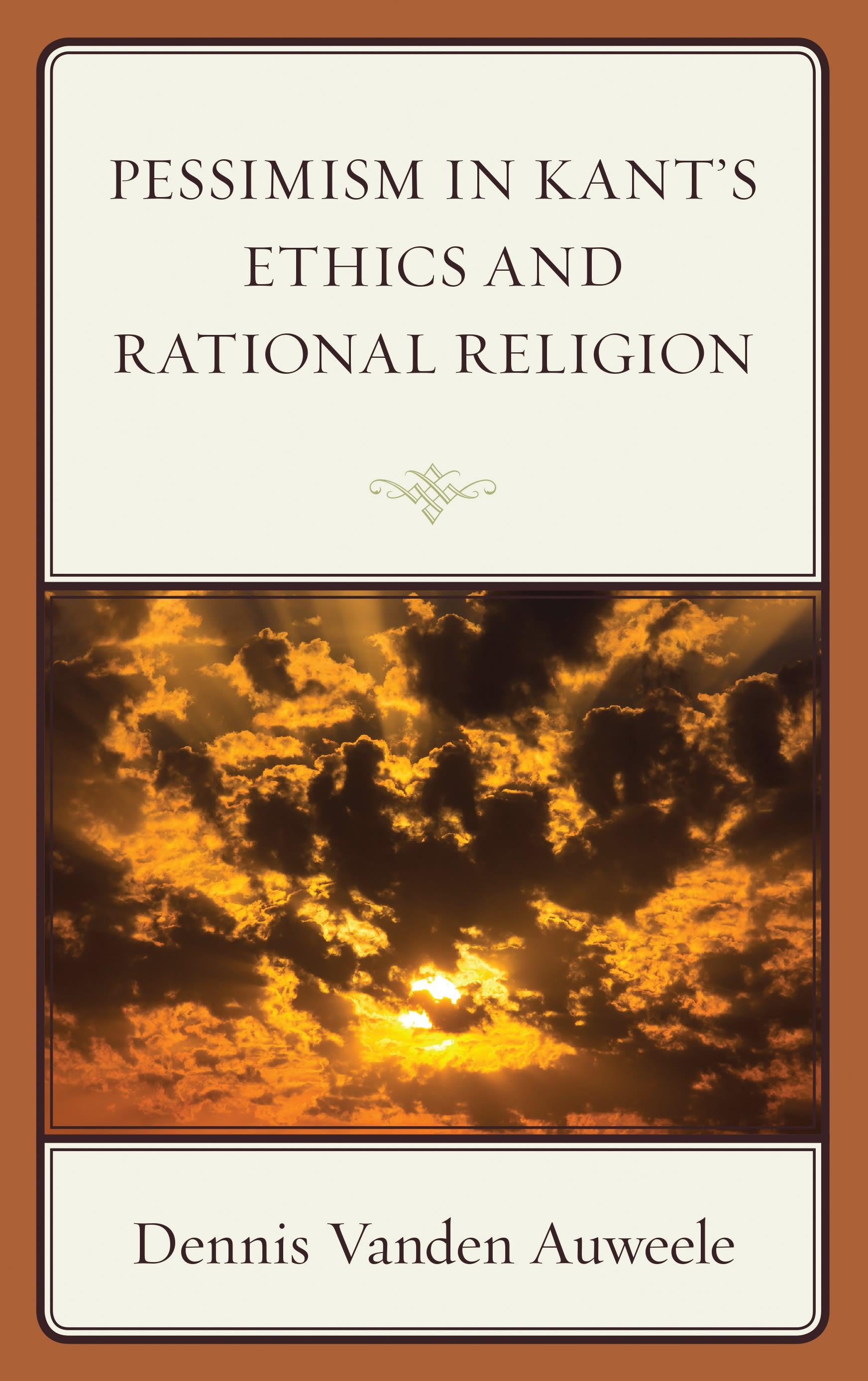
The historical period of the Enlightenment is usually thought of as the high point of philosophical optimism. By breaking the chains of traditional heteronomous morality, the tutelage of dogmatic religion and the oppression of authoritarian politics, the Enlightenment created the space for a new, self-critical and autonomous frame of reference for human effort. Immanuel Kant is undoubtedly the greatest philosopher in the German Enlightenment. And Kant was a pessimist? In this book, the author explores Kant’s moral and religious philosophy and shows that a pessimistic undercurrent pervades these. This provides a new vantage point not only to assess comprehensively Kantian philosophy but also to provide much needed context and reading assistance to the general premises of Kant’s philosophy of autonomy and rationality. For Kant, to be autonomous and rational is not something human nature naturally pursues; instead, reason but must reframe, rethink and reshape human nature. Human nature is a problem, autonomy and rationality are the solution. Kant’s subsequent attempts to establish a rational religion can be explained in extension of this problem. Since human beings are not naturally prone to act autonomously, they have to be educated through historical institutions that are reformed appropriately so as to provide the incentives for human beings to become autonomous. This is where Kant believed religion could play an important pedagogical function.
Betal nemt med kort, Klarna, Apple Pay eller Google Pay. Ikke tilfreds? Du har altid 14 dages fortrydelsesret. Læs mere i vores vilkår. Har du spørgsmål, så send os en mail på hello@memmo.org.
Memmo gør det nemmere at studere – uanset hvor du er i verden. Hos os samler du dine kursusbøger og smarte studieværktøjer ét sted: resuméer, quizzer, podcasts og flashcards. Og så er der Ted, din studieven, der svarer på alt, du undrer dig over. Over 50 000 studerende studerer allerede her – bygget til at hjælpe dig med at lære hurtigere og stresse mindre.