
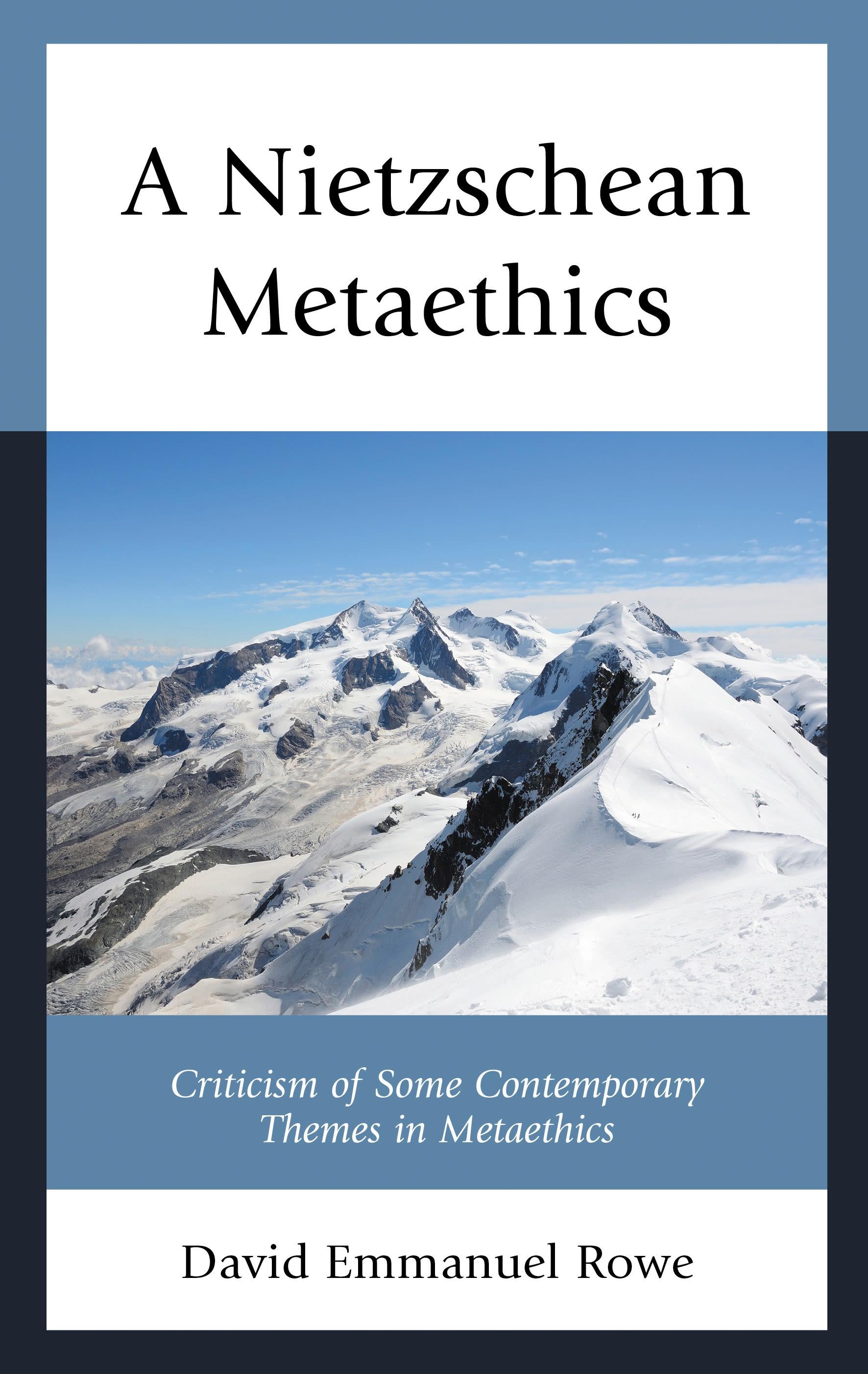
This book develops a novel interpretation of the late-nineteenth-century German philosopher Friedrich Nietzsche as holding a distinct and original metaethical position (a theory about our practice of ethics). David Emannuel Rowe characterizes it as a human-centered metaethics. A central achievement of A Nietzschean Metaethics is to bring Nietzsche into a conversation with the analytic metaethical tradition. To do so, Rowe interprets Nietzsche’s use of such concepts as the notorious “will to power”; his ideal agent, the superman or Übermensch; nihilism; the eternal recurrence; Perspectivism; and Being and Becoming. The result is a view of Nietzsche as a radical moral error theorist, which is to say he defends the view that all statements that appeal to some value for their truth are false. This theory is radical because Nietzsche argues that insofar as language requires certain concepts for its truth it is in error, in virtue of an appeal to some value. Rowe also offers a view where the increase in one’s power is a standard by which one can make sense of Nietzsche’s so-called re-evaluation of all values. By means of this resolution, Nietzsche criticizes some contemporary themes in metaethics, such as particular views about moral motivation, reasons, moral error theory, and agency.
Betal nemt med kort, Klarna, Apple Pay eller Google Pay. Ikke tilfreds? Du har altid 14 dages fortrydelsesret. Læs mere i vores vilkår. Har du spørgsmål, så send os en mail på hello@memmo.org.
Memmo gør det nemmere at studere – uanset hvor du er i verden. Hos os samler du dine kursusbøger og smarte studieværktøjer ét sted: resuméer, quizzer, podcasts og flashcards. Og så er der Ted, din studieven, der svarer på alt, du undrer dig over. Over 50 000 studerende studerer allerede her – bygget til at hjælpe dig med at lære hurtigere og stresse mindre.