
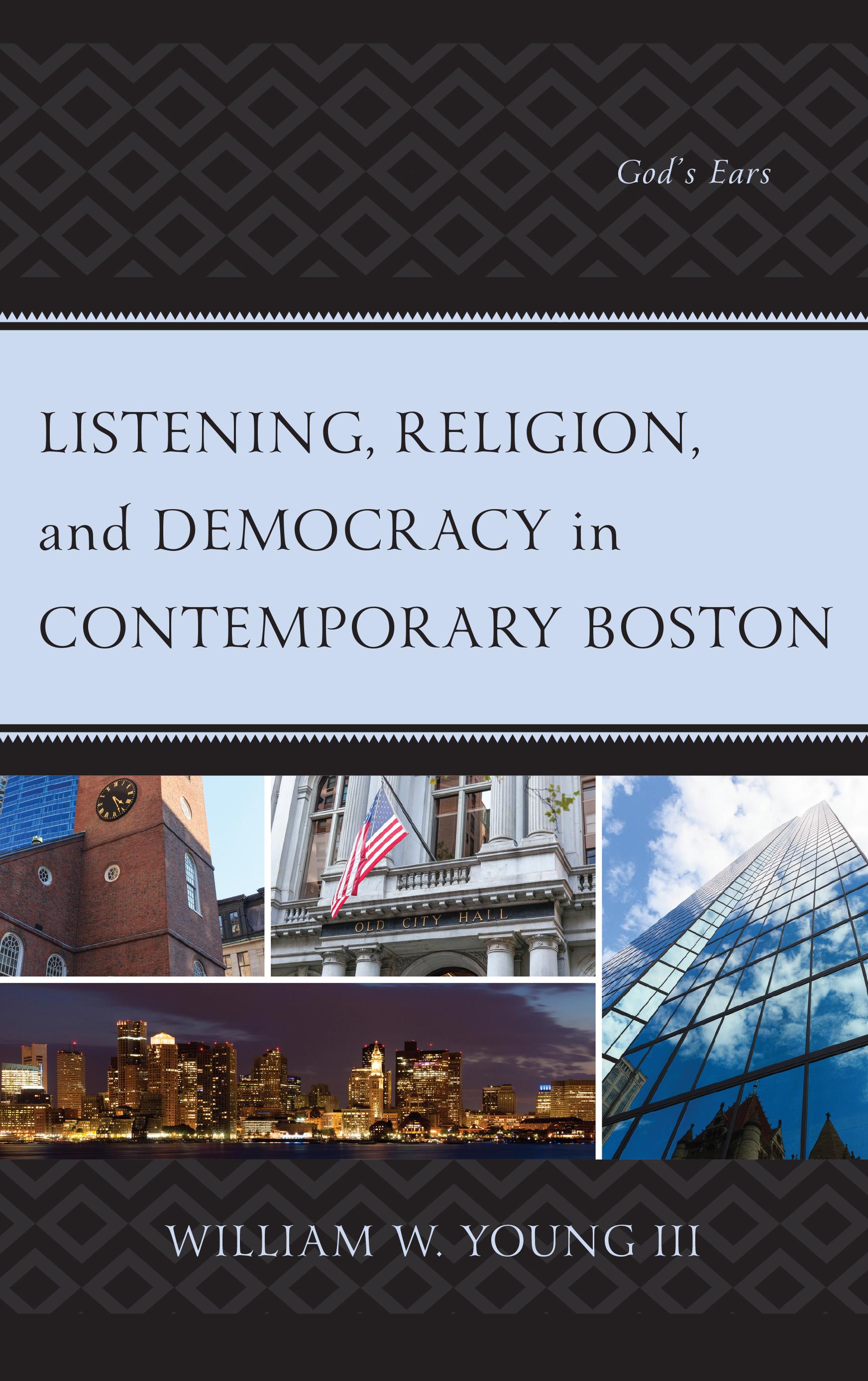
This book is a study of religious practices of listening in the Boston area. Through ethnographic study of a variety of religious communities, with an extensive focus on Quaker listening, it argues that religious practice shapes our habits of listening by creating a plurality of regimes of listening across Boston’s landscape. These practices, moreover, cultivate specific dispositions, as well as distinct patterns of religious and democratic virtues. Through these dispositions and virtues, religious listening facilitates a diverse range of forms of democratic engagement, and varied contributions to the pursuit of social justice. William Young provides an innovative interpretation of these religious practices. It argues that insofar as religious listening helps practitioners to extend and amplify their listening, and makes them more responsive to their communities, it creates a social mode of embodied receptivity and agency. Through both their listening and their actions, these groups express their conceptions of divinity, embodying divine attributes and activity within the sociopolitical realm—serving as God’s ears within the world. It is by interpreting their practices as creating modes of social discipline, reception, and agency that the book explicates the full significance of religious listening, in its adaptations and extensions of our aural capacities, and their implications for sociopolitical life.
Betal nemt med kort, Klarna, Apple Pay eller Google Pay. Ikke tilfreds? Du har altid 14 dages fortrydelsesret. Læs mere i vores vilkår. Har du spørgsmål, så send os en mail på hello@memmo.org.
Memmo gør det nemmere at studere – uanset hvor du er i verden. Hos os samler du dine kursusbøger og smarte studieværktøjer ét sted: resuméer, quizzer, podcasts og flashcards. Og så er der Ted, din studieven, der svarer på alt, du undrer dig over. Over 50 000 studerende studerer allerede her – bygget til at hjælpe dig med at lære hurtigere og stresse mindre.