
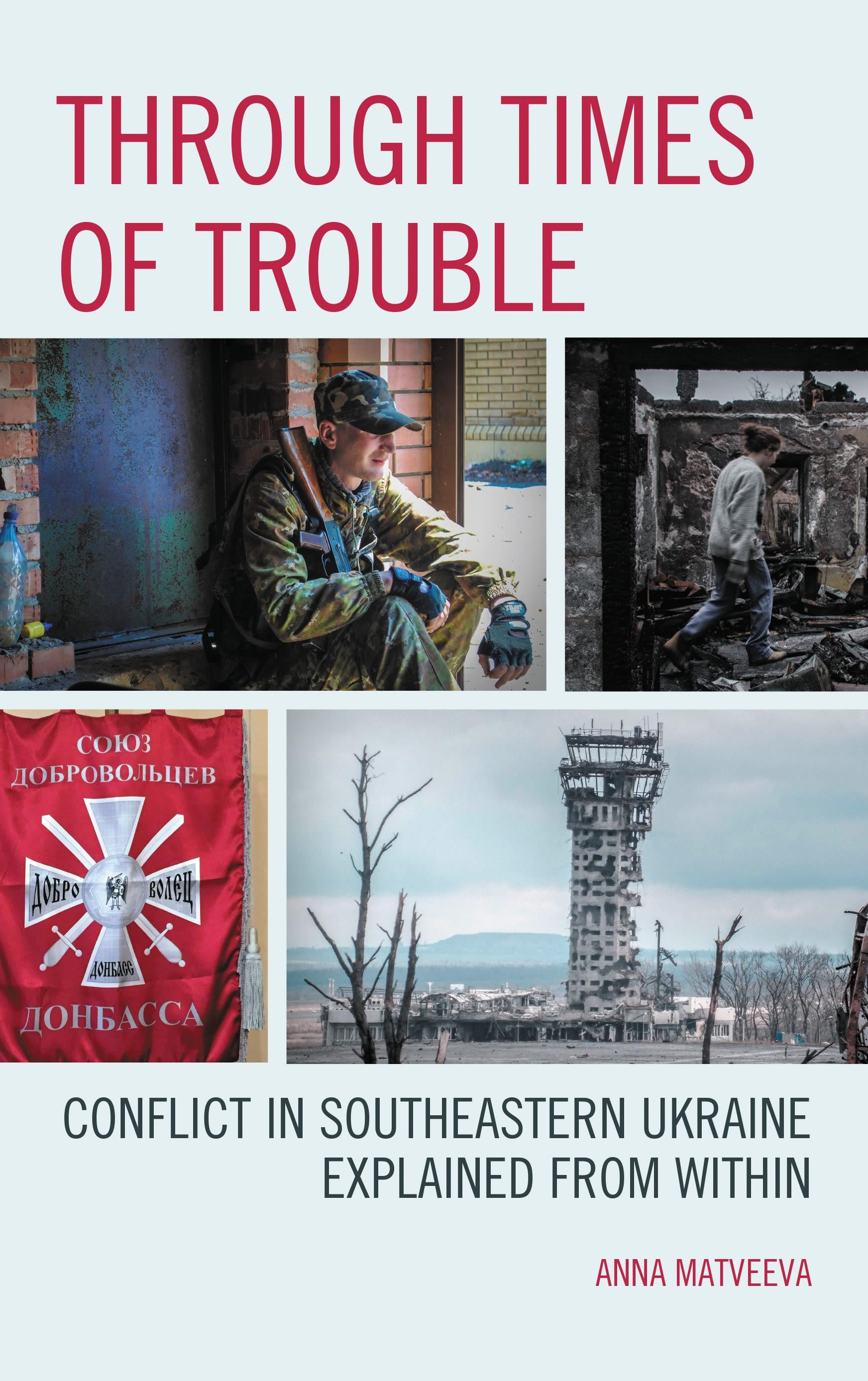
This book tells the story of insurgency in Ukraine’s Donbas region from the perspective of the rebels, who sought and continue to seek either independence from Ukraine or unification with Russia. As such, it provides a unique insight into their thinking and motivations, which need to be understood if the conflict is to be resolved. Those making and remaking the conflict are placed in the centre of the story which uses the words of the combatants themselves. It shows how volunteer fighters, driven by a wide and diffuse set of motivations, emerged from Ukraine, Russia, and different parts of the world, stood at the rebellion's heart. The book focuses on the participants’ own voices and personalities, drawing extensively on first-hand research and interviews.
Rather than rendering Ukraine a chess piece on the geopolitical board, the rebellion shows that ordinary people, rather than elites, can act as a decisive force. Donbas says something about why large numbers of people make the decision to take part in a collective violent action, when material rewards are low or non-existent, and mortal risks high. It stands as an important text on the study of modern insurgencies, revealing how violent conflicts happen via issues of politicized identity and involvement of non-state actors. This book places this conflict into the context of other conflicts worldwide and demonstrates how ideas and narratives are constructed to provide meaning to a struggle. The insurgency has produced a conflict sub-culture, rich with symbolism, narrative, and communications, made possible by the digital age and a social media-savvy population. These beliefs and ideas have had the power to pull people from different parts of the world.
This book follows the stages of assembling different conflict ingredients together, and the rebellion’s zigzagging fortunes after it became apparent that Moscow was not going to repeat the Crimea scenario in Donbas. It analyses the logic of armed struggle and the tactics deployed by warring parties. It also sheds light on the developments in Moscow, discusses the phenomenon of the Russian Spring movement and concludes with the prospects for a peaceful solution.
Rather than rendering Ukraine a chess piece on the geopolitical board, the rebellion shows that ordinary people, rather than elites, can act as a decisive force. Donbas says something about why large numbers of people make the decision to take part in a collective violent action, when material rewards are low or non-existent, and mortal risks high. It stands as an important text on the study of modern insurgencies, revealing how violent conflicts happen via issues of politicized identity and involvement of non-state actors. This book places this conflict into the context of other conflicts worldwide and demonstrates how ideas and narratives are constructed to provide meaning to a struggle. The insurgency has produced a conflict sub-culture, rich with symbolism, narrative, and communications, made possible by the digital age and a social media-savvy population. These beliefs and ideas have had the power to pull people from different parts of the world.
This book follows the stages of assembling different conflict ingredients together, and the rebellion’s zigzagging fortunes after it became apparent that Moscow was not going to repeat the Crimea scenario in Donbas. It analyses the logic of armed struggle and the tactics deployed by warring parties. It also sheds light on the developments in Moscow, discusses the phenomenon of the Russian Spring movement and concludes with the prospects for a peaceful solution.
Sider: 356
Kategori: Statsvetenskap & Politik
e-ISBN: 9781498543248
Forsendelsesvægt: 1.2 kg
Sendes inden for: 1-2 dage
Betal nemt med kort, Klarna, Apple Pay eller Google Pay. Ikke tilfreds? Du har altid 14 dages fortrydelsesret. Læs mere i vores vilkår. Har du spørgsmål, så send os en mail på hello@memmo.org.
Memmo gør det nemmere at studere – uanset hvor du er i verden. Hos os samler du dine kursusbøger og smarte studieværktøjer ét sted: resuméer, quizzer, podcasts og flashcards. Og så er der Ted, din studieven, der svarer på alt, du undrer dig over. Over 50 000 studerende studerer allerede her – bygget til at hjælpe dig med at lære hurtigere og stresse mindre.