
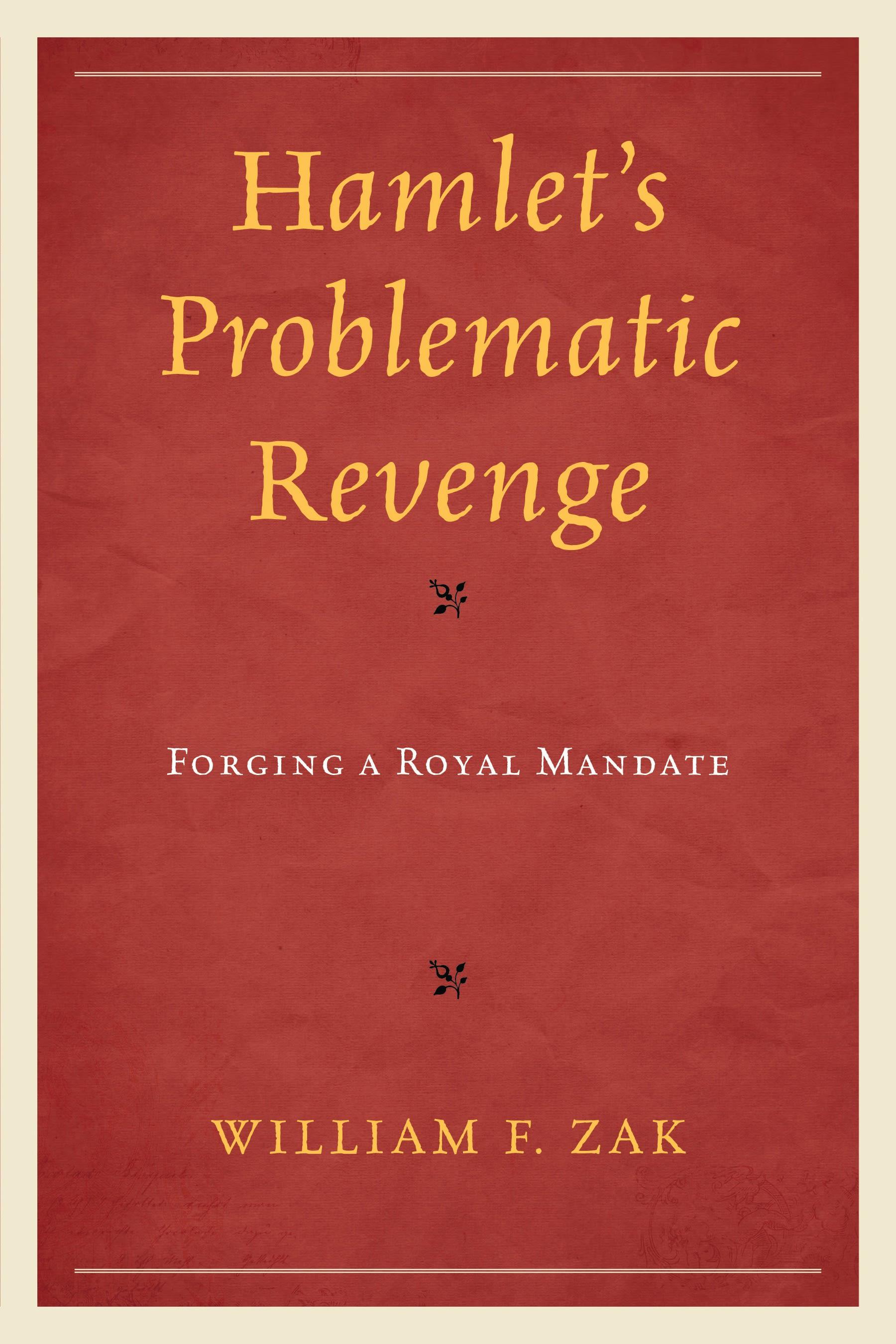
Hamlet's Problematic Revenge: Forging a Royal Mandate provides a new argument within Shakespearean studies that argues the oft-noted arrest of the play’s dramaturgical momentum, especially evident in Hamlet’s much delayed enactment of his revenge, represents in fact a succinct emblem of the “arrested development” in the moral maturity of the entire cast, most notably, Hamlet himself—as the unifying disclosure and tragic problem in the play. Settling for unreflective and short-sighted personal gratifications and cold comforts, they truantly elbow aside a more considerable moral obligation. Again and again, all yield this duty’s commanding priority to a childishly self-regarding fear of offending those in nominal positions of power and questionable positions of authority—figures, like Ophelia and Hamlet’s fathers, for instance, demanding an unworthy deference.
While Hamlet fails to consider with loving regard the improved well-being of the larger community to which he owes his existence and, fails to interrogate the moral adequacy of the Ghost’s command of violent reprisal (two things he never does nor even contemplates doing), “all occasions” in the play “do inform against” him and merely “spur a dull revenge”—not, as he interprets his own words, arguing the need for greater urgency in his vendetta, but, instead, to “inform against” the criminality of that very course itself. His revenge therefore can be argued as “dull,” not because he cannot summon the wherewithal to enact it more bloodily, but because in obsessing about it ceaselessly he remains unreceptive to its “dull” or “unenlightened” opposition to the evil he hopes to eradicate. Hamlet does not avenge his father; this book argues that he becomes him. Amidst a wealth of previously unremarked figurative mirrorings, as well as much of the seemingly digressive material in Hamlet within Shakespearean studies, Hamlet’s Problematic Revenge brings to light a new interpretation of the tragic problem in the play.
While Hamlet fails to consider with loving regard the improved well-being of the larger community to which he owes his existence and, fails to interrogate the moral adequacy of the Ghost’s command of violent reprisal (two things he never does nor even contemplates doing), “all occasions” in the play “do inform against” him and merely “spur a dull revenge”—not, as he interprets his own words, arguing the need for greater urgency in his vendetta, but, instead, to “inform against” the criminality of that very course itself. His revenge therefore can be argued as “dull,” not because he cannot summon the wherewithal to enact it more bloodily, but because in obsessing about it ceaselessly he remains unreceptive to its “dull” or “unenlightened” opposition to the evil he hopes to eradicate. Hamlet does not avenge his father; this book argues that he becomes him. Amidst a wealth of previously unremarked figurative mirrorings, as well as much of the seemingly digressive material in Hamlet within Shakespearean studies, Hamlet’s Problematic Revenge brings to light a new interpretation of the tragic problem in the play.
Sider: 156
Kategori: Litteraturvetenskap & Teori
e-ISBN: 9781498513111
Forsendelsesvægt: 1.2 kg
Sendes inden for: 1-2 dage
Betal nemt med kort, Klarna, Apple Pay eller Google Pay. Ikke tilfreds? Du har altid 14 dages fortrydelsesret. Læs mere i vores vilkår. Har du spørgsmål, så send os en mail på hello@memmo.org.
Memmo gør det nemmere at studere – uanset hvor du er i verden. Hos os samler du dine kursusbøger og smarte studieværktøjer ét sted: resuméer, quizzer, podcasts og flashcards. Og så er der Ted, din studieven, der svarer på alt, du undrer dig over. Over 50 000 studerende studerer allerede her – bygget til at hjælpe dig med at lære hurtigere og stresse mindre.