
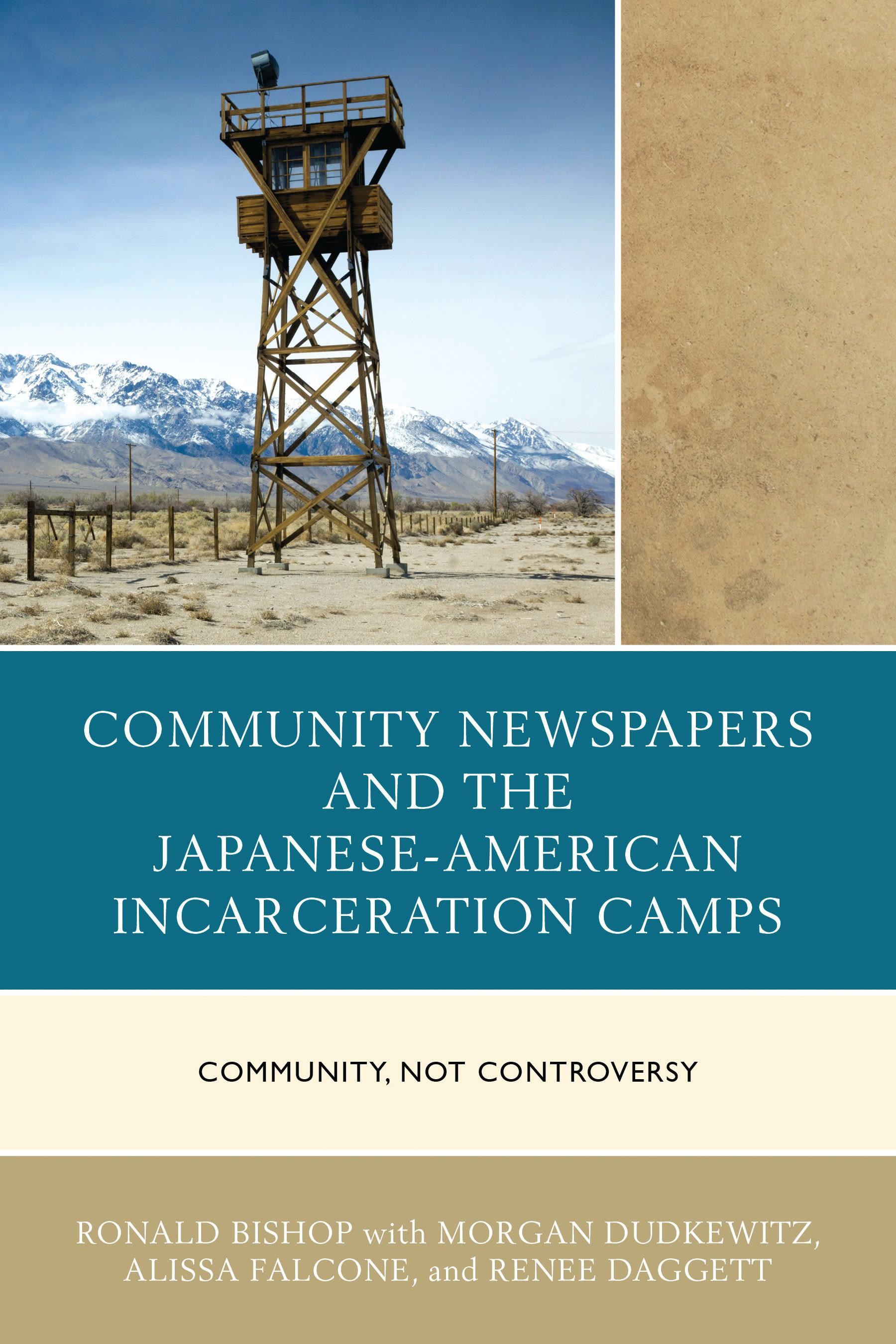
Though much has been said about Japanese-American incarceration camps, little attention is paid to the community newspapers closest to the camps and how they constructed the identities and lives of the occupants inside. Dependent on government and military officials for information, these journalists rarely wrote about the violation of the evacuees’ civil rights. Instead, they concentrated on the economic impact the camps—and the evacuees, who would replace workers off to enlist in the military and work for defense contractors—would have on the areas they covered. Newspapers like the Cody Enterprise and Powell Tribune in Wyoming, the Lamar Daily News, and the Casa Grande Dispatch regularly published overly optimistic updates on the progress of construction, the size of the contractor payrolls, and the amount of materials used to build the camps. Ronald Bishop and his coauthors reveal how journalists positioned the incarceration camps as a potential economic boon and how evacuees were framed as another community group, there to contribute to the region’s economic well-being. Community Newspapers and the Japanese-American Incarceration Camps examines the rhetoric and journalistic approach of the local papers and how they informed the communities just outside their walls. This book will appeal to scholars of history and journalism.
Betal nemt med kort, Klarna, Apple Pay eller Google Pay. Ikke tilfreds? Du har altid 14 dages fortrydelsesret. Læs mere i vores vilkår. Har du spørgsmål, så send os en mail på hello@memmo.org.
Memmo gør det nemmere at studere – uanset hvor du er i verden. Hos os samler du dine kursusbøger og smarte studieværktøjer ét sted: resuméer, quizzer, podcasts og flashcards. Og så er der Ted, din studieven, der svarer på alt, du undrer dig over. Over 50 000 studerende studerer allerede her – bygget til at hjælpe dig med at lære hurtigere og stresse mindre.