
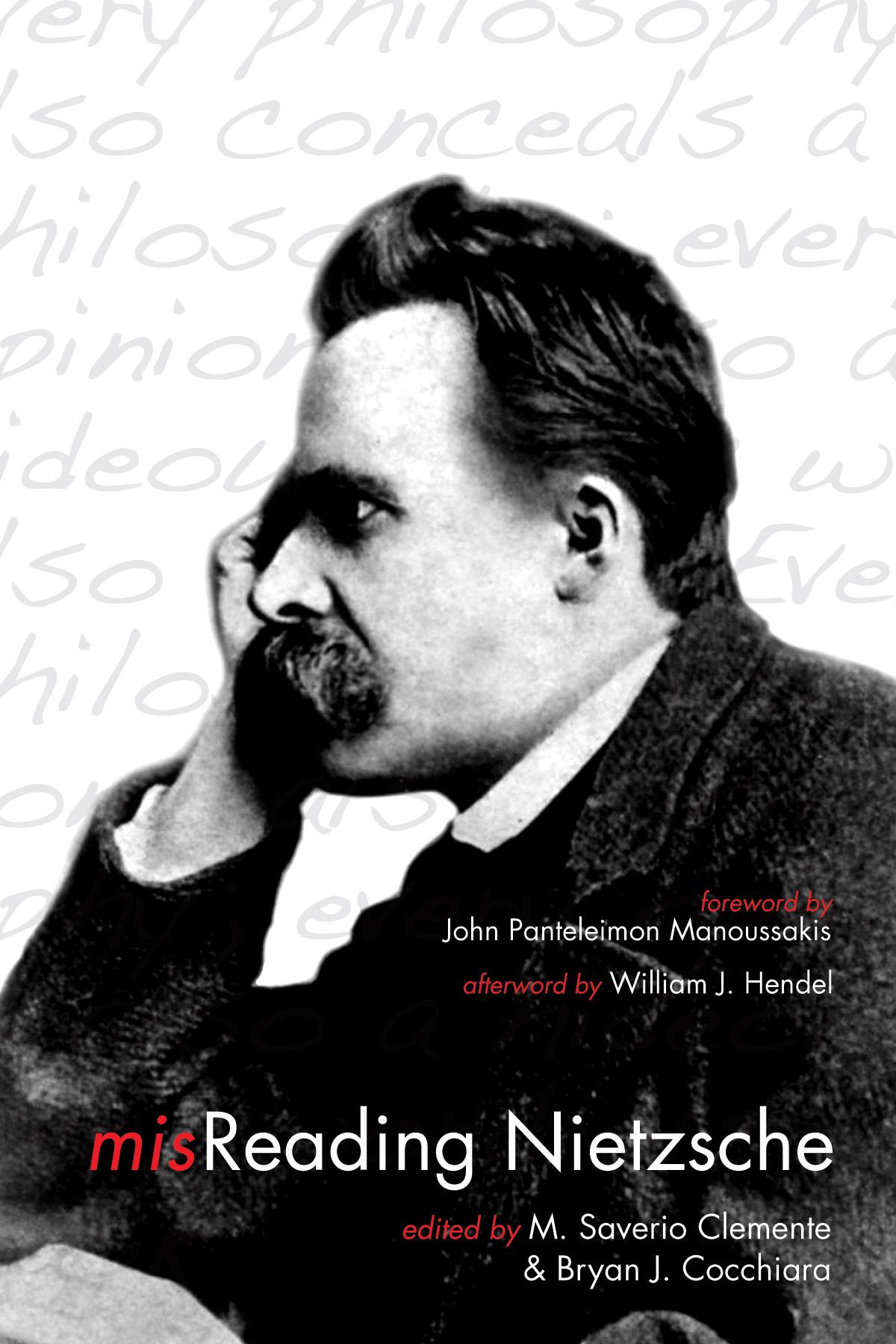
Perhaps more than any philosophy written in the past few centuries, the work of Friedrich Nietzsche has given rise to controversy, misunderstanding, and dissent. Today Nietzsche is remembered as the revolutionary author of such polemical ideas as the death of God, the revaluation of values, the will to untruth, and the Ubermensch. Yet is Nietzsche's philosophy as atheistic, relativistic, nihilistic, and immoral as some commentators have claimed? Or ought we perhaps to give more credence to Nietzsche's own assertion that one writes books "precisely to conceal what one harbors" (BGE, 9, 289)?
If "whatever is profound loves masks" (BGE, 2, 40) then might Nietzsche's more daring claims be interpreted as clever masks behind which he conceals a deeper philosophy and on which he reveals a hidden truth? Is it not possible that the standard readings of Nietzsche are in fact misreadings--that his work invites misreading, that it is intentionally unclear, deceptive, disguised?
The goal of this volume is to reread Nietzsche for all that he shows and all that he hides. It is to dig deeper into his work in order to challenge misreadings of old and invite misreadings anew--as, indeed, his work itself calls for and demands.
Betal nemt med kort, Klarna, Apple Pay eller Google Pay. Ikke tilfreds? Du har altid 14 dages fortrydelsesret. Læs mere i vores vilkår. Har du spørgsmål, så send os en mail på hello@memmo.org.
Memmo gør det nemmere at studere – uanset hvor du er i verden. Hos os samler du dine kursusbøger og smarte studieværktøjer ét sted: resuméer, quizzer, podcasts og flashcards. Og så er der Ted, din studieven, der svarer på alt, du undrer dig over. Over 50 000 studerende studerer allerede her – bygget til at hjælpe dig med at lære hurtigere og stresse mindre.
Du kan måske også lide
Køb bogen0