
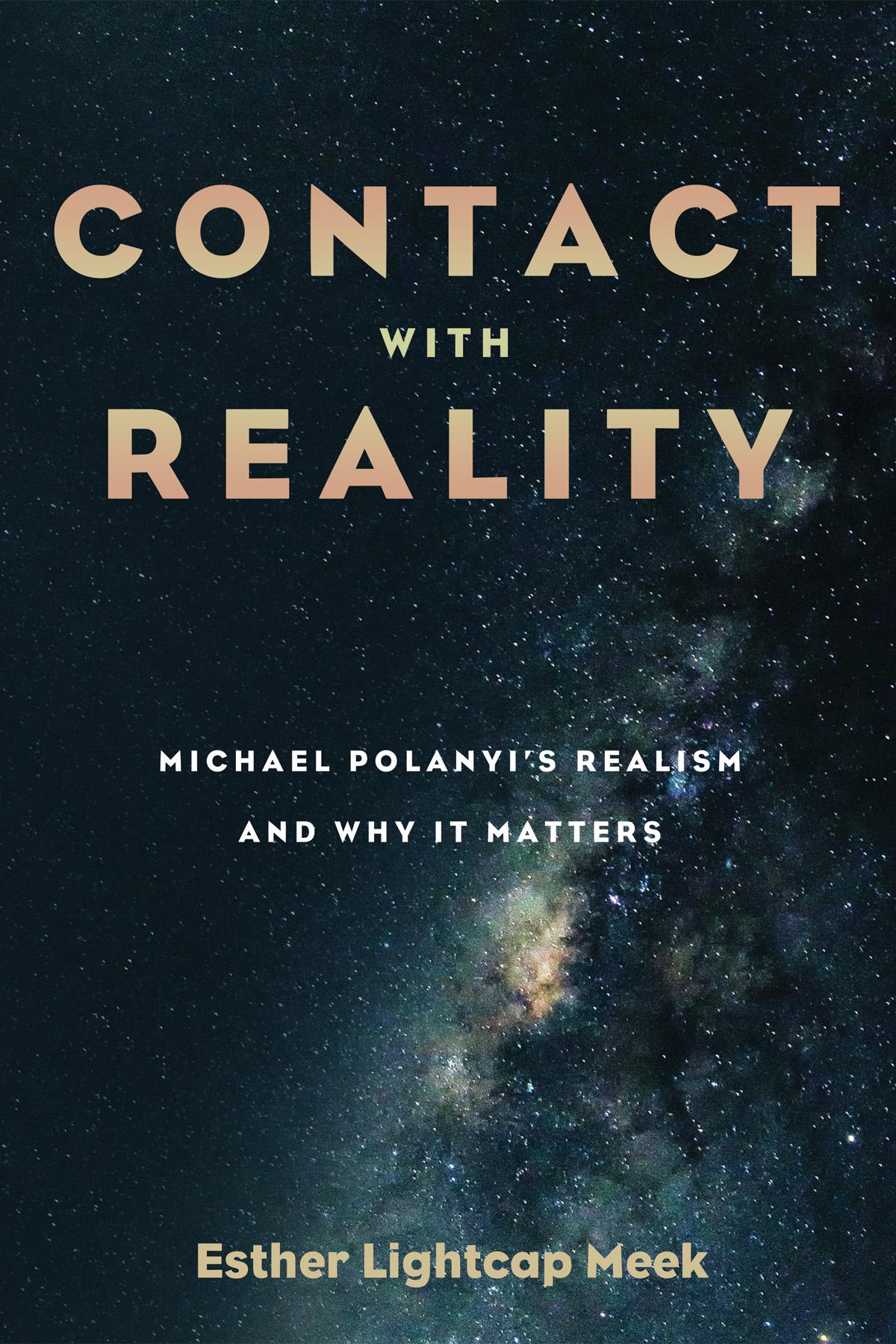
Is knowledge discovered, or just invented? Can we ever get outside ourselves to know how reality is in itself, independent of us? Philosophical realism raises the question whether in our knowing we connect with an independent reality--or only connect with our own mental constructs. Far from being a silly parlor game, the question impacts our lives concretely and deeply. Modern Western culture has been infected with antirealism and the doubt, skepticism, subjectivism, relativism, and atheism that attends it--not to mention distrust and arbitrary (mis)use of reality.
Premier scientist-turned-philosopher Michael Polanyi stepped aside from research to offer an innovative account of knowing that takes its cue from how discovery actually happens. Polanyi defied the antirealism of the twentieth century, sounding a ringing note of hope in his repeated claim that in discovery, we know we have made contact with reality because "we have a sense of the possibility of indeterminate future manifestations." And that sense marks contact with reality, because it is the way reality is: abundant, generous, and fraught with as-yet-unnameable possibilities.
This book examines that distinctive claim, contrasting it to the wider philosophical discussions regarding realism and antirealism in the recent decades. It shows why Polanyi's outlook is superior, and why that matters, not just to scientific discoverers, but to us all.
Premier scientist-turned-philosopher Michael Polanyi stepped aside from research to offer an innovative account of knowing that takes its cue from how discovery actually happens. Polanyi defied the antirealism of the twentieth century, sounding a ringing note of hope in his repeated claim that in discovery, we know we have made contact with reality because "we have a sense of the possibility of indeterminate future manifestations." And that sense marks contact with reality, because it is the way reality is: abundant, generous, and fraught with as-yet-unnameable possibilities.
This book examines that distinctive claim, contrasting it to the wider philosophical discussions regarding realism and antirealism in the recent decades. It shows why Polanyi's outlook is superior, and why that matters, not just to scientific discoverers, but to us all.
Betal nemt med kort, Klarna, Apple Pay eller Google Pay. Ikke tilfreds? Du har altid 14 dages fortrydelsesret. Læs mere i vores vilkår. Har du spørgsmål, så send os en mail på hello@memmo.org.
Memmo gør det nemmere at studere – uanset hvor du er i verden. Hos os samler du dine kursusbøger og smarte studieværktøjer ét sted: resuméer, quizzer, podcasts og flashcards. Og så er der Ted, din studieven, der svarer på alt, du undrer dig over. Over 50 000 studerende studerer allerede her – bygget til at hjælpe dig med at lære hurtigere og stresse mindre.
Du kan måske også lide
Køb bogen0