
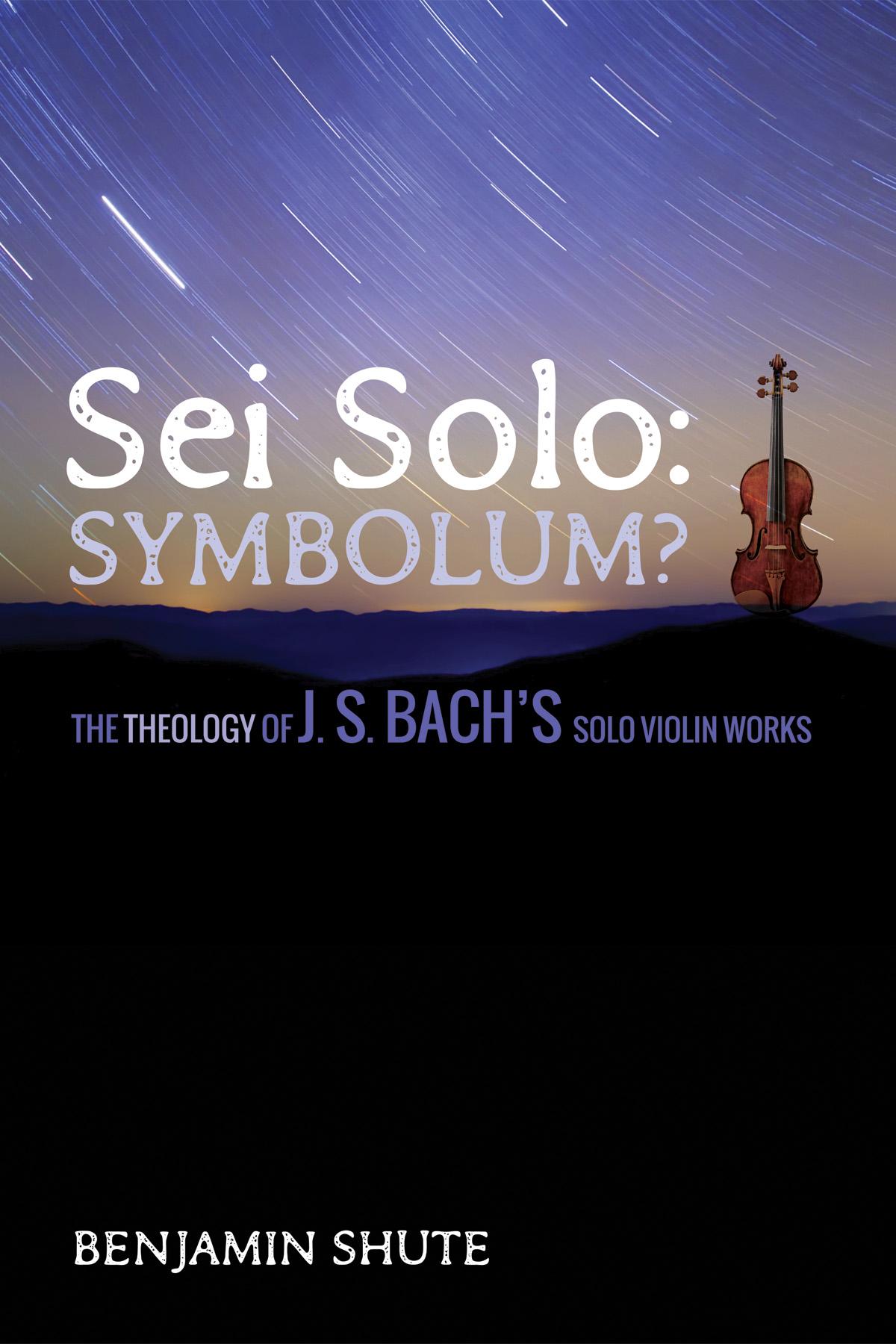
One of the jewels in the crown of Johann Sebastian Bach's sacred music is its use of astonishingly subtle and complex allegorical and representational devices. But when similar devices appear in the context of one of Bach's untexted, secular, instrumental collections such as the Six Solos (sonatas and partitas) for violin, the question arises whether he might be intending to embed discernible theological significances there as well, thus infusing the secular with the sacred. Such designs would be reasonably plausible within Bach's musical, cultural, and religious context.
Shute carefully investigates the extent to which musical features of the Six Solos that seem to invite theological parallels might indeed have been intended to do so. Although the precise extent of Bach's intentions cannot be ascertained with certainty, the degree of correlation among strong potential signifiers would seem to suggest that they, and many other features of the Six Solos, are best explained as the product of extensive theological-allegorical designs on Bach's part, like those evident in his texted vocal music.
Betal nemt med kort, Klarna, Apple Pay eller Google Pay. Ikke tilfreds? Du har altid 14 dages fortrydelsesret. Læs mere i vores vilkår. Har du spørgsmål, så send os en mail på hello@memmo.org.
Memmo gør det nemmere at studere – uanset hvor du er i verden. Hos os samler du dine kursusbøger og smarte studieværktøjer ét sted: resuméer, quizzer, podcasts og flashcards. Og så er der Ted, din studieven, der svarer på alt, du undrer dig over. Over 50 000 studerende studerer allerede her – bygget til at hjælpe dig med at lære hurtigere og stresse mindre.
Du kan måske også lide
Køb bogen0