
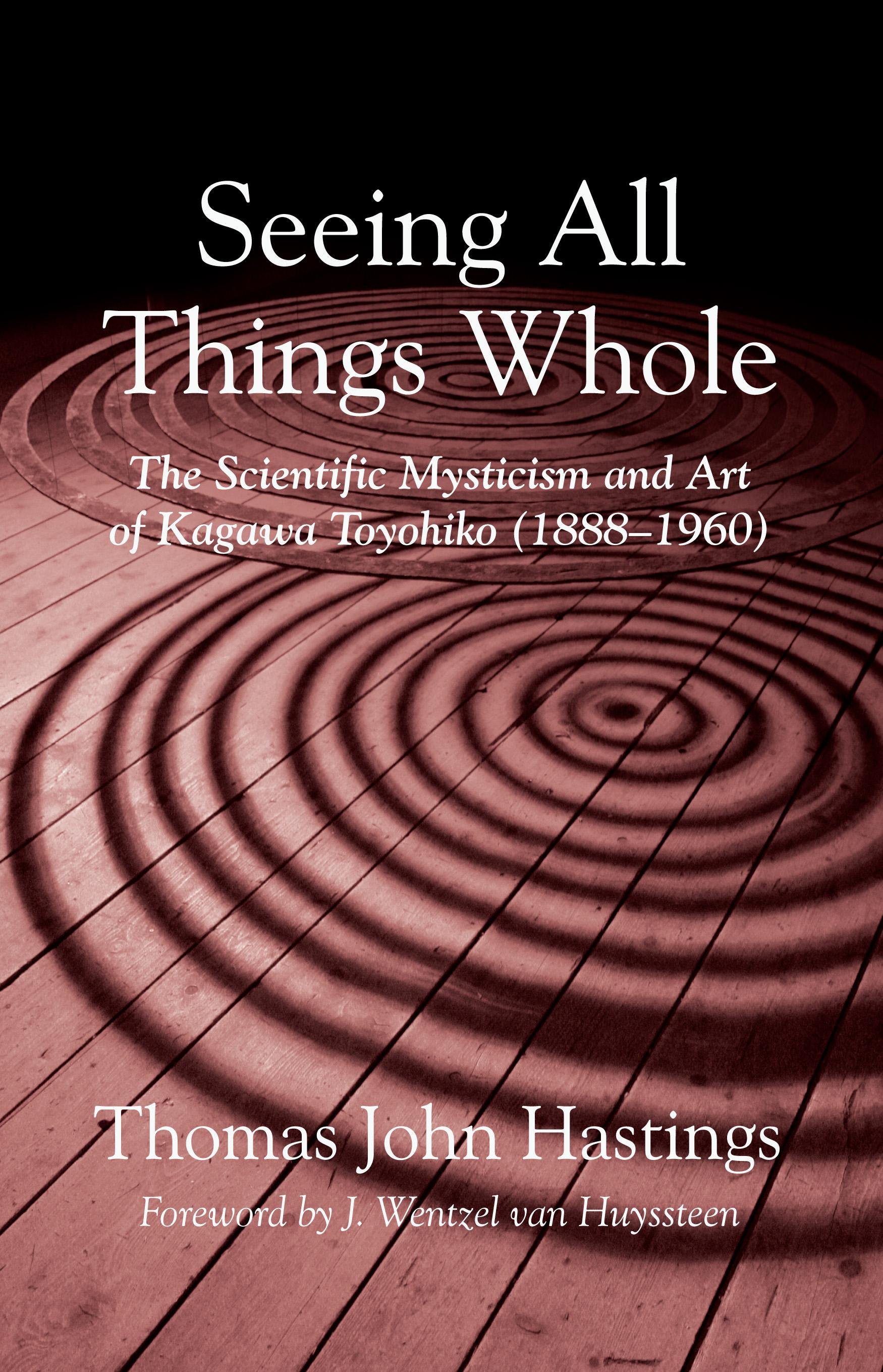
Kagawa Toyohiko was one of the best-known evangelists and social reformers of the twentieth century. Founder of several religious, educational, social welfare, medical, financial, labor, and agricultural cooperatives, he was nominated twice for the Nobel Prize in Literature (1947 and 1948), and four times for the Nobel Peace Prize (1954, 1955, 1956, and 1960).
Appealing to the masses who had little knowledge of Christianity, Kagawa believed that a positive interpretation of nature was a key missiological issue in Japan. He reasoned that a faith, which is rooted in the "downward movement" of Christ's incarnation, must support the scientific quest and meditate on the purpose or "upward movement" implicit in scientific findings. Through an anti-reductionist methodological pluralism that strives to "sees all things whole," this "scientific mystic" employed a wide range of Japanese and Western cultural resources to assert a complementary role for science and religion in modern society.
Betal nemt med kort, Klarna, Apple Pay eller Google Pay. Ikke tilfreds? Du har altid 14 dages fortrydelsesret. Læs mere i vores vilkår. Har du spørgsmål, så send os en mail på hello@memmo.org.
Memmo gør det nemmere at studere – uanset hvor du er i verden. Hos os samler du dine kursusbøger og smarte studieværktøjer ét sted: resuméer, quizzer, podcasts og flashcards. Og så er der Ted, din studieven, der svarer på alt, du undrer dig over. Over 50 000 studerende studerer allerede her – bygget til at hjælpe dig med at lære hurtigere og stresse mindre.
Du kan måske også lide
Køb bogen0