
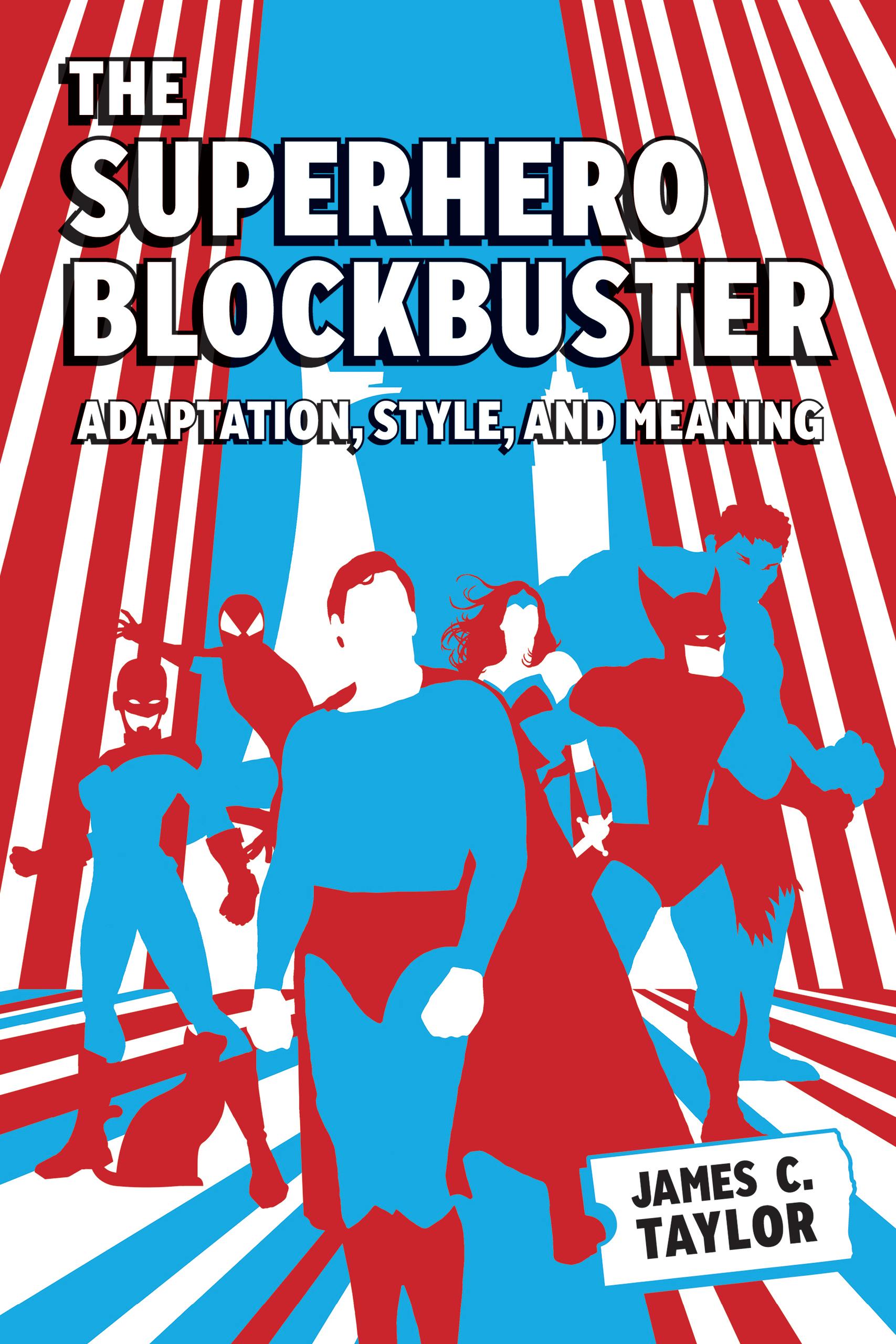
The Superhero Blockbuster: Adaptation, Style, and Meaning builds an innovative framework for analyzing one of the most prominent genres in twenty-first-century Hollywood. In combining theories of adaptation with close textual analysis, James C. Taylor provides a set of analytical tools with which to undertake nuanced exploration of superhero blockbusters’ meanings. This deep understanding of the films attends to historical, sociopolitical, and industrial contexts and also illuminates key ways in which the superhero genre has contributed to the development of the Hollywood blockbuster.
Each chapter focuses on a different superhero or superhero team, covering some of the most popular superhero blockbusters based on DC and Marvel superheroes. The chapters cover different aspects of the films’ adaptive practices, exploring the adaptation of stylistic strategies, narrative models, and modes of seriality from superhero comic books, while being attentive to the ways in which the films engage with the wider networks of texts in various media that comprise a given superhero franchise. Chapter 1 looks back to the first superhero blockbuster, 1978’s Superman: The Movie, examining its cinematic re-envisioning of the quintessential superhero and role in establishing Hollywood’s emerging model of blockbuster filmmaking. Subsequent chapters analyze the twenty-first-century boom in superhero blockbusters and examine digital imaging and nostalgia in Spider-Man films, Marvel Studios’ adaptation of a shared universe model of seriality in the Marvel Cinematic Universe, and the use of alternate timeline narratives in X-Men films. The book concludes by turning its analytical toolkit to analysis of DC Studios’ cinematic universe, the DC Extended Universe.
Each chapter focuses on a different superhero or superhero team, covering some of the most popular superhero blockbusters based on DC and Marvel superheroes. The chapters cover different aspects of the films’ adaptive practices, exploring the adaptation of stylistic strategies, narrative models, and modes of seriality from superhero comic books, while being attentive to the ways in which the films engage with the wider networks of texts in various media that comprise a given superhero franchise. Chapter 1 looks back to the first superhero blockbuster, 1978’s Superman: The Movie, examining its cinematic re-envisioning of the quintessential superhero and role in establishing Hollywood’s emerging model of blockbuster filmmaking. Subsequent chapters analyze the twenty-first-century boom in superhero blockbusters and examine digital imaging and nostalgia in Spider-Man films, Marvel Studios’ adaptation of a shared universe model of seriality in the Marvel Cinematic Universe, and the use of alternate timeline narratives in X-Men films. The book concludes by turning its analytical toolkit to analysis of DC Studios’ cinematic universe, the DC Extended Universe.
Betal nemt med kort, Klarna, Apple Pay eller Google Pay. Ikke tilfreds? Du har altid 14 dages fortrydelsesret. Læs mere i vores vilkår. Har du spørgsmål, så send os en mail på hello@memmo.org.
Memmo gør det nemmere at studere – uanset hvor du er i verden. Hos os samler du dine kursusbøger og smarte studieværktøjer ét sted: resuméer, quizzer, podcasts og flashcards. Og så er der Ted, din studieven, der svarer på alt, du undrer dig over. Over 50 000 studerende studerer allerede her – bygget til at hjælpe dig med at lære hurtigere og stresse mindre.
Du kan måske også lide
Køb bogen0