
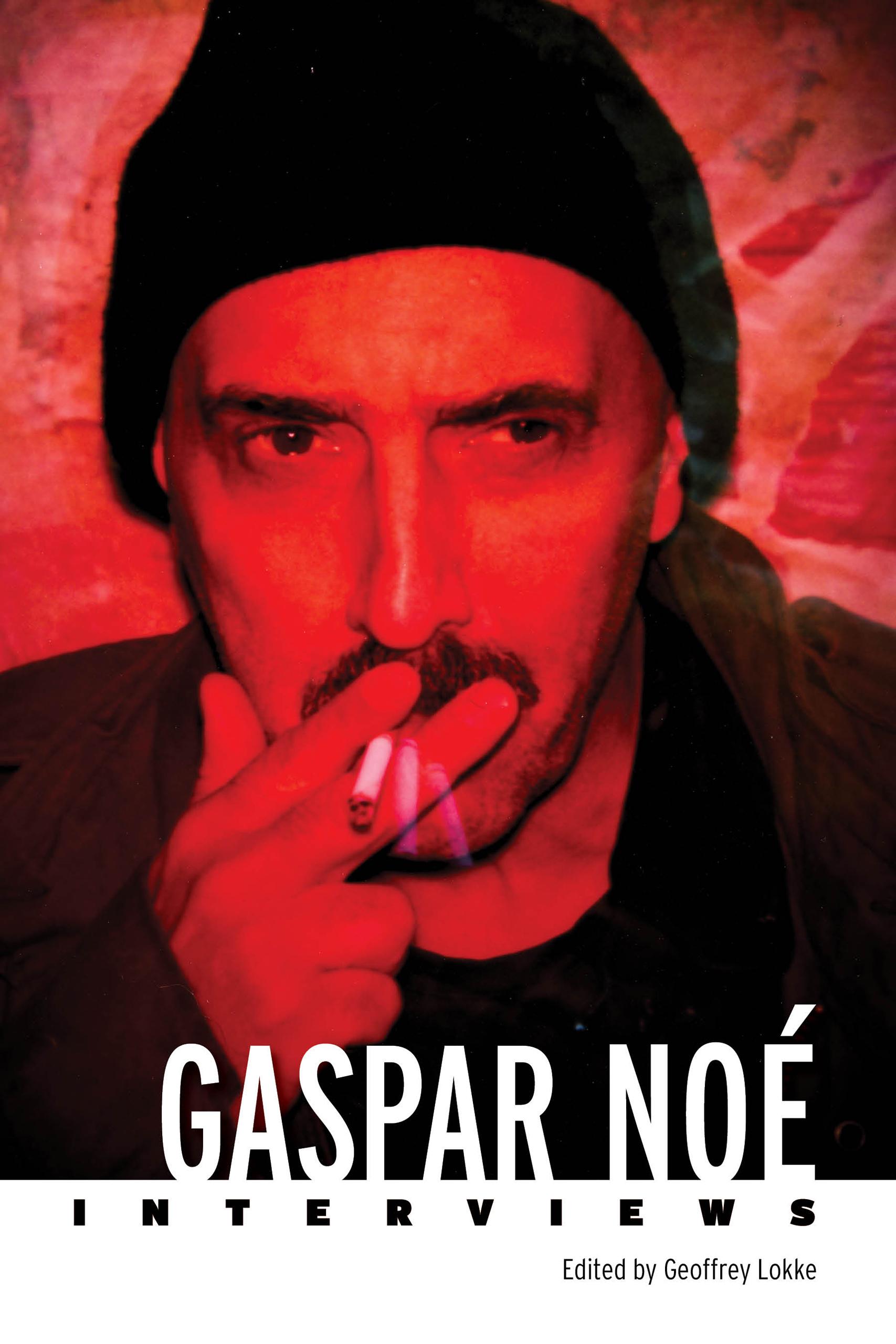
Since the release of his breakout film Irréversible in 2002, Gaspar Noé (b. 1963) has been labeled the principal provocateur of twenty-first-century French cinema. While many of the filmmaker’s complex and daring works have been reduced by his critics to their (innumerable) depictions of hallucinogens, violence, and unsimulated sexual intercourse—the latter rendered into vertiginous 3D with his film Love—other viewers have remained in steady awe of Noé’s dizzying camerawork, immersive visuality, and expressive editing. Noé’s cinema greets the short attention spans of digital life with works of extremities and endurance for performers and spectators alike.
This first-of-its-kind collection of interviews documents Noé’s engagement with the feverish reception of his work and received ideas about his life and politics. Collecting conversations with critics, scholars, and artists, including fellow directors Matthew Barney, Abel Ferrara, and Harmony Korine, Noé speaks about his process as a writer, director, cinematographer, and editor. Also examined are his engagement with developing film technology and his fascination and indebtedness to past filmmakers such as Pier Paolo Pasolini, Jean Eustache, Stanley Kubrick, and Sam Peckinpah. Noé discusses life in Buenos Aires and emigrating to France, his use of irony and melodrama, and his interest in documentary practices. Throughout, Noé explores his continuing examination of faith and secularism, body and mind, and the politics of spectatorship. Editor Geoffrey Lokke’s introduction provides a close reading of Noé in conversation, assessing what has changed over the years in terms of the filmmaker’s aesthetics and presentation of self, as well as what Noé is reticent to articulate about his life and art.
This first-of-its-kind collection of interviews documents Noé’s engagement with the feverish reception of his work and received ideas about his life and politics. Collecting conversations with critics, scholars, and artists, including fellow directors Matthew Barney, Abel Ferrara, and Harmony Korine, Noé speaks about his process as a writer, director, cinematographer, and editor. Also examined are his engagement with developing film technology and his fascination and indebtedness to past filmmakers such as Pier Paolo Pasolini, Jean Eustache, Stanley Kubrick, and Sam Peckinpah. Noé discusses life in Buenos Aires and emigrating to France, his use of irony and melodrama, and his interest in documentary practices. Throughout, Noé explores his continuing examination of faith and secularism, body and mind, and the politics of spectatorship. Editor Geoffrey Lokke’s introduction provides a close reading of Noé in conversation, assessing what has changed over the years in terms of the filmmaker’s aesthetics and presentation of self, as well as what Noé is reticent to articulate about his life and art.
Sider: 224
Kategori: Film- & Medievetenskap
e-ISBN: 9781496854230
Forsendelsesvægt: 1.2 kg
Sendes inden for: 1-2 dage
Betal nemt med kort, Klarna, Apple Pay eller Google Pay. Ikke tilfreds? Du har altid 14 dages fortrydelsesret. Læs mere i vores vilkår. Har du spørgsmål, så send os en mail på hello@memmo.org.
Memmo gør det nemmere at studere – uanset hvor du er i verden. Hos os samler du dine kursusbøger og smarte studieværktøjer ét sted: resuméer, quizzer, podcasts og flashcards. Og så er der Ted, din studieven, der svarer på alt, du undrer dig over. Over 50 000 studerende studerer allerede her – bygget til at hjælpe dig med at lære hurtigere og stresse mindre.
Du kan måske også lide
Køb bogen0