
2025 Recipient of a Certificate of Merit in the category of Best Historical Research in Blues, R&B, Gospel, Hip Hop, or Soul Music from the Association for Recorded Sound Collections
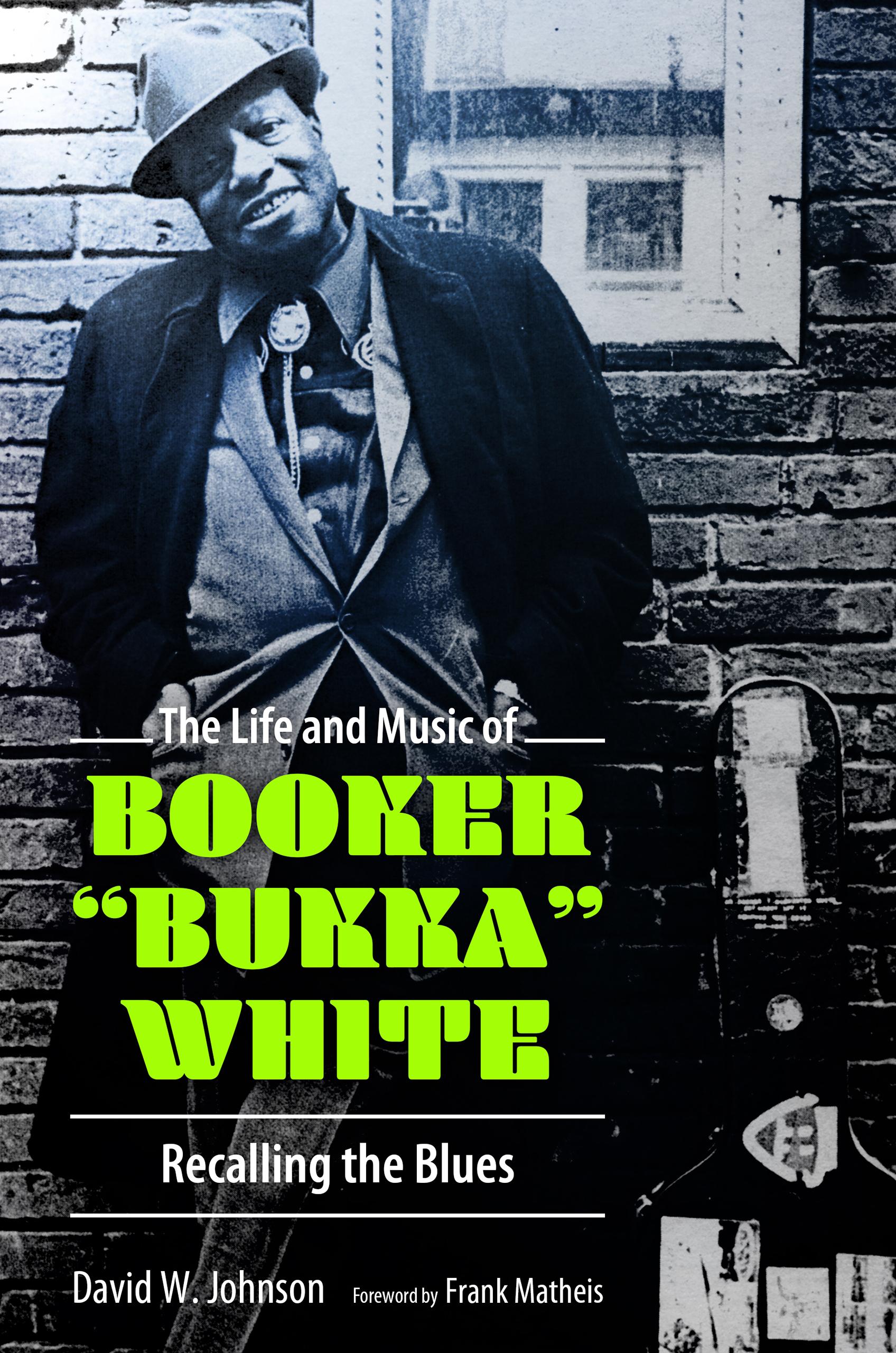
Booker “Bukka” White (1905–1977) was one of the most important blues musicians of the twentieth century. The twelve songs he recorded in Chicago in 1940 are considered to be among the finest in country blues. In The Life and Music of Booker “Bukka” White: Recalling the Blues, David W. Johnson traces the trajectory of White’s life from his early years in Chickasaw and Grenada Counties, Mississippi, through his imprisonment in the notorious Mississippi State Penal Farm in the late 1930s, to making a new life for himself in Memphis, Tennessee.
For years only a name on old 78 records—and believed by some to be dead—White was “rediscovered” by John Fahey and ED Denson in the summer of 1963. He went on to have a productive second career, playing venues and festivals throughout the United States and in Canada, and touring Europe and Great Britain with the American Folk Blues Festival. In 1975, he was invited to Bremen, Germany, for a solo concert that was released as his final album.
In July 1976, the author interviewed White shortly before his discharge from a Massachusetts hospital where he was recovering from a stroke. After spending eight days in the intensive care unit and three weeks in rehabilitation, White was ready to talk about his life. Recalling stories of “slavery time,” White told the author, “. . . some of the [formerly enslaved] guys were wise enough to hold that in their head where they could tell a young pants, where it would go down in history, you know. Just like you doing that now—something happen to you, somebody else will carry that on.”
The product of years of research, The Life and Music of Booker “Bukka” White is the first full-length biography of this remarkable country blues performer. Interviewing those who knew White, including his second cousin B. B. King, Johnson has written a detailed and sometimes surprising account of how a young Black man born in the first decade of the twentieth century—the grandson of a slave—found a way to rise above his circumstances and maintain a decades-long career as a musician.
Booker “Bukka” White (1905–1977) was one of the most important blues musicians of the twentieth century. The twelve songs he recorded in Chicago in 1940 are considered to be among the finest in country blues. In The Life and Music of Booker “Bukka” White: Recalling the Blues, David W. Johnson traces the trajectory of White’s life from his early years in Chickasaw and Grenada Counties, Mississippi, through his imprisonment in the notorious Mississippi State Penal Farm in the late 1930s, to making a new life for himself in Memphis, Tennessee.
For years only a name on old 78 records—and believed by some to be dead—White was “rediscovered” by John Fahey and ED Denson in the summer of 1963. He went on to have a productive second career, playing venues and festivals throughout the United States and in Canada, and touring Europe and Great Britain with the American Folk Blues Festival. In 1975, he was invited to Bremen, Germany, for a solo concert that was released as his final album.
In July 1976, the author interviewed White shortly before his discharge from a Massachusetts hospital where he was recovering from a stroke. After spending eight days in the intensive care unit and three weeks in rehabilitation, White was ready to talk about his life. Recalling stories of “slavery time,” White told the author, “. . . some of the [formerly enslaved] guys were wise enough to hold that in their head where they could tell a young pants, where it would go down in history, you know. Just like you doing that now—something happen to you, somebody else will carry that on.”
The product of years of research, The Life and Music of Booker “Bukka” White is the first full-length biography of this remarkable country blues performer. Interviewing those who knew White, including his second cousin B. B. King, Johnson has written a detailed and sometimes surprising account of how a young Black man born in the first decade of the twentieth century—the grandson of a slave—found a way to rise above his circumstances and maintain a decades-long career as a musician.
Betal nemt med kort, Klarna, Apple Pay eller Google Pay. Ikke tilfreds? Du har altid 14 dages fortrydelsesret. Læs mere i vores vilkår. Har du spørgsmål, så send os en mail på hello@memmo.org.
Memmo gør det nemmere at studere – uanset hvor du er i verden. Hos os samler du dine kursusbøger og smarte studieværktøjer ét sted: resuméer, quizzer, podcasts og flashcards. Og så er der Ted, din studieven, der svarer på alt, du undrer dig over. Over 50 000 studerende studerer allerede her – bygget til at hjælpe dig med at lære hurtigere og stresse mindre.
Du kan måske også lide
Køb bogen0