
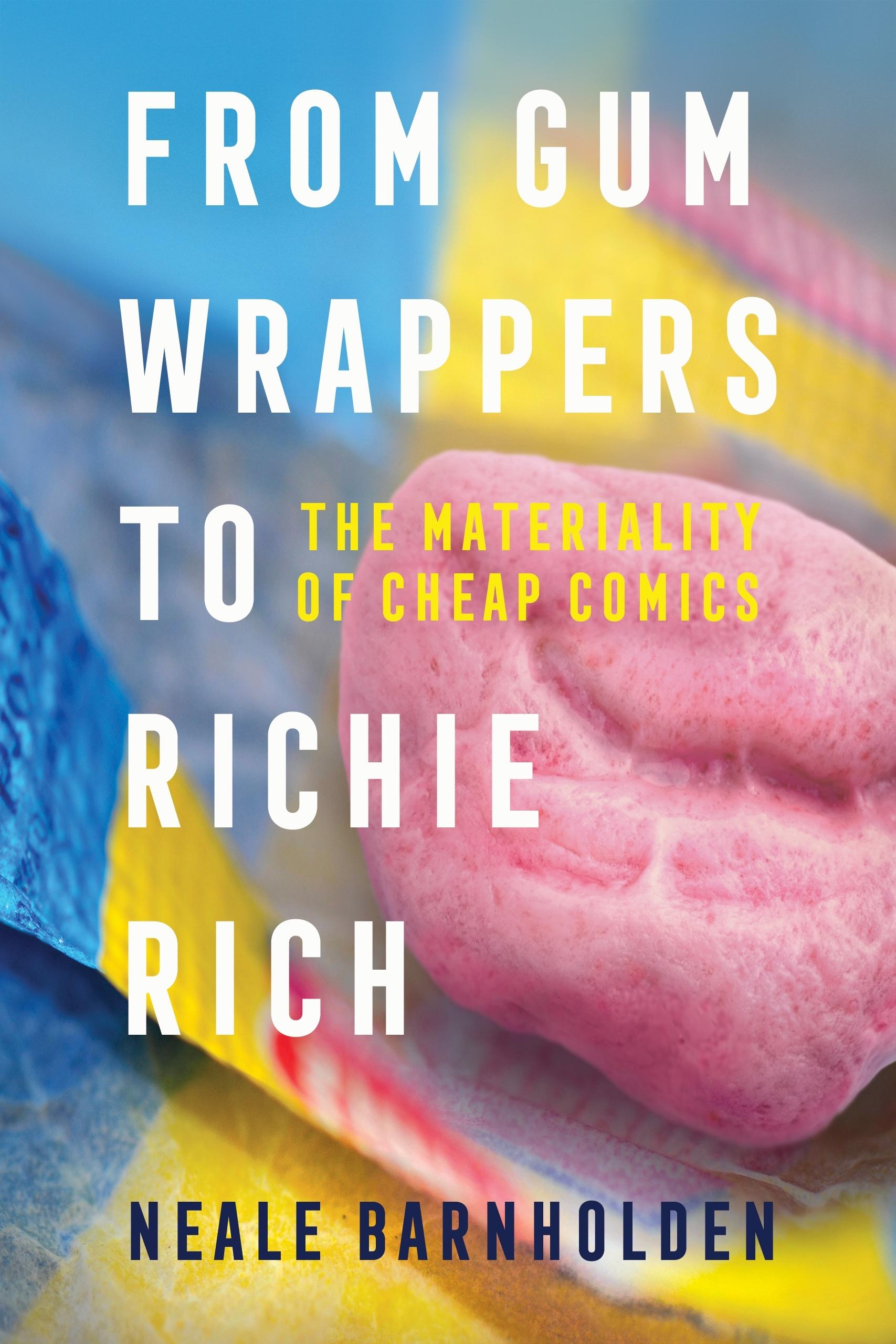
Between the 1930s and the invention of the internet, American comics reached readers in a few distinct physical forms: the familiar monthly stapled pamphlet, the newspaper comics section, bubblegum wrappers, and bound books. From Gum Wrappers to Richie Rich: The Materiality of Cheap Comics places the history of four representative comics—Watchmen, Uncle Scrooge, Richie Rich, and Fleer Funnies—in the larger contexts of book history, children’s culture, and consumerism to understand the roles that comics have played as very specific kinds of books. While comics have received increasing amounts of scholarly attention over the past several decades, their material form is a neglected aspect of how creators, corporations, and readers have constructed meaning inside and around narratives.
Neale Barnholden traces the unusual and surprising histories of comics ranging from the most acclaimed works to literal garbage, analyzing how the physical objects containing comics change the meaning of those comics. For example, Carl Barks’s Uncle Scrooge comics were gradually salvaged by a fan-driven project, an evolution that is evident when considering their increasingly expensive forms. Similarly, Watchmen has been physically made into the epitome of “prestigious graphic novel” by the DC Comics corporation. On the other hand, Harvey Comics’ Richie Rich is typically misunderstood as a result of its own branding, while Fleer Funnies uses its inextricable association with bubblegum to offer unexpectedly sophisticated meanings. Examining the bibliographical histories of each title, Barnholden demonstrates how the materiality of consumer culture suggests meanings to comics texts beyond the narratives.
Neale Barnholden traces the unusual and surprising histories of comics ranging from the most acclaimed works to literal garbage, analyzing how the physical objects containing comics change the meaning of those comics. For example, Carl Barks’s Uncle Scrooge comics were gradually salvaged by a fan-driven project, an evolution that is evident when considering their increasingly expensive forms. Similarly, Watchmen has been physically made into the epitome of “prestigious graphic novel” by the DC Comics corporation. On the other hand, Harvey Comics’ Richie Rich is typically misunderstood as a result of its own branding, while Fleer Funnies uses its inextricable association with bubblegum to offer unexpectedly sophisticated meanings. Examining the bibliographical histories of each title, Barnholden demonstrates how the materiality of consumer culture suggests meanings to comics texts beyond the narratives.
Sider: 184
Kategori: Film- & Medievetenskap
e-ISBN: 9781496851635
Forsendelsesvægt: 1.2 kg
Sendes inden for: 1-2 dage
Betal nemt med kort, Klarna, Apple Pay eller Google Pay. Ikke tilfreds? Du har altid 14 dages fortrydelsesret. Læs mere i vores vilkår. Har du spørgsmål, så send os en mail på hello@memmo.org.
Memmo gør det nemmere at studere – uanset hvor du er i verden. Hos os samler du dine kursusbøger og smarte studieværktøjer ét sted: resuméer, quizzer, podcasts og flashcards. Og så er der Ted, din studieven, der svarer på alt, du undrer dig over. Over 50 000 studerende studerer allerede her – bygget til at hjælpe dig med at lære hurtigere og stresse mindre.
Du kan måske også lide
Køb bogen0