
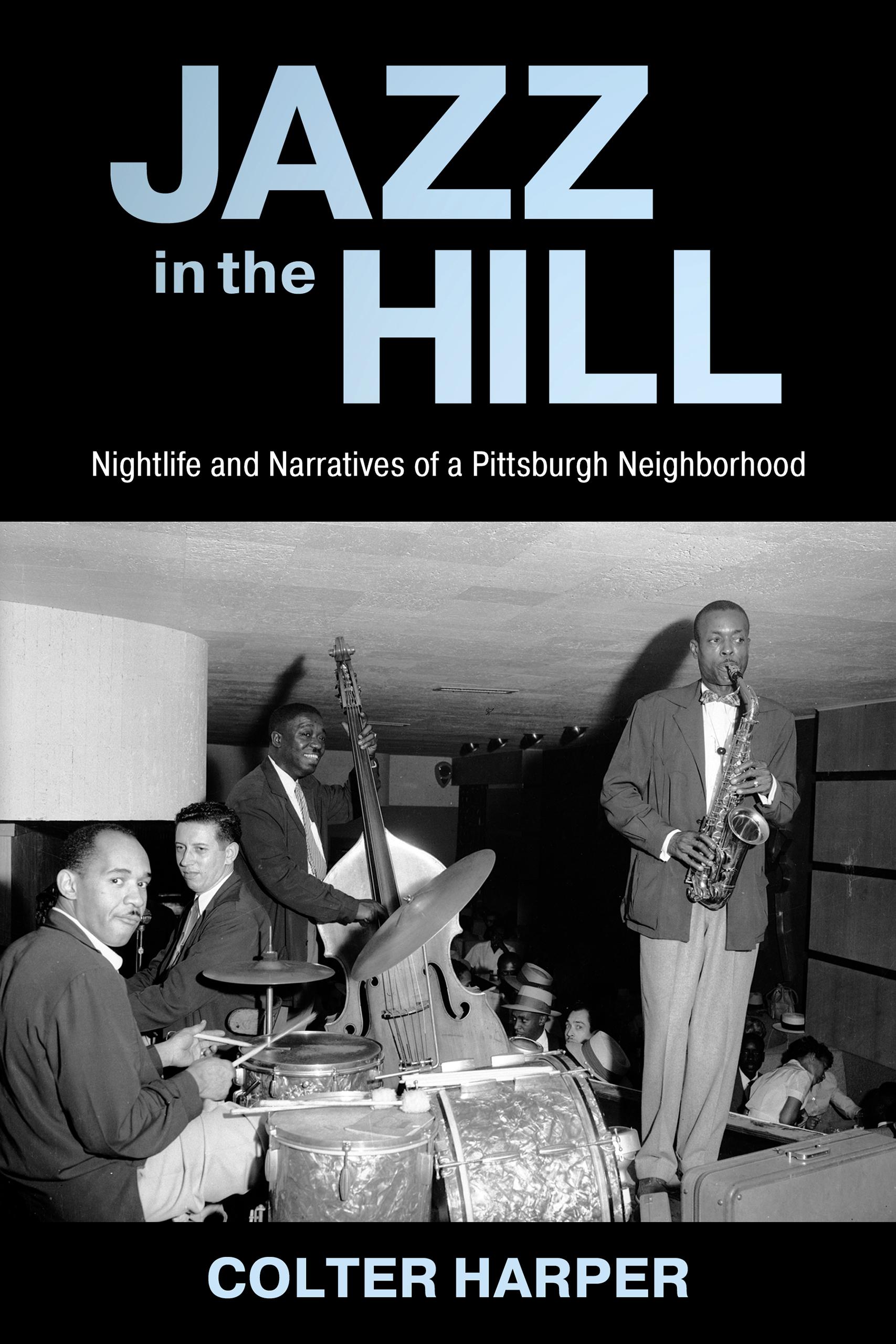
From the 1920s through the 1960s, Pittsburgh’s Hill District was the heart of the city’s Black cultural life and home to a vibrant jazz scene. In Jazz in the Hill: Nightlife and Narratives of a Pittsburgh Neighborhood, Colter Harper looks at how jazz shaped the neighborhood and created a way of life. Beyond backdrops for remarkable careers, jazz clubs sparked the development of a self-determined African American community. In delving into the history of entrepreneurialism, placemaking, labor organizing, and critical listening in the Hill District, Harper forges connections to larger political contexts, processes of urban development, and civil rights struggles.
Harper adopts a broad approach in thinking about jazz clubs, foregrounding the network of patrons, business owners, and musicians who were actively invested in community building. Jazz in the Hill provides a valuable case study detailing the intersections of music, political and cultural history, public policy, labor, and law. The book addresses distinctive eras and issues of twentieth century American urban history, including notions of “vice” during the Prohibition Era (1920–1934); “blight” during the mid-twentieth century boom in urban redevelopment (1946–1973); and workplace integration during the civil rights era (1954–1968). Throughout, Harper demonstrates how the clubs, as a nexus of music, politics, economy, labor, and social relations, supported the livelihood of residents and artists while developing cultures of listening and learning. Though the neighborhood has undergone an extensive socioeconomic transformation that has muted its nightlife, this musical legacy continues to guide current development visions for the Hill on the cusp of its remaking.
Harper adopts a broad approach in thinking about jazz clubs, foregrounding the network of patrons, business owners, and musicians who were actively invested in community building. Jazz in the Hill provides a valuable case study detailing the intersections of music, political and cultural history, public policy, labor, and law. The book addresses distinctive eras and issues of twentieth century American urban history, including notions of “vice” during the Prohibition Era (1920–1934); “blight” during the mid-twentieth century boom in urban redevelopment (1946–1973); and workplace integration during the civil rights era (1954–1968). Throughout, Harper demonstrates how the clubs, as a nexus of music, politics, economy, labor, and social relations, supported the livelihood of residents and artists while developing cultures of listening and learning. Though the neighborhood has undergone an extensive socioeconomic transformation that has muted its nightlife, this musical legacy continues to guide current development visions for the Hill on the cusp of its remaking.
Betal nemt med kort, Klarna, Apple Pay eller Google Pay. Ikke tilfreds? Du har altid 14 dages fortrydelsesret. Læs mere i vores vilkår. Har du spørgsmål, så send os en mail på hello@memmo.org.
Memmo gør det nemmere at studere – uanset hvor du er i verden. Hos os samler du dine kursusbøger og smarte studieværktøjer ét sted: resuméer, quizzer, podcasts og flashcards. Og så er der Ted, din studieven, der svarer på alt, du undrer dig over. Over 50 000 studerende studerer allerede her – bygget til at hjælpe dig med at lære hurtigere og stresse mindre.
Du kan måske også lide
Køb bogen0