
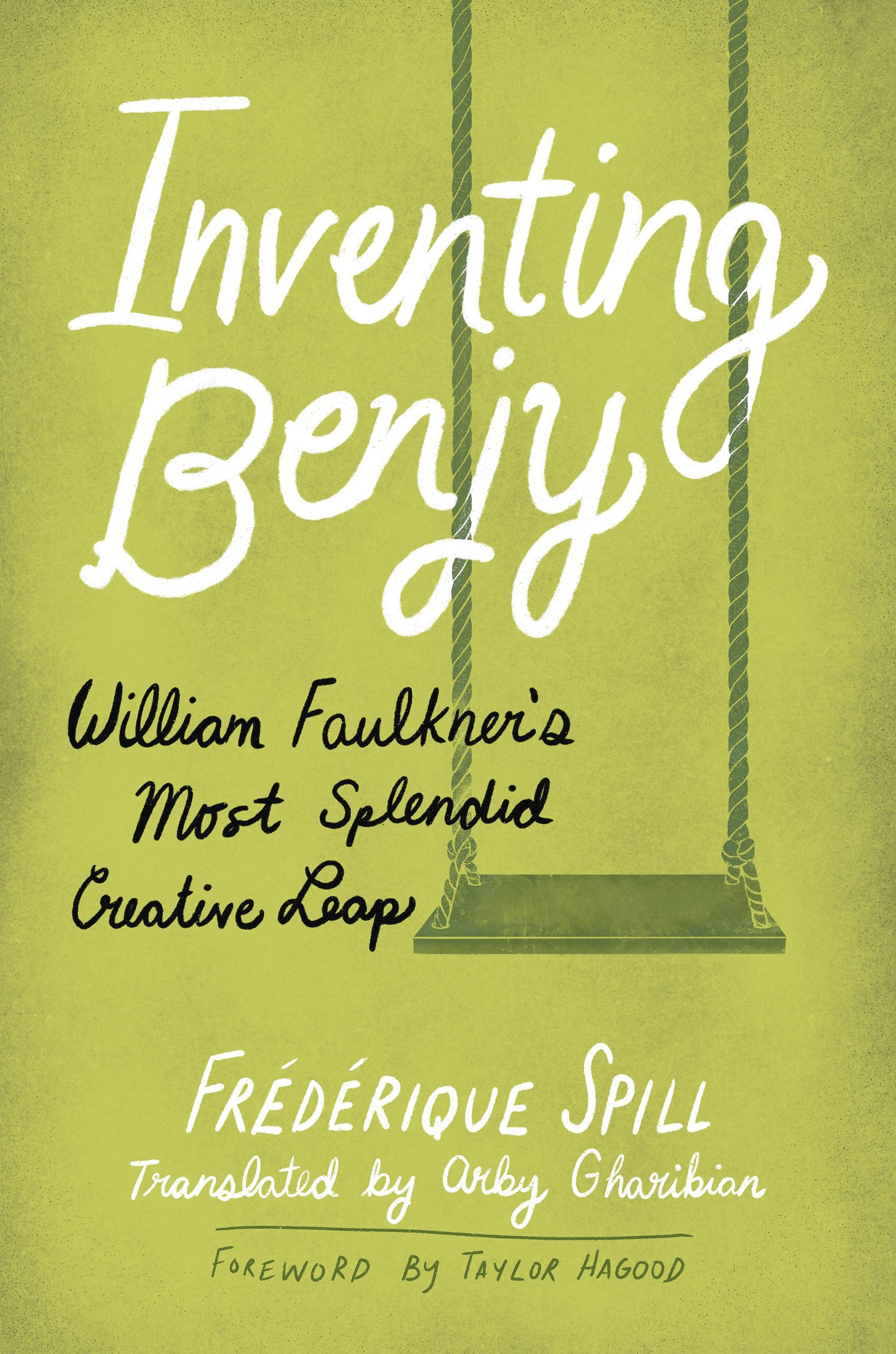
Inventing Benjy: William Faulkner’s Most Splendid Creative Leap is a groundbreaking work at the intersection of Faulkner studies and disability studies. Originally published in 2009 by Presses de la Sorbonne Nouvelle as L’Idiotie dans l’œuvre de Faulkner, this translation brings the book to English-language readers for the first time. Author Frédérique Spill begins with a sustained look at the monologue of Benjy Compson, the initial first-person narrator in Faulkner’s The Sound and the Fury. Spill questions the reasons for this narrative choice, bringing readers to consider Benjy’s monologue, which is told by a narrator who is deaf and cognitively disabled, as an impossible discourse. This paradoxical discourse, which relies mostly on senses and sensory perception, sets the foundation of a sophisticated poetics of idiocy. Using this form of writing, Faulkner shaped perspective from a disabled character, revealing a certain depth to characters that were previously only portrayed on a shallow level. This style encompasses some of the most striking forms and figures of his leap into modern(ist) writing. In that respect, Inventing Benjy thoroughly examines Benjy’s discourse as an experimental workshop in which objects and words are exclusively modelled by the senses.
This study regards Faulkner’s decision to place a disabled character at the center of perception as the inaugural and emblematic gesture of his writing. Closely examining excerpts from Faulkner’s novels and a few short stories, Spill emphasizes how the corporal, temporal, sensorial, and narrative figures of "idiocy" are reflected throughout Faulkner’s work. These writing choices underlie some of his most compelling inventions and certainly contribute to his unmistakable writing style. In the process, Faulkner’s writing takes on a phenomenological dimension, simultaneously dismantling and reinventing the intertwined dynamics of perception and language.
This study regards Faulkner’s decision to place a disabled character at the center of perception as the inaugural and emblematic gesture of his writing. Closely examining excerpts from Faulkner’s novels and a few short stories, Spill emphasizes how the corporal, temporal, sensorial, and narrative figures of "idiocy" are reflected throughout Faulkner’s work. These writing choices underlie some of his most compelling inventions and certainly contribute to his unmistakable writing style. In the process, Faulkner’s writing takes on a phenomenological dimension, simultaneously dismantling and reinventing the intertwined dynamics of perception and language.
Betal nemt med kort, Klarna, Apple Pay eller Google Pay. Ikke tilfreds? Du har altid 14 dages fortrydelsesret. Læs mere i vores vilkår. Har du spørgsmål, så send os en mail på hello@memmo.org.
Memmo gør det nemmere at studere – uanset hvor du er i verden. Hos os samler du dine kursusbøger og smarte studieværktøjer ét sted: resuméer, quizzer, podcasts og flashcards. Og så er der Ted, din studieven, der svarer på alt, du undrer dig over. Over 50 000 studerende studerer allerede her – bygget til at hjælpe dig med at lære hurtigere og stresse mindre.
Du kan måske også lide
Køb bogen0