
RECIPIENT OF A 2024 NORTH CAROLINA SOCIETY OF HISTORIANS AWARD OF EXCELLENCE
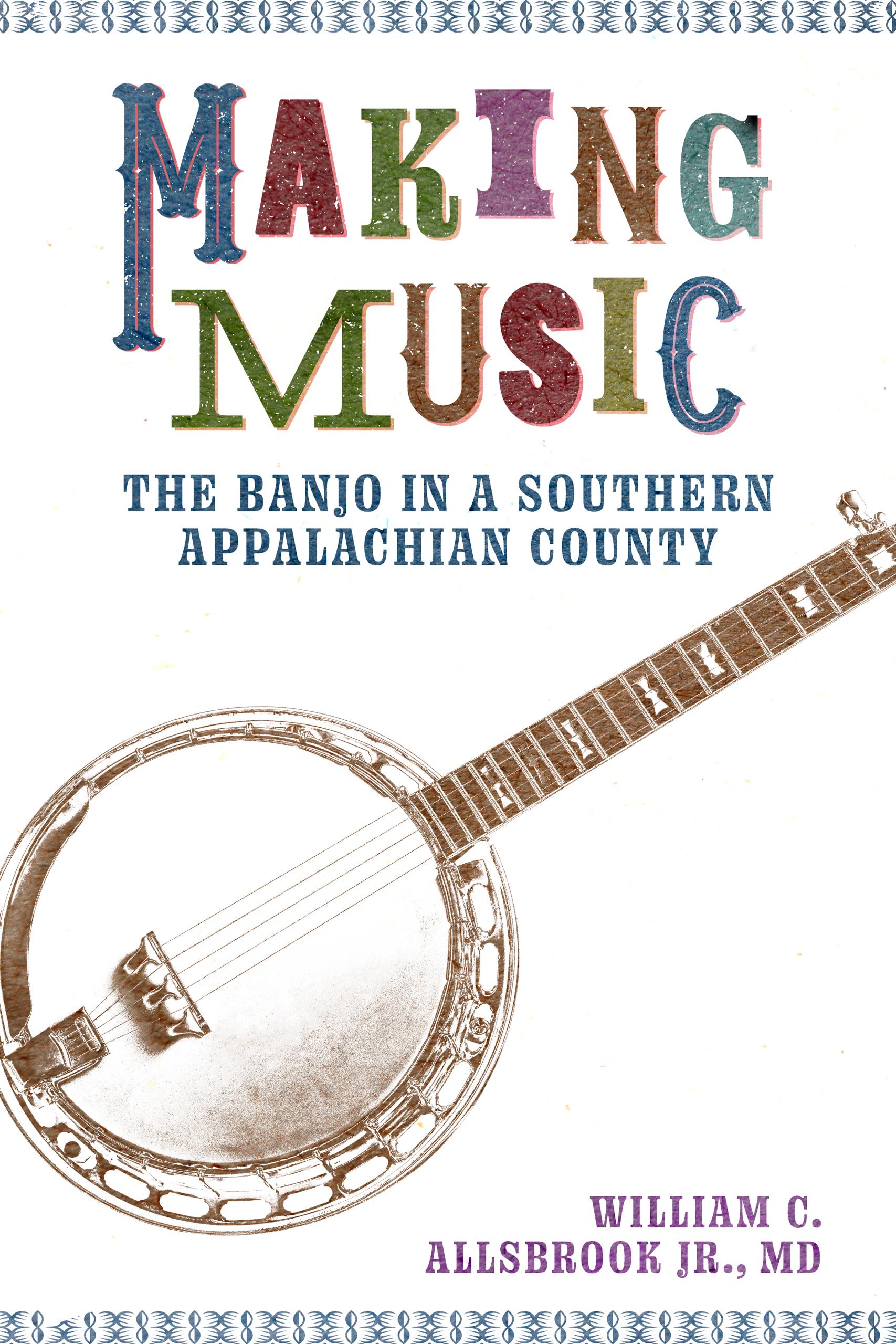
The banjo has been emblematic of the Southern Appalachian Mountains since the late twentieth century. Making Music: The Banjo in a Southern Appalachian County takes a close look at the instrument and banjo players in Haywood County, North Carolina. Author William C. Allsbrook Jr., MD, presents the oral histories of thirty-two banjo players, all but two of whom were born in Haywood County. These talented musicians recount, in their own words, their earliest memories of music, and of the banjo, as well as the appeal of the banjo. They also discuss learning to play the instrument, including what it “feels like” playing the banjo, many describing occasional “flow states.”
In the book, Allsbrook explores an in-home musical folkway that developed along the colonial frontier. By the mid-1800s, frontier expansion had ceased in Haywood County due to geographic barriers, but the in-home musical tradition, including the banjo, survived in largely isolated areas. Vestiges of that tradition remain to this day, although the region has undergone significant changes over the lifetimes of the musicians interviewed. As a result, the survival of the in-home tradition is not guaranteed. Readers are invited into the private lives of the banjo players and asked to consider the future of the banjo in the face of contemporary trends. The future will be shaped by how this remarkable mountain culture continues to adapt to these challenges. Still, this thriving community of banjo players represents the vibrant legacy of the banjo in Haywood County and the persistence of tradition in the twenty-first century.
The banjo has been emblematic of the Southern Appalachian Mountains since the late twentieth century. Making Music: The Banjo in a Southern Appalachian County takes a close look at the instrument and banjo players in Haywood County, North Carolina. Author William C. Allsbrook Jr., MD, presents the oral histories of thirty-two banjo players, all but two of whom were born in Haywood County. These talented musicians recount, in their own words, their earliest memories of music, and of the banjo, as well as the appeal of the banjo. They also discuss learning to play the instrument, including what it “feels like” playing the banjo, many describing occasional “flow states.”
In the book, Allsbrook explores an in-home musical folkway that developed along the colonial frontier. By the mid-1800s, frontier expansion had ceased in Haywood County due to geographic barriers, but the in-home musical tradition, including the banjo, survived in largely isolated areas. Vestiges of that tradition remain to this day, although the region has undergone significant changes over the lifetimes of the musicians interviewed. As a result, the survival of the in-home tradition is not guaranteed. Readers are invited into the private lives of the banjo players and asked to consider the future of the banjo in the face of contemporary trends. The future will be shaped by how this remarkable mountain culture continues to adapt to these challenges. Still, this thriving community of banjo players represents the vibrant legacy of the banjo in Haywood County and the persistence of tradition in the twenty-first century.
Betal nemt med kort, Klarna, Apple Pay eller Google Pay. Ikke tilfreds? Du har altid 14 dages fortrydelsesret. Læs mere i vores vilkår. Har du spørgsmål, så send os en mail på hello@memmo.org.
Memmo gør det nemmere at studere – uanset hvor du er i verden. Hos os samler du dine kursusbøger og smarte studieværktøjer ét sted: resuméer, quizzer, podcasts og flashcards. Og så er der Ted, din studieven, der svarer på alt, du undrer dig over. Over 50 000 studerende studerer allerede her – bygget til at hjælpe dig med at lære hurtigere og stresse mindre.
Du kan måske også lide
Køb bogen0