
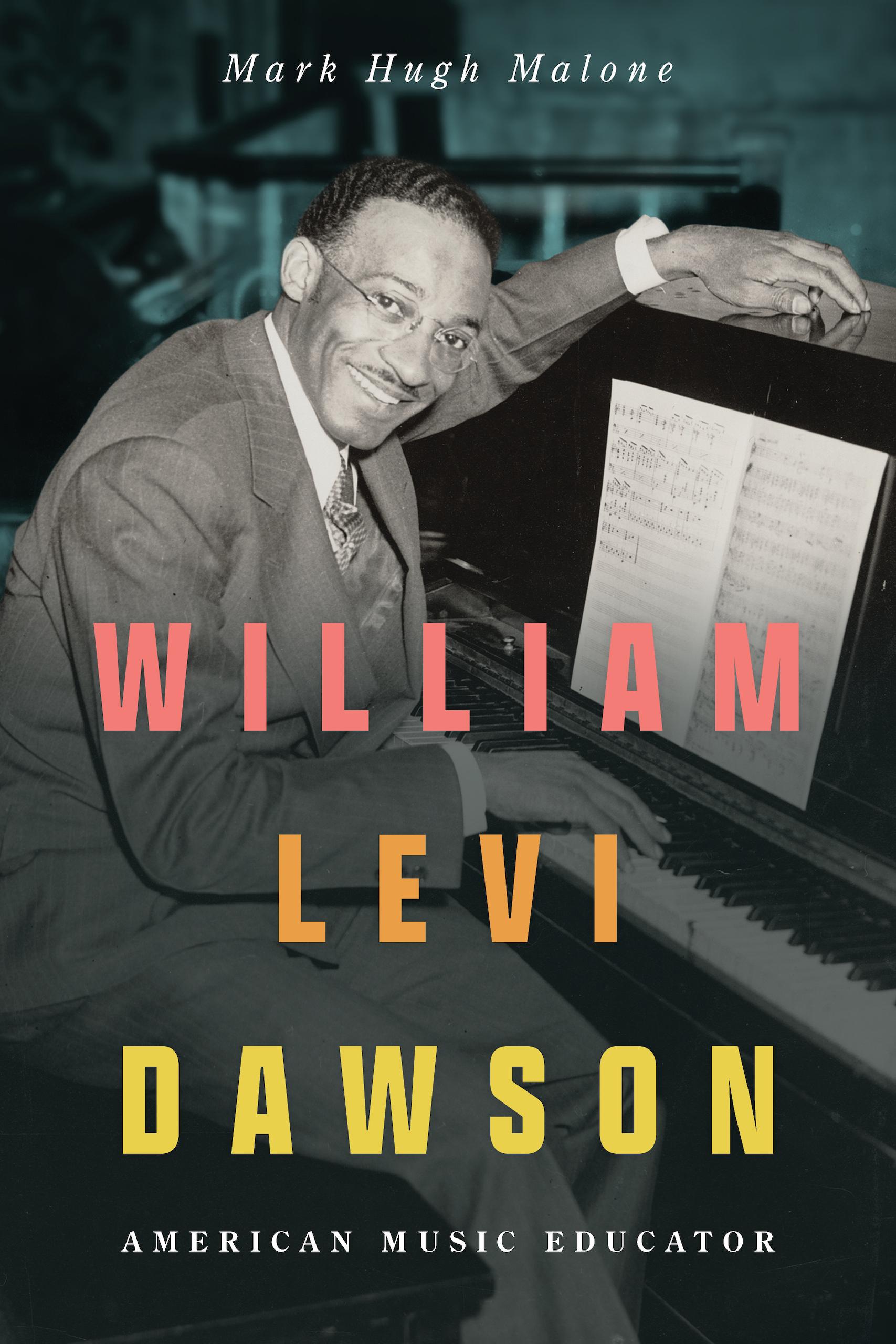
William Levi Dawson (1899–1990) overcame adversity and Jim Crow racism to become a nationally recognized composer, choral arranger, conductor, and professor of music. In William Levi Dawson: American Music Educator, Mark Hugh Malone tells the fascinating tale of Dawson’s early life, quest for education, rise to success at the Tuskegee Institute, achievement of national notoriety as a composer, and retirement years spent conducting choirs throughout the US and world.
From his days as a student at Tuskegee in the final years of Booker T. Washington’s presidency, Dawson continually pursued education in music, despite racial barriers to college admission. Returning to Tuskegee later in life, he became director of the School of Music. Under his direction, the Tuskegee Choir achieved national recognition by singing at Radio City Music Hall, presenting concerts for Presidents Herbert Hoover and Franklin D. Roosevelt, and performing on nationwide radio and television broadcasts.
Dawson’s Negro Folk Symphony, only the second extended musical work to be written by an African American, was premiered by Leopold Stokowski and the Philadelphia Orchestra in both Philadelphia and New York City. Dawson’s arrangements of spirituals, the original folk music of African Americans enslaved in America during the antebellum period, quickly became highly sought-after choral works. This biographical account of Dawson's life is narrated with a generous sprinkling of his personal memories and photographs.
From his days as a student at Tuskegee in the final years of Booker T. Washington’s presidency, Dawson continually pursued education in music, despite racial barriers to college admission. Returning to Tuskegee later in life, he became director of the School of Music. Under his direction, the Tuskegee Choir achieved national recognition by singing at Radio City Music Hall, presenting concerts for Presidents Herbert Hoover and Franklin D. Roosevelt, and performing on nationwide radio and television broadcasts.
Dawson’s Negro Folk Symphony, only the second extended musical work to be written by an African American, was premiered by Leopold Stokowski and the Philadelphia Orchestra in both Philadelphia and New York City. Dawson’s arrangements of spirituals, the original folk music of African Americans enslaved in America during the antebellum period, quickly became highly sought-after choral works. This biographical account of Dawson's life is narrated with a generous sprinkling of his personal memories and photographs.
Betal nemt med kort, Klarna, Apple Pay eller Google Pay. Ikke tilfreds? Du har altid 14 dages fortrydelsesret. Læs mere i vores vilkår. Har du spørgsmål, så send os en mail på hello@memmo.org.
Memmo gør det nemmere at studere – uanset hvor du er i verden. Hos os samler du dine kursusbøger og smarte studieværktøjer ét sted: resuméer, quizzer, podcasts og flashcards. Og så er der Ted, din studieven, der svarer på alt, du undrer dig over. Over 50 000 studerende studerer allerede her – bygget til at hjælpe dig med at lære hurtigere og stresse mindre.
Du kan måske også lide
Køb bogen0