
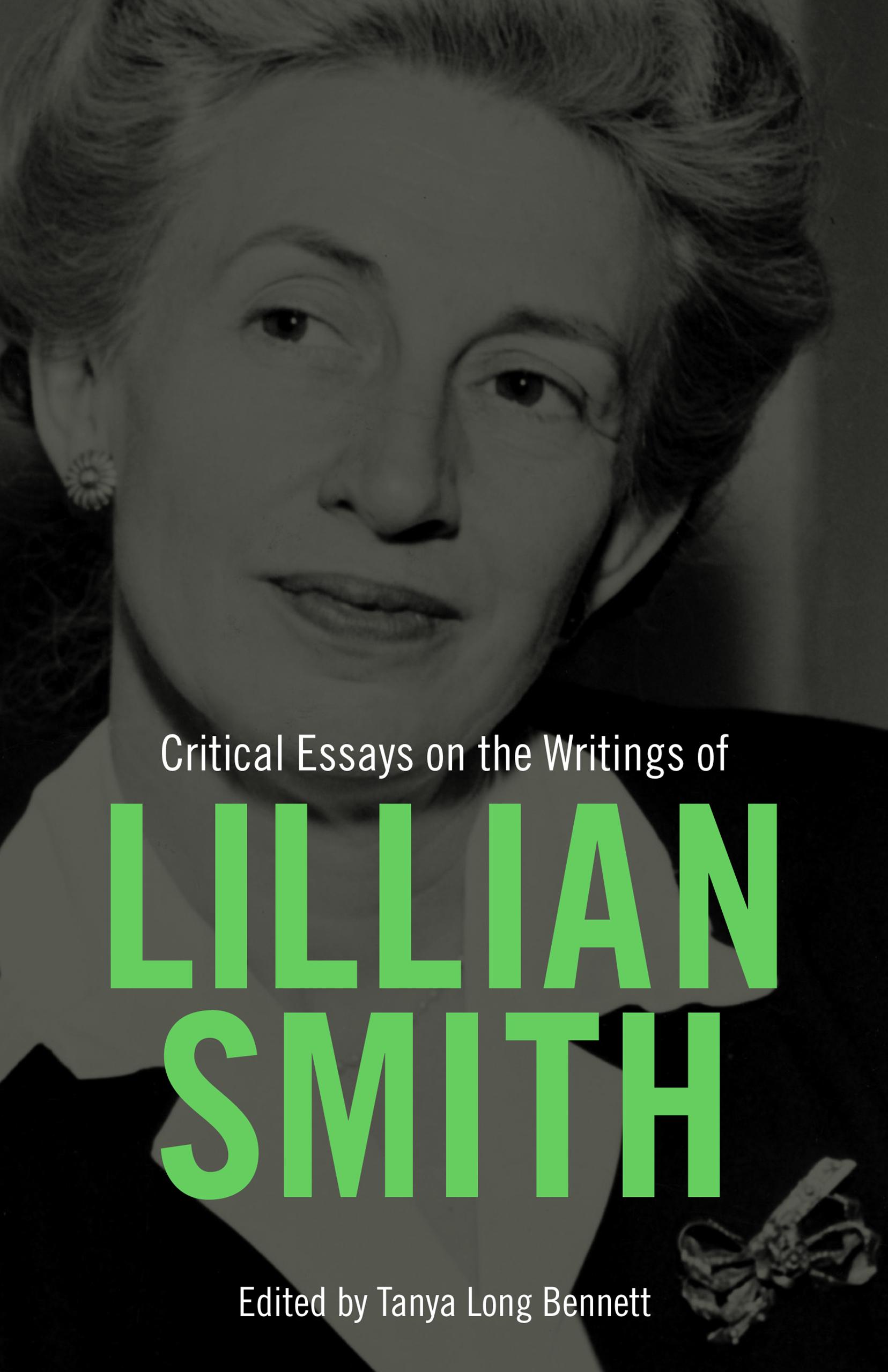
Contributions by Tanya Long Bennett, David Brauer, Cameron Williams Crawford, Emily Pierce Cummins, April Conley Kilinski, Justin Mellette, and Wendy Kurant Rollins
As a white woman of means living in segregated Georgia in the first half of the twentieth century, Lillian Smith (1897–1966) surprised readers with stories of mixed-race love affairs, mob attacks on “outsiders,” and young female campers exploring their sexuality.
Critical Essays on the Writings of Lillian Smith tracks the evolution of Smith from a young girls’ camp director into a courageous artist who could examine controversial topics frankly and critically while preserving a lifelong connection to the north Georgia mountains and people. She did not pull punches in her portrayals of the South and refused to obsess on an idealized past. Smith took seriously the artist’s role as she saw it—to lead readers toward a better understanding of themselves and a more fulfilling existence.
Smith’s perspective cut straight to the core of the neurotic behaviors she observed and participated in. To draw readers into her exploration of those behaviors, she created compelling stories, using carefully chosen literary techniques in powerful ways. With words as her medium, she drew maps of her fictionalized southern places, revealing literally and metaphorically society’s disfunctions. Through carefully crafted points of view, she offers readers an intimate glimpse into her own childhood as well as the psychological traumas that all southerners experience and help to perpetuate.
Comprised of seven essays by contemporary Smith scholars, this volume explores these fascinating aspects of Smith’s writings in an attempt to fill in the picture of this charismatic figure, whose work not only was influential in her time but also is profoundly relevant to ours.
As a white woman of means living in segregated Georgia in the first half of the twentieth century, Lillian Smith (1897–1966) surprised readers with stories of mixed-race love affairs, mob attacks on “outsiders,” and young female campers exploring their sexuality.
Critical Essays on the Writings of Lillian Smith tracks the evolution of Smith from a young girls’ camp director into a courageous artist who could examine controversial topics frankly and critically while preserving a lifelong connection to the north Georgia mountains and people. She did not pull punches in her portrayals of the South and refused to obsess on an idealized past. Smith took seriously the artist’s role as she saw it—to lead readers toward a better understanding of themselves and a more fulfilling existence.
Smith’s perspective cut straight to the core of the neurotic behaviors she observed and participated in. To draw readers into her exploration of those behaviors, she created compelling stories, using carefully chosen literary techniques in powerful ways. With words as her medium, she drew maps of her fictionalized southern places, revealing literally and metaphorically society’s disfunctions. Through carefully crafted points of view, she offers readers an intimate glimpse into her own childhood as well as the psychological traumas that all southerners experience and help to perpetuate.
Comprised of seven essays by contemporary Smith scholars, this volume explores these fascinating aspects of Smith’s writings in an attempt to fill in the picture of this charismatic figure, whose work not only was influential in her time but also is profoundly relevant to ours.
Betal nemt med kort, Klarna, Apple Pay eller Google Pay. Ikke tilfreds? Du har altid 14 dages fortrydelsesret. Læs mere i vores vilkår. Har du spørgsmål, så send os en mail på hello@memmo.org.
Memmo gør det nemmere at studere – uanset hvor du er i verden. Hos os samler du dine kursusbøger og smarte studieværktøjer ét sted: resuméer, quizzer, podcasts og flashcards. Og så er der Ted, din studieven, der svarer på alt, du undrer dig over. Over 50 000 studerende studerer allerede her – bygget til at hjælpe dig med at lære hurtigere og stresse mindre.
Du kan måske også lide
Køb bogen0