
Contributions by Whitney Jordan Adams, Wendy Atkins-Sayre, Jason Edward Black, Patricia G. Davis, Cassidy D. Ellis, Megan Fitzmaurice, Michael L. Forst, Jeremy R. Grossman, Cynthia P. King, Julia M. Medhurst, Ryan Neville-Shepard, Jonathan M. Smith, Ashli Quesinberry Stokes, Dave Tell, and Carolyn Walcott
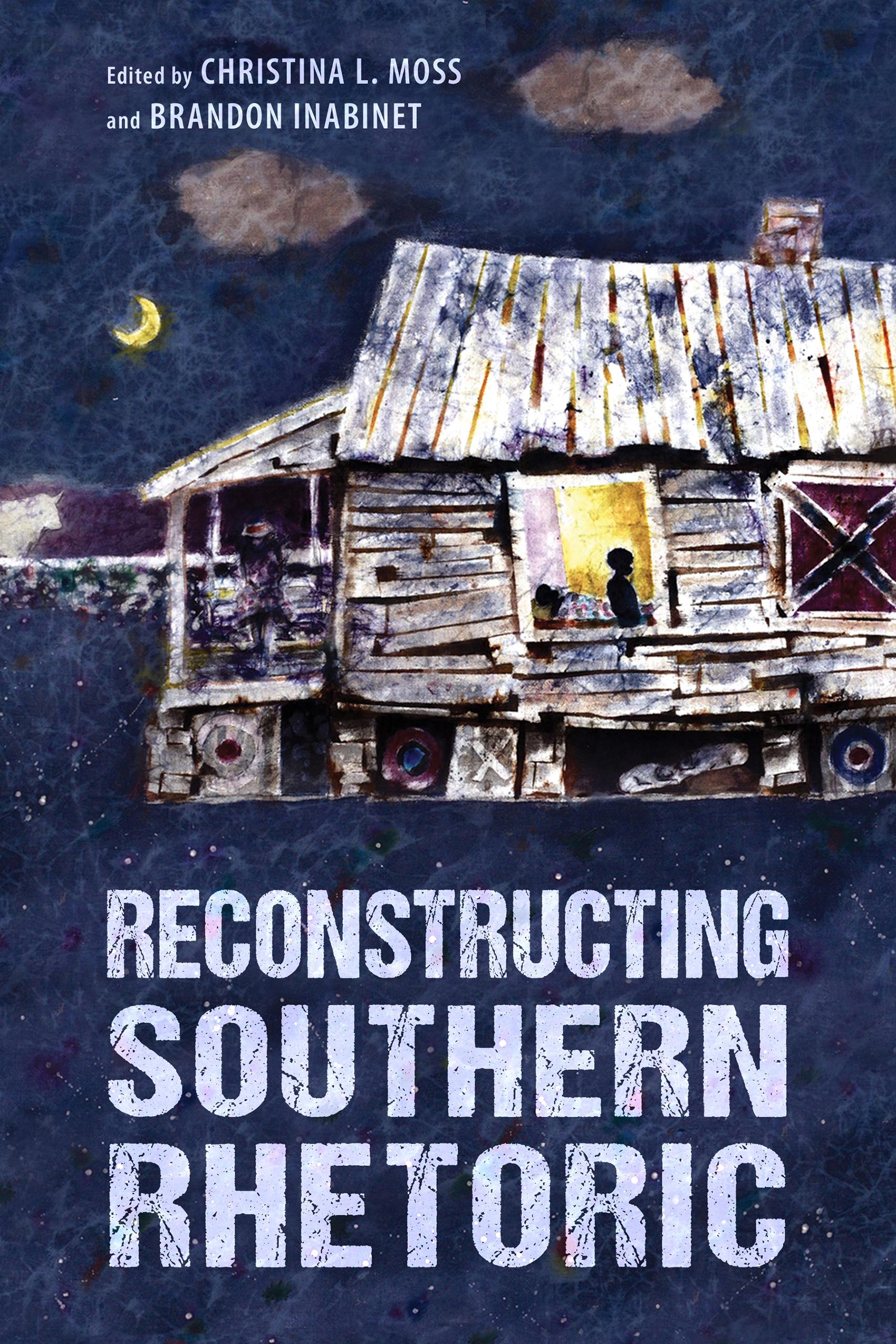
Southern rhetoric is communication’s oldest regional study. During its initial invention, the discipline was founded to justify the study of rhetoric in a field of white male scholars analyzing significant speeches by other white men, yielding research that added to myths of Lost Cause ideology and a uniquely oratorical culture. Reconstructing Southern Rhetoric takes on the much-overdue task of reconstructing the way southern rhetoric has been viewed and critiqued within the communication discipline. The collection reveals that southern rhetoric is fluid and migrates beyond geography, is constructed in weak counterpublic formation against legitimated power, creates a region that is not monolithic, and warrants activism and healing.
Contributors to the volume examine such topics as political campaign strategies, memorial and museum experiences, television and music influences, commemoration protests, and ethnographic experiences in the South. The essays cohesively illustrate southern identity as manifested in various contexts and ways, considering what it means to be a part of a region riddled with slavery, Jim Crow laws, and other expressions of racial and cultural hierarchy. Ultimately, the volume initiates a new conversation, asking what southern rhetorical critique would be like if it included the richness of the southern culture from which it came.
Southern rhetoric is communication’s oldest regional study. During its initial invention, the discipline was founded to justify the study of rhetoric in a field of white male scholars analyzing significant speeches by other white men, yielding research that added to myths of Lost Cause ideology and a uniquely oratorical culture. Reconstructing Southern Rhetoric takes on the much-overdue task of reconstructing the way southern rhetoric has been viewed and critiqued within the communication discipline. The collection reveals that southern rhetoric is fluid and migrates beyond geography, is constructed in weak counterpublic formation against legitimated power, creates a region that is not monolithic, and warrants activism and healing.
Contributors to the volume examine such topics as political campaign strategies, memorial and museum experiences, television and music influences, commemoration protests, and ethnographic experiences in the South. The essays cohesively illustrate southern identity as manifested in various contexts and ways, considering what it means to be a part of a region riddled with slavery, Jim Crow laws, and other expressions of racial and cultural hierarchy. Ultimately, the volume initiates a new conversation, asking what southern rhetorical critique would be like if it included the richness of the southern culture from which it came.
Betal nemt med kort, Klarna, Apple Pay eller Google Pay. Ikke tilfreds? Du har altid 14 dages fortrydelsesret. Læs mere i vores vilkår. Har du spørgsmål, så send os en mail på hello@memmo.org.
Memmo gør det nemmere at studere – uanset hvor du er i verden. Hos os samler du dine kursusbøger og smarte studieværktøjer ét sted: resuméer, quizzer, podcasts og flashcards. Og så er der Ted, din studieven, der svarer på alt, du undrer dig over. Over 50 000 studerende studerer allerede her – bygget til at hjælpe dig med at lære hurtigere og stresse mindre.
Du kan måske også lide
Køb bogen0