
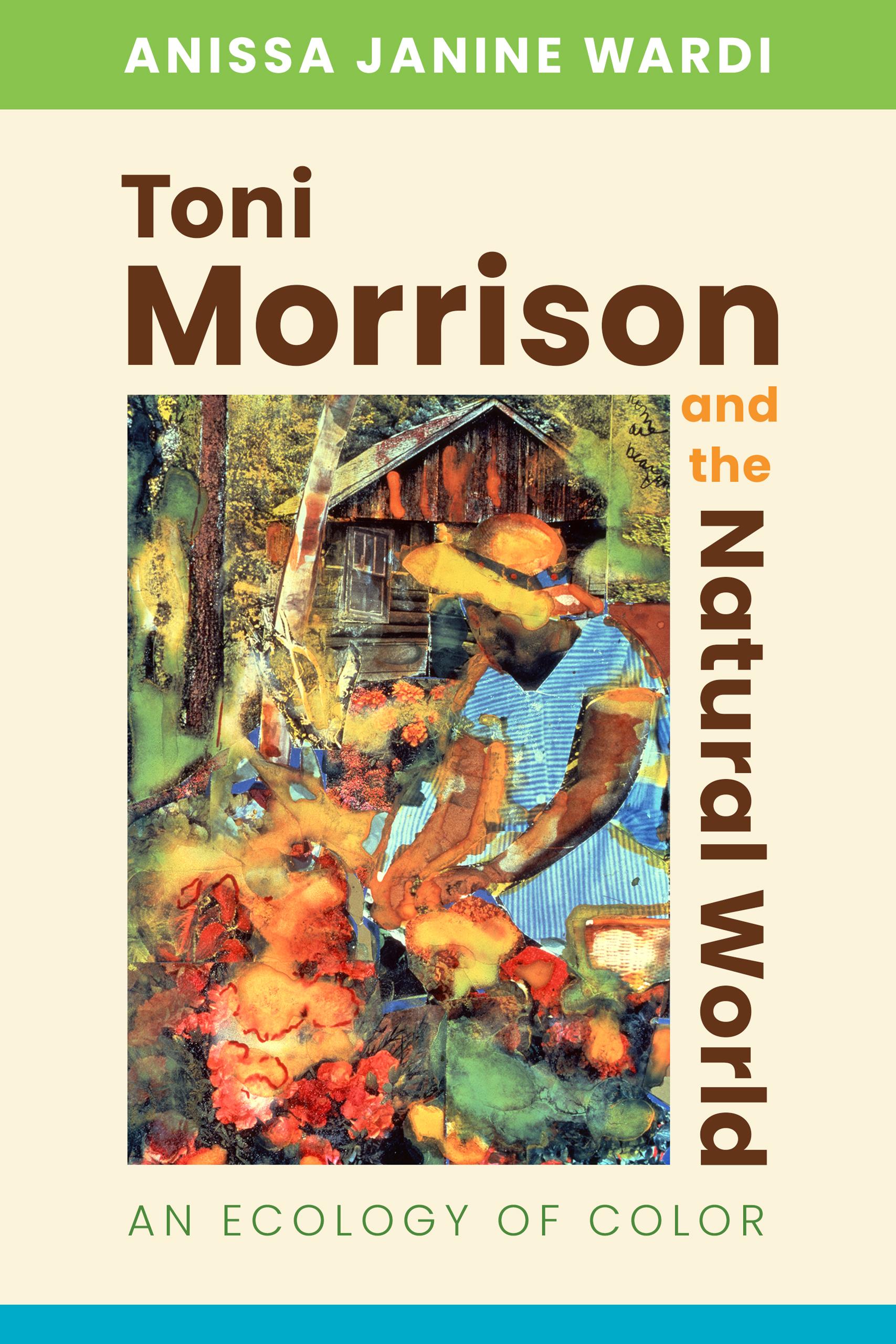
Winner of the Toni Morrison Society Book Prize for Best Single-Authored Book, 2019-2022
Critics have routinely excluded African American literature from ecocritical inquiry despite the fact that the literary tradition has, from its inception, proved to be steeped in environmental concerns that address elements of the natural world and relate nature to the transatlantic slave trade, plantation labor, and nationhood. Toni Morrison’s work is no exception. Toni Morrison and the Natural World: An Ecology of Color is the first full-length ecocritical investigation of the Nobel Laureate’s novels and brings to the fore an unequaled engagement between race and nature.
Morrison’s ecological consciousness holds that human geographies are enmeshed with nonhuman nature. It follows, then, that ecology, the branch of biology that studies how people relate to each other and their environment, is an apt framework for this book. The interrelationships and interactions between individuals and community, and between organisms and the biosphere, are central to this analysis. They highlight that the human and nonhuman are part of a larger ecosystem of interfacings and transformations. Toni Morrison and the Natural World is organized by color, examining soil (brown) in The Bluest Eye and Paradise; plant life (green) in Song of Solomon, Beloved, and Home; bodies of water (blue) in Tar Baby and Love; and fire (orange) in Sula and God Help the Child.
By providing a racially inflected reading of nature, Toni Morrison and the Natural World makes an important contribution to the field of environmental studies and provides a landmark for Morrison scholarship.
Critics have routinely excluded African American literature from ecocritical inquiry despite the fact that the literary tradition has, from its inception, proved to be steeped in environmental concerns that address elements of the natural world and relate nature to the transatlantic slave trade, plantation labor, and nationhood. Toni Morrison’s work is no exception. Toni Morrison and the Natural World: An Ecology of Color is the first full-length ecocritical investigation of the Nobel Laureate’s novels and brings to the fore an unequaled engagement between race and nature.
Morrison’s ecological consciousness holds that human geographies are enmeshed with nonhuman nature. It follows, then, that ecology, the branch of biology that studies how people relate to each other and their environment, is an apt framework for this book. The interrelationships and interactions between individuals and community, and between organisms and the biosphere, are central to this analysis. They highlight that the human and nonhuman are part of a larger ecosystem of interfacings and transformations. Toni Morrison and the Natural World is organized by color, examining soil (brown) in The Bluest Eye and Paradise; plant life (green) in Song of Solomon, Beloved, and Home; bodies of water (blue) in Tar Baby and Love; and fire (orange) in Sula and God Help the Child.
By providing a racially inflected reading of nature, Toni Morrison and the Natural World makes an important contribution to the field of environmental studies and provides a landmark for Morrison scholarship.
Betal nemt med kort, Klarna, Apple Pay eller Google Pay. Ikke tilfreds? Du har altid 14 dages fortrydelsesret. Læs mere i vores vilkår. Har du spørgsmål, så send os en mail på hello@memmo.org.
Memmo gør det nemmere at studere – uanset hvor du er i verden. Hos os samler du dine kursusbøger og smarte studieværktøjer ét sted: resuméer, quizzer, podcasts og flashcards. Og så er der Ted, din studieven, der svarer på alt, du undrer dig over. Over 50 000 studerende studerer allerede her – bygget til at hjælpe dig med at lære hurtigere og stresse mindre.
Du kan måske også lide
Køb bogen0