
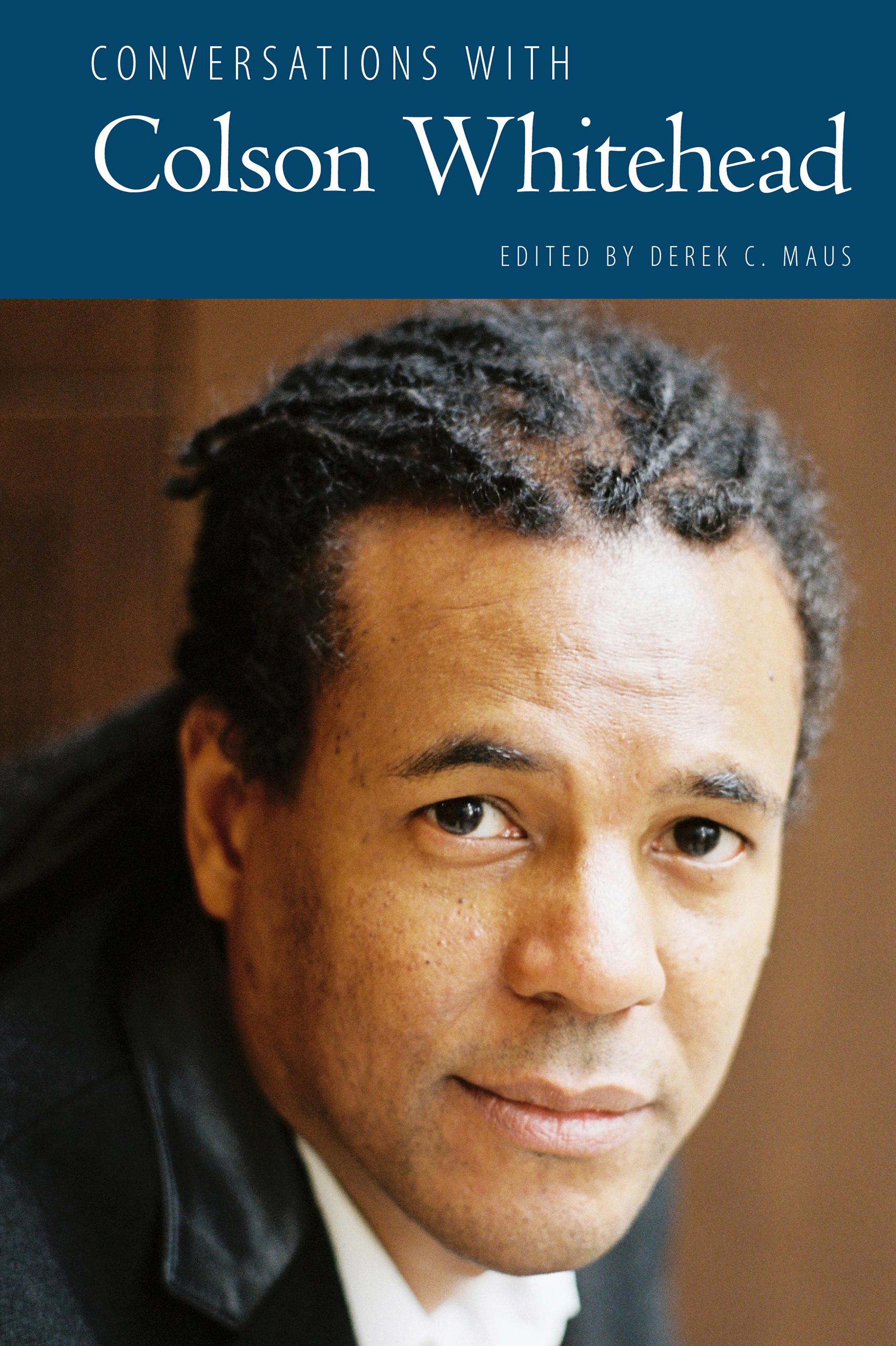
Since the publication of his first novel, The Intuitionist, in 1999, Colson Whitehead (b. 1969) has been considered an important new voice in American literature. His seven subsequent books have done little to contradict that initial assessment, especially after 2016’s The Underground Railroad spent many weeks at the top of bestseller lists and won numerous major literary awards, including the Pulitzer Prize.
Ranging from 2001 to 2016, the twenty-three interviews collected in Conversations with Colson Whitehead reveal the workings of one of America’s most idiosyncratic and most successful literary minds. Through these interviews, it is clear that none of this well-earned praise has gone to his head. If anything, he still seems inclined to present himself as an awkward misfit who writes about such offbeat subject matter as rival groups of elevator inspectors, the insufficiency of off-brand “flesh-colored” bandages, or a literalized alternate version of the Underground Railroad.
Whitehead speaks at length about matters related to his craft, including his varied literary and nonliterary influences, the particular methods of researching and writing that have proved valuable to telling his stories, and the ways in which he has managed the rollercoaster life of a professional writer. He also opens up about popular culture, particularly the unconventional blend of music, genre fiction, B movies, and comic books that he gleefully identifies as a passion that has persisted for him since his childhood.
Ranging from 2001 to 2016, the twenty-three interviews collected in Conversations with Colson Whitehead reveal the workings of one of America’s most idiosyncratic and most successful literary minds. Through these interviews, it is clear that none of this well-earned praise has gone to his head. If anything, he still seems inclined to present himself as an awkward misfit who writes about such offbeat subject matter as rival groups of elevator inspectors, the insufficiency of off-brand “flesh-colored” bandages, or a literalized alternate version of the Underground Railroad.
Whitehead speaks at length about matters related to his craft, including his varied literary and nonliterary influences, the particular methods of researching and writing that have proved valuable to telling his stories, and the ways in which he has managed the rollercoaster life of a professional writer. He also opens up about popular culture, particularly the unconventional blend of music, genre fiction, B movies, and comic books that he gleefully identifies as a passion that has persisted for him since his childhood.
Betal nemt med kort, Klarna, Apple Pay eller Google Pay. Ikke tilfreds? Du har altid 14 dages fortrydelsesret. Læs mere i vores vilkår. Har du spørgsmål, så send os en mail på hello@memmo.org.
Memmo gør det nemmere at studere – uanset hvor du er i verden. Hos os samler du dine kursusbøger og smarte studieværktøjer ét sted: resuméer, quizzer, podcasts og flashcards. Og så er der Ted, din studieven, der svarer på alt, du undrer dig over. Over 50 000 studerende studerer allerede her – bygget til at hjælpe dig med at lære hurtigere og stresse mindre.
Du kan måske også lide
Køb bogen0