
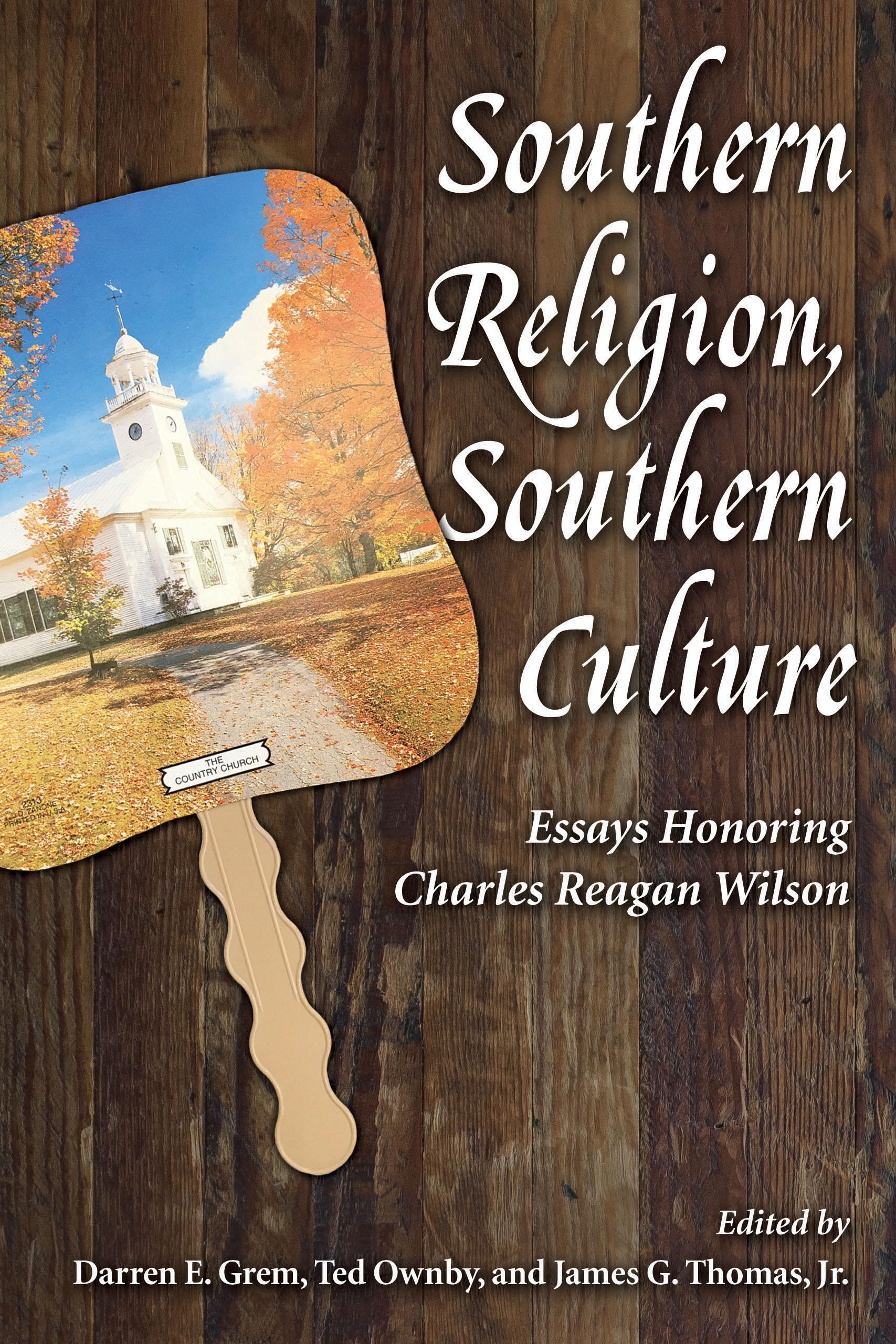
Contributions by Ryan L. Fletcher, Darren E. Grem, Paul Harvey, Alicia Jackson, Ted Ownby, Otis W. Pickett, Arthur Remillard, Chad Seales, and Randall J. Stephens
Over more than three decades of teaching at the University of Mississippi, Charles Reagan Wilson’s research and writing transformed southern studies in key ways.
This volume pays tribute to and extends Wilson’s seminal work on southern religion and culture. Using certain episodes and moments in southern religious history, the essays examine the place and power of religion in southern communities and society. It emulates Wilson’s model, featuring both majority and minority voices from archives and applying a variety of methods to explain the South’s religious diversity and how religion mattered in many arenas of private and public life, often with life-or-death stakes.
The volume first concentrates on churches and ministers, and then considers religious and cultural constructions outside formal religious bodies and institutions. It examines the faiths expressed via the region’s fields, streets, homes, public squares, recreational venues, roadsides, and stages. In doing so, this book shows that Wilson’s groundbreaking work on religion is an essential part of southern studies and crucial for fostering deeper understanding of the South’s complicated history and culture.
Over more than three decades of teaching at the University of Mississippi, Charles Reagan Wilson’s research and writing transformed southern studies in key ways.
This volume pays tribute to and extends Wilson’s seminal work on southern religion and culture. Using certain episodes and moments in southern religious history, the essays examine the place and power of religion in southern communities and society. It emulates Wilson’s model, featuring both majority and minority voices from archives and applying a variety of methods to explain the South’s religious diversity and how religion mattered in many arenas of private and public life, often with life-or-death stakes.
The volume first concentrates on churches and ministers, and then considers religious and cultural constructions outside formal religious bodies and institutions. It examines the faiths expressed via the region’s fields, streets, homes, public squares, recreational venues, roadsides, and stages. In doing so, this book shows that Wilson’s groundbreaking work on religion is an essential part of southern studies and crucial for fostering deeper understanding of the South’s complicated history and culture.
Betal nemt med kort, Klarna, Apple Pay eller Google Pay. Ikke tilfreds? Du har altid 14 dages fortrydelsesret. Læs mere i vores vilkår. Har du spørgsmål, så send os en mail på hello@memmo.org.
Memmo gør det nemmere at studere – uanset hvor du er i verden. Hos os samler du dine kursusbøger og smarte studieværktøjer ét sted: resuméer, quizzer, podcasts og flashcards. Og så er der Ted, din studieven, der svarer på alt, du undrer dig over. Over 50 000 studerende studerer allerede her – bygget til at hjælpe dig med at lære hurtigere og stresse mindre.
Du kan måske også lide
Køb bogen0