
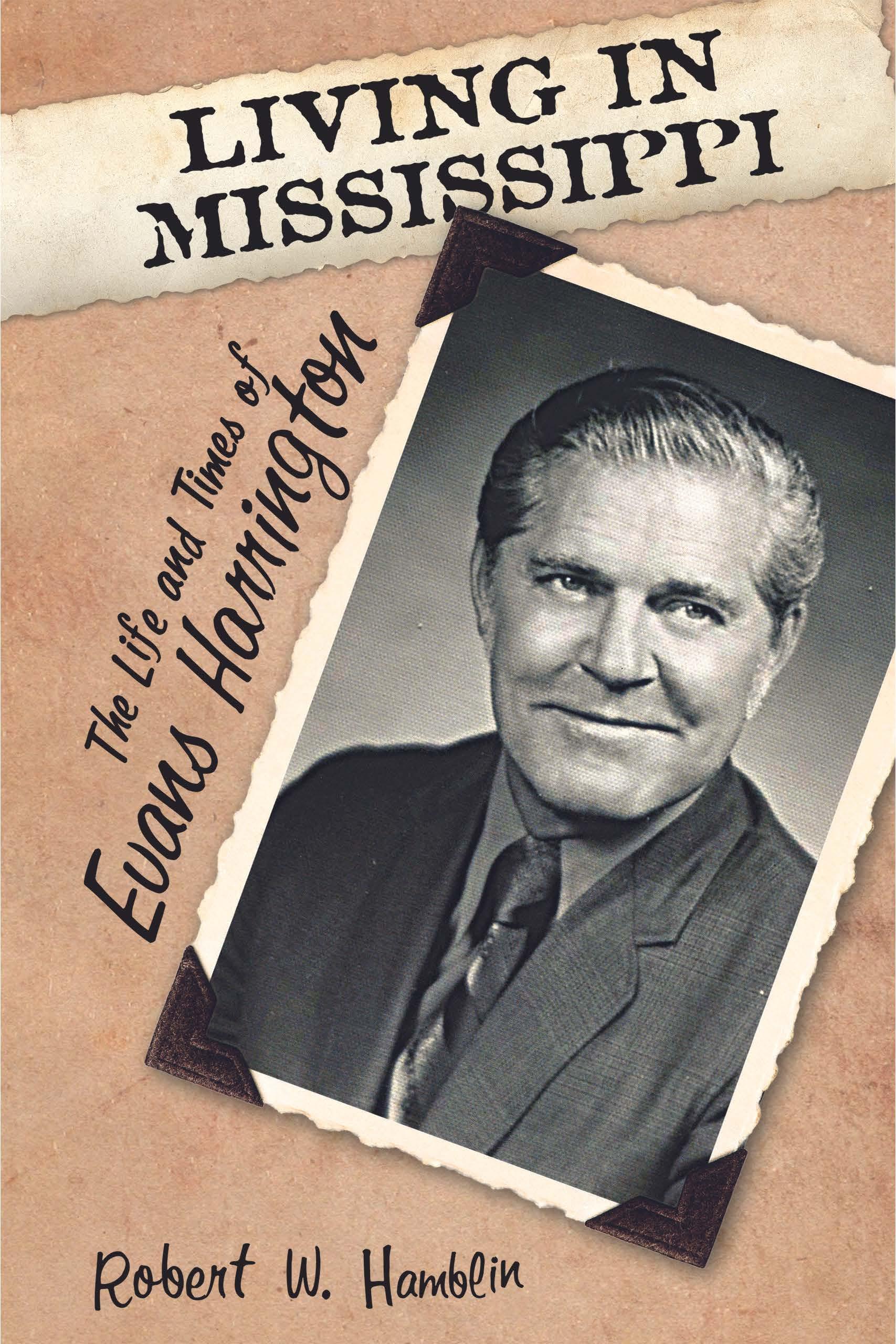
Robert W. Hamblin elevates Evans Harrington (1925–1997), as well as his remarkable achievements and writings, introducing his legacy to a new generation. Harrington continually found himself in conflict with the conservative, and often reactionary, institutions of his society—be they educational, political, or religious. Yet unlike many Mississippi liberals and moderates of his day—white as well as black—Harrington did not leave the state for a freer environment or better opportunities elsewhere. Except for his military service, he stayed in Mississippi his entire life, and his presence made a difference.
In 1962, Harrington openly supported the enrollment of James Meredith, the first African American student to attend Ole Miss. In 1965, he invited African American students from Tougaloo College to attend the Southern Literary Festival hosted by Ole Miss—the first meeting of that organization to be integrated. In 1972, as faculty sponsor of Images, the Ole Miss literary journal, he joined his student writers in a successful suit against the university's attempt to suppress an issue of the magazine that contained controversial content. In 1996, Harrington united with other ACLU members to support the cause of Lisa Herdahl, who had brought suit against the North Pontotoc, Mississippi, School Board for allowing sectarian prayers and devotionals in public school classrooms. Hamblin presents these and other examples, showing Harrington both as an exception to and as a representative figure of his time and place.
This biography also explores Harrington and his writings, which include “Living in Mississippi,” a personal essay about being a white liberal in segregated Mississippi; several short stories; a novel, The Prisoners; and three popular novels issued under the pseudonym Gilbert Terrell: Willa, Missy, and Lily, as well as a number of unpublished manuscripts. Harrington also coedited, with Ann J. Abadie, four volumes of papers presented at the annual Faulkner and Yoknapatawpha Conference, which he cofounded.
In 1962, Harrington openly supported the enrollment of James Meredith, the first African American student to attend Ole Miss. In 1965, he invited African American students from Tougaloo College to attend the Southern Literary Festival hosted by Ole Miss—the first meeting of that organization to be integrated. In 1972, as faculty sponsor of Images, the Ole Miss literary journal, he joined his student writers in a successful suit against the university's attempt to suppress an issue of the magazine that contained controversial content. In 1996, Harrington united with other ACLU members to support the cause of Lisa Herdahl, who had brought suit against the North Pontotoc, Mississippi, School Board for allowing sectarian prayers and devotionals in public school classrooms. Hamblin presents these and other examples, showing Harrington both as an exception to and as a representative figure of his time and place.
This biography also explores Harrington and his writings, which include “Living in Mississippi,” a personal essay about being a white liberal in segregated Mississippi; several short stories; a novel, The Prisoners; and three popular novels issued under the pseudonym Gilbert Terrell: Willa, Missy, and Lily, as well as a number of unpublished manuscripts. Harrington also coedited, with Ann J. Abadie, four volumes of papers presented at the annual Faulkner and Yoknapatawpha Conference, which he cofounded.
Betal nemt med kort, Klarna, Apple Pay eller Google Pay. Ikke tilfreds? Du har altid 14 dages fortrydelsesret. Læs mere i vores vilkår. Har du spørgsmål, så send os en mail på hello@memmo.org.
Memmo gør det nemmere at studere – uanset hvor du er i verden. Hos os samler du dine kursusbøger og smarte studieværktøjer ét sted: resuméer, quizzer, podcasts og flashcards. Og så er der Ted, din studieven, der svarer på alt, du undrer dig over. Over 50 000 studerende studerer allerede her – bygget til at hjælpe dig med at lære hurtigere og stresse mindre.
Du kan måske også lide
Køb bogen0