
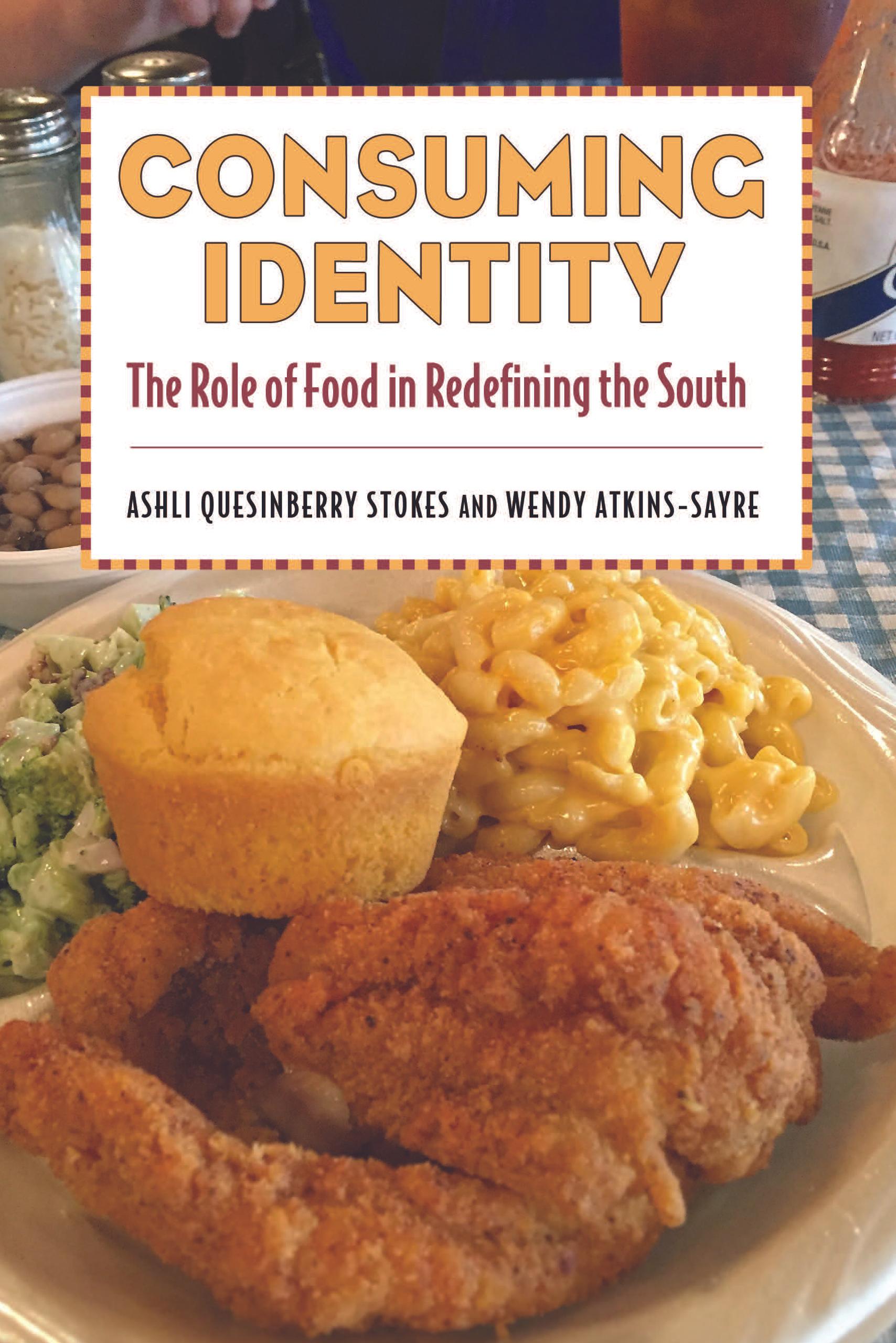
Southerners love to talk food, quickly revealing likes and dislikes, regional preferences, and their own delicious stories. Because the topic often crosses lines of race, class, gender, and region, food supplies a common fuel to launch discussion. Consuming Identity sifts through the self-definitions, allegiances, and bonds made possible and strengthened through the theme of southern foodways. The book focuses on the role food plays in building identities, accounting for the messages food sends about who we are, how we see ourselves, and how we see others. While many volumes examine southern food, this one is the first to focus on food’s rhetorical qualities and the effect that it can have on culture.
The volume examines southern food stories that speak to the identity of the region, explain how food helps to build identities, and explore how it enables cultural exchange. Food acts rhetorically, with what we choose to eat and serve sending distinct messages. It also serves a vital identity-building function, factoring heavily into our memories, narratives, and understanding of who we are. Finally, because food and the tales surrounding it are so important to southerners, the rhetoric of food offers a significant and meaningful way to open up dialogue in the region. By sharing and celebrating both foodways and the food itself, southerners are able to revel in shared histories and traditions. In this way individuals find a common language despite the divisions of race and class that continue to plague the South. The rich subject of southern fare serves up a significant starting point for understanding the powerful rhetorical potential of all food.
The volume examines southern food stories that speak to the identity of the region, explain how food helps to build identities, and explore how it enables cultural exchange. Food acts rhetorically, with what we choose to eat and serve sending distinct messages. It also serves a vital identity-building function, factoring heavily into our memories, narratives, and understanding of who we are. Finally, because food and the tales surrounding it are so important to southerners, the rhetoric of food offers a significant and meaningful way to open up dialogue in the region. By sharing and celebrating both foodways and the food itself, southerners are able to revel in shared histories and traditions. In this way individuals find a common language despite the divisions of race and class that continue to plague the South. The rich subject of southern fare serves up a significant starting point for understanding the powerful rhetorical potential of all food.
Betal nemt med kort, Klarna, Apple Pay eller Google Pay. Ikke tilfreds? Du har altid 14 dages fortrydelsesret. Læs mere i vores vilkår. Har du spørgsmål, så send os en mail på hello@memmo.org.
Memmo gør det nemmere at studere – uanset hvor du er i verden. Hos os samler du dine kursusbøger og smarte studieværktøjer ét sted: resuméer, quizzer, podcasts og flashcards. Og så er der Ted, din studieven, der svarer på alt, du undrer dig over. Over 50 000 studerende studerer allerede her – bygget til at hjælpe dig med at lære hurtigere og stresse mindre.
Du kan måske også lide
Køb bogen0