
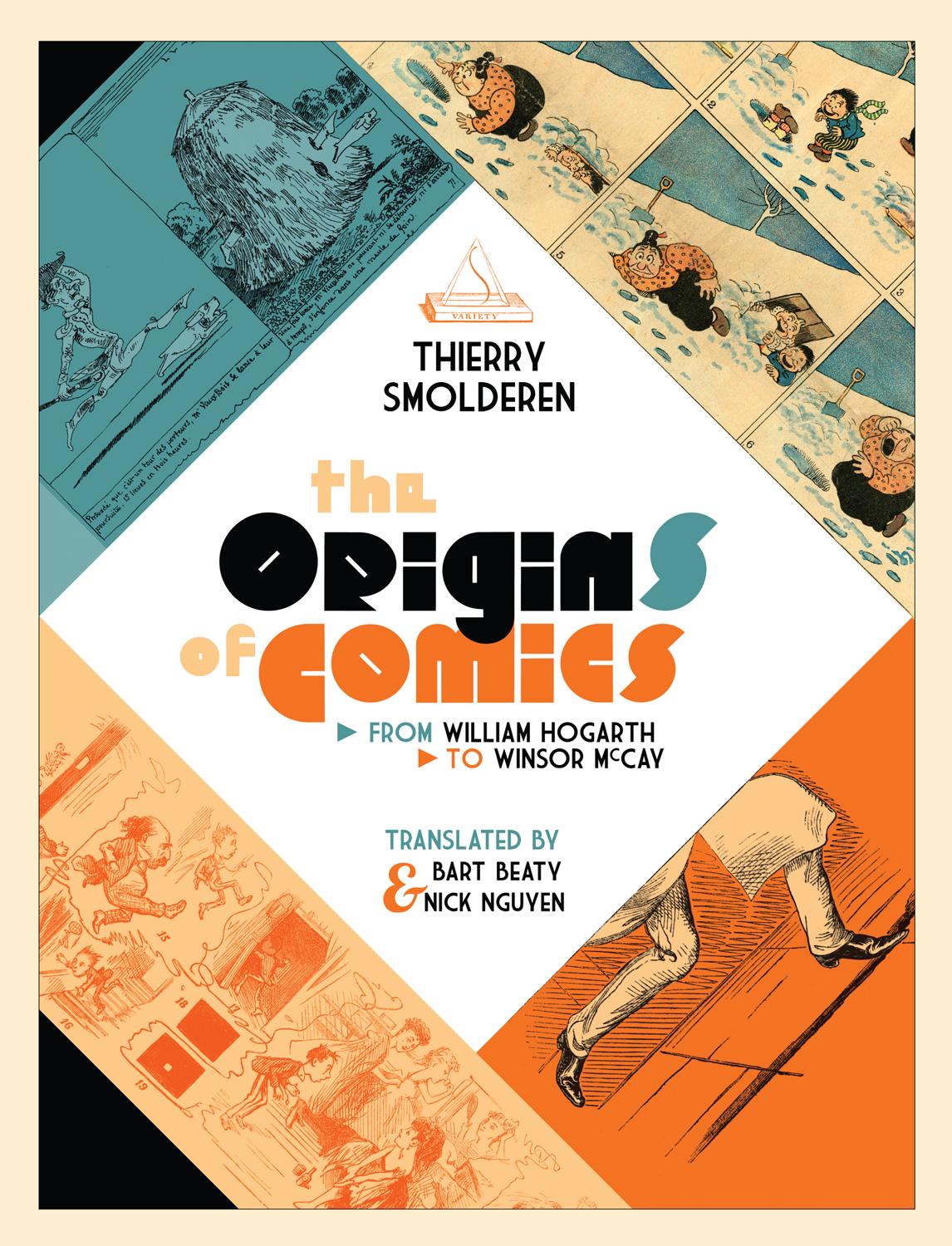
In The Origins of Comics: From William Hogarth to Winsor McCay, Thierry Smolderen presents a cultural landscape whose narrative differs in many ways from those presented by other historians of the comic strip. Rather than beginning his inquiry with the popularly accepted "sequential art" definition of the comic strip, Smolderen instead wishes to engage with the historical dimensions that inform that definition. His goal is to understand the processes that led to the twentieth-century comic strip, the highly recognizable species of picture stories that he sees crystallizing around 1900 in the United States.
Featuring close readings of the picture stories, caricatures, and humoristic illustrations of William Hogarth, Rodolphe Töpffer, Gustave Doré, and their many contemporaries, Smolderen establishes how these artists were immersed in a very old visual culture in which images—satirical images in particular—were deciphered in a way that was often described as hieroglyphical. Across eight chapters, he acutely points out how the effect of the printing press and the mass advent of audiovisual technologies (photography, audio recording, and cinema) at the end of the nineteenth century led to a new twentieth-century visual culture. In tracing this evolution, Smolderen distinguishes himself from other comics historians by following a methodology that explains the present state of the form of comics on the basis of its history, rather than presenting the history of the form on the basis of its present state. This study remaps the history of this influential art form.
Featuring close readings of the picture stories, caricatures, and humoristic illustrations of William Hogarth, Rodolphe Töpffer, Gustave Doré, and their many contemporaries, Smolderen establishes how these artists were immersed in a very old visual culture in which images—satirical images in particular—were deciphered in a way that was often described as hieroglyphical. Across eight chapters, he acutely points out how the effect of the printing press and the mass advent of audiovisual technologies (photography, audio recording, and cinema) at the end of the nineteenth century led to a new twentieth-century visual culture. In tracing this evolution, Smolderen distinguishes himself from other comics historians by following a methodology that explains the present state of the form of comics on the basis of its history, rather than presenting the history of the form on the basis of its present state. This study remaps the history of this influential art form.
Sider: 168
Kategori: Konst, Design & Fotografi
e-ISBN: 9781496801333
Forsendelsesvægt: 1.2 kg
Sendes inden for: 1-2 dage
Betal nemt med kort, Klarna, Apple Pay eller Google Pay. Ikke tilfreds? Du har altid 14 dages fortrydelsesret. Læs mere i vores vilkår. Har du spørgsmål, så send os en mail på hello@memmo.org.
Memmo gør det nemmere at studere – uanset hvor du er i verden. Hos os samler du dine kursusbøger og smarte studieværktøjer ét sted: resuméer, quizzer, podcasts og flashcards. Og så er der Ted, din studieven, der svarer på alt, du undrer dig over. Over 50 000 studerende studerer allerede her – bygget til at hjælpe dig med at lære hurtigere og stresse mindre.
Du kan måske også lide
Køb bogen0