
A 2022 Choice Reviews Outstanding Academic Title
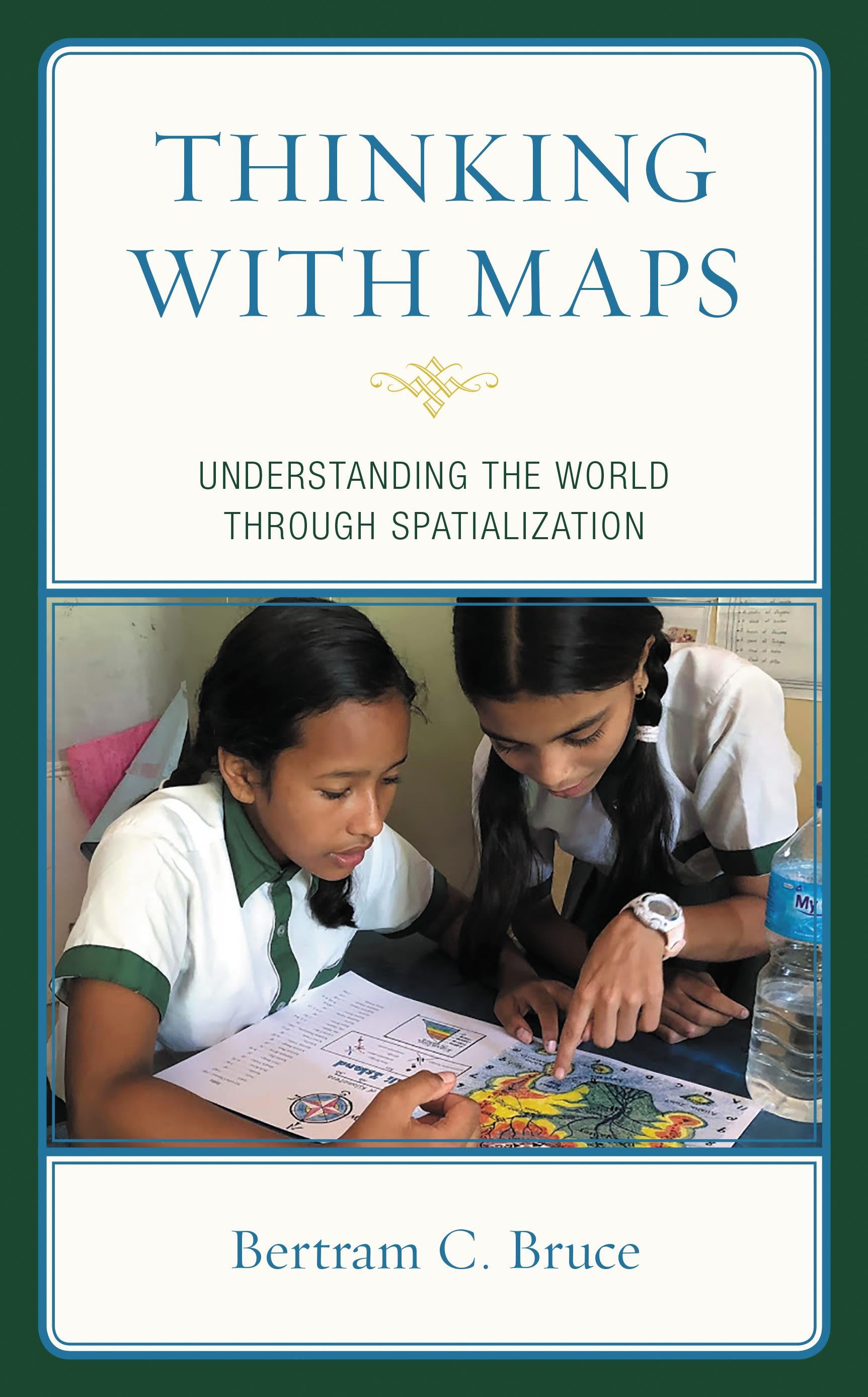
Spatial reasoning, which promises connection across wide areas, is itself ironically often not connected to other areas of knowledge. Thinking with Maps: Understanding the World through Spatialization addresses this problem, developing its argument through historical analysis and cross-disciplinary examples involving maps. The idea of maps here includes traditional cartographic representations of physical environments, but more broadly encompasses the wide variety of ways that visualizations are used across all disciplines to enable understanding, to generate new knowledge, and to effect change.
The idea of thinking with maps is also used broadly. Maps become, not simply one among many items to learn about, but indispensable tools for thinking across every field of inquiry, in a way similar to that of textual and mathematical language. Effective use of maps becomes a way to make knowledge, much as writing or mathematical exploration not only displays ideas, but also creates them. The book shows that maps for thinking are not just a means to improve geographic knowledge, as valuable as that may be. Instead, they provide mechanisms for rejuvenating our engagement with the world, helping us to become more capable of facing our global challenges.
This book has a broader aim: It is fundamentally about general principles of how we learn and know. It calls for a renewed focus on democratic education in which both the means and ends are democratic. Education, just as the political realm, should follow Dewey’s dictum that “democratic ends need democratic methods for their realization.” Maps and mapping are invaluable in that endeavor.
Spatial reasoning, which promises connection across wide areas, is itself ironically often not connected to other areas of knowledge. Thinking with Maps: Understanding the World through Spatialization addresses this problem, developing its argument through historical analysis and cross-disciplinary examples involving maps. The idea of maps here includes traditional cartographic representations of physical environments, but more broadly encompasses the wide variety of ways that visualizations are used across all disciplines to enable understanding, to generate new knowledge, and to effect change.
The idea of thinking with maps is also used broadly. Maps become, not simply one among many items to learn about, but indispensable tools for thinking across every field of inquiry, in a way similar to that of textual and mathematical language. Effective use of maps becomes a way to make knowledge, much as writing or mathematical exploration not only displays ideas, but also creates them. The book shows that maps for thinking are not just a means to improve geographic knowledge, as valuable as that may be. Instead, they provide mechanisms for rejuvenating our engagement with the world, helping us to become more capable of facing our global challenges.
This book has a broader aim: It is fundamentally about general principles of how we learn and know. It calls for a renewed focus on democratic education in which both the means and ends are democratic. Education, just as the political realm, should follow Dewey’s dictum that “democratic ends need democratic methods for their realization.” Maps and mapping are invaluable in that endeavor.
Betal nemt med kort, Klarna, Apple Pay eller Google Pay. Ikke tilfreds? Du har altid 14 dages fortrydelsesret. Læs mere i vores vilkår. Har du spørgsmål, så send os en mail på hello@memmo.org.
Memmo gør det nemmere at studere – uanset hvor du er i verden. Hos os samler du dine kursusbøger og smarte studieværktøjer ét sted: resuméer, quizzer, podcasts og flashcards. Og så er der Ted, din studieven, der svarer på alt, du undrer dig over. Over 50 000 studerende studerer allerede her – bygget til at hjælpe dig med at lære hurtigere og stresse mindre.