
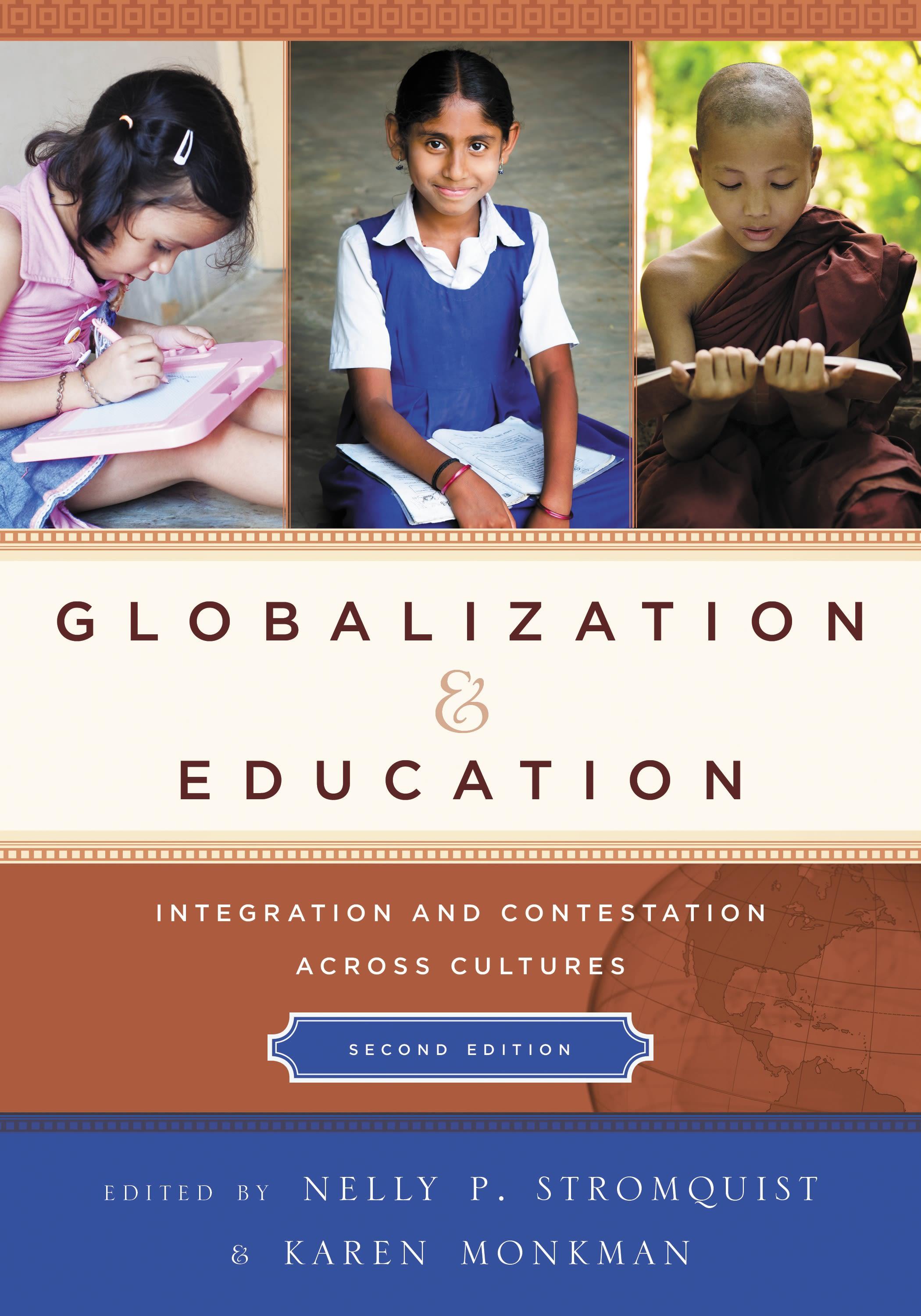
We offer in this book a collection of chapters that reflect a broad range of issues linking globalization to education in an accessible yet theoretically grounded and detailed form. The authors analyze phenomena on the global plane, in local spaces, and in the connections between the global and the local. New developments such as the growing impact of technology on education, the emergence of new policy actors, the growing expansion and segmentation of higher education, the salience of human rights, among others, are emerging as powerful agendas shaping all levels of education. In fundamental ways, the forces of globalization challenge the previous approaches and theories of national development. Recognizing the areas of convergence, dissonance, and conflict should help us grasp with greater clarity the implications of globalization for education and knowledge in the XXI century. The contributors to this book include both well-known scholars in the field of comparative education as well as young scholars. The chapters present a balanced geographical coverage in terms of authors and the countries/regions examined.
The second edition has been thoroughly updated throughout and contains seven new chapters. The expanding interest in the intersection of education and globalization has brought up several new topics, including: the salience of global education policies, notably EFA; the expansion and differentiation of higher education; the emphasis on work-related training; the increasing role of non-state actors such as the transnational corporations; and greater attention to human rights. Also in this new edition is a chapter on qualitative methodologies especially suitable to the understanding of the intersection of globalization and education.
The second edition has been thoroughly updated throughout and contains seven new chapters. The expanding interest in the intersection of education and globalization has brought up several new topics, including: the salience of global education policies, notably EFA; the expansion and differentiation of higher education; the emphasis on work-related training; the increasing role of non-state actors such as the transnational corporations; and greater attention to human rights. Also in this new edition is a chapter on qualitative methodologies especially suitable to the understanding of the intersection of globalization and education.
Betal nemt med kort, Klarna, Apple Pay eller Google Pay. Ikke tilfreds? Du har altid 14 dages fortrydelsesret. Læs mere i vores vilkår. Har du spørgsmål, så send os en mail på hello@memmo.org.
Memmo gør det nemmere at studere – uanset hvor du er i verden. Hos os samler du dine kursusbøger og smarte studieværktøjer ét sted: resuméer, quizzer, podcasts og flashcards. Og så er der Ted, din studieven, der svarer på alt, du undrer dig over. Over 50 000 studerende studerer allerede her – bygget til at hjælpe dig med at lære hurtigere og stresse mindre.