
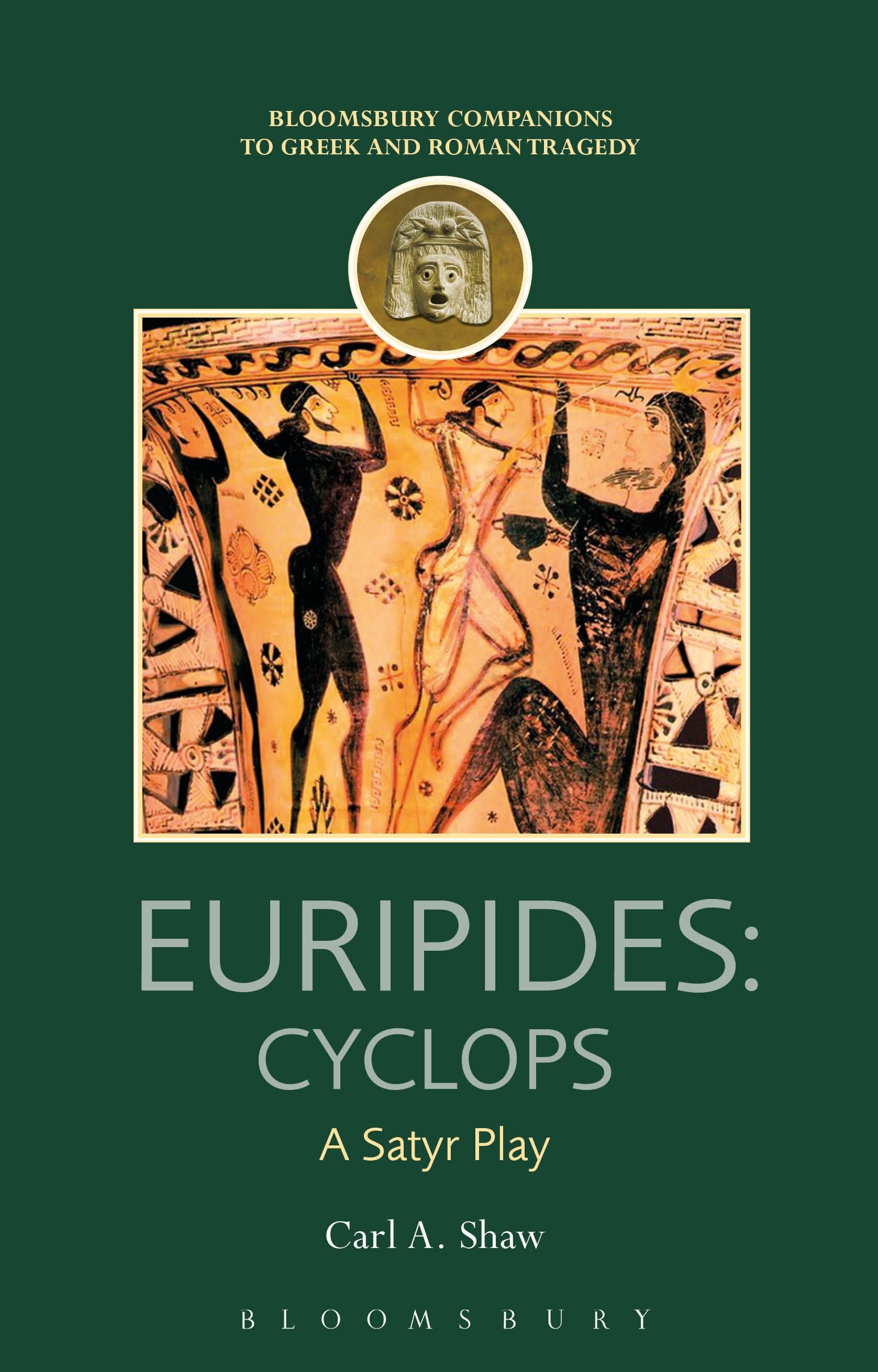
With its ribald chorus of ithyphallic, half-man / half-horse creatures, satyr drama was a peculiar part of the Athenian theatrical experience. Performed three times each year after a trilogy of tragedies, it was an integral part of the 5th- and 4th-century City Dionysia, a large festival in honour of the god Dionysus. Euripides: Cyclops is the first book-length study of this fascinating genre's only complete, extant play, a theatrical version of Odysseus' encounter with the monster Polyphemus.
Shaw begins with a look at the history of the genre, following its development from early 6th-century religious processions up to the Hellenistic era. He then offers a comprehensive analysis of the Cyclops' plot and performance, using the text (alongside ancient literary fragments and visual evidence) to determine the original viewing experience: the stage, masks, costumes, actions and emotions. A detailed examination of the text reveals that Euripides associates and distinguishes his version of the story from previous iterations of the myth, especially book nine of Homer's Odyssey. Euripides handles many of the same themes as his predecessors, but he updates the Cyclops for the Athenian stage, adapting his work to reflect and comment upon contemporary religious, philosophical and literary-musical trends.
Shaw begins with a look at the history of the genre, following its development from early 6th-century religious processions up to the Hellenistic era. He then offers a comprehensive analysis of the Cyclops' plot and performance, using the text (alongside ancient literary fragments and visual evidence) to determine the original viewing experience: the stage, masks, costumes, actions and emotions. A detailed examination of the text reveals that Euripides associates and distinguishes his version of the story from previous iterations of the myth, especially book nine of Homer's Odyssey. Euripides handles many of the same themes as his predecessors, but he updates the Cyclops for the Athenian stage, adapting his work to reflect and comment upon contemporary religious, philosophical and literary-musical trends.
Betal nemt med kort, Klarna, Apple Pay eller Google Pay. Ikke tilfreds? Du har altid 14 dages fortrydelsesret. Læs mere i vores vilkår. Har du spørgsmål, så send os en mail på hello@memmo.org.
Memmo gør det nemmere at studere – uanset hvor du er i verden. Hos os samler du dine kursusbøger og smarte studieværktøjer ét sted: resuméer, quizzer, podcasts og flashcards. Og så er der Ted, din studieven, der svarer på alt, du undrer dig over. Over 50 000 studerende studerer allerede her – bygget til at hjælpe dig med at lære hurtigere og stresse mindre.