
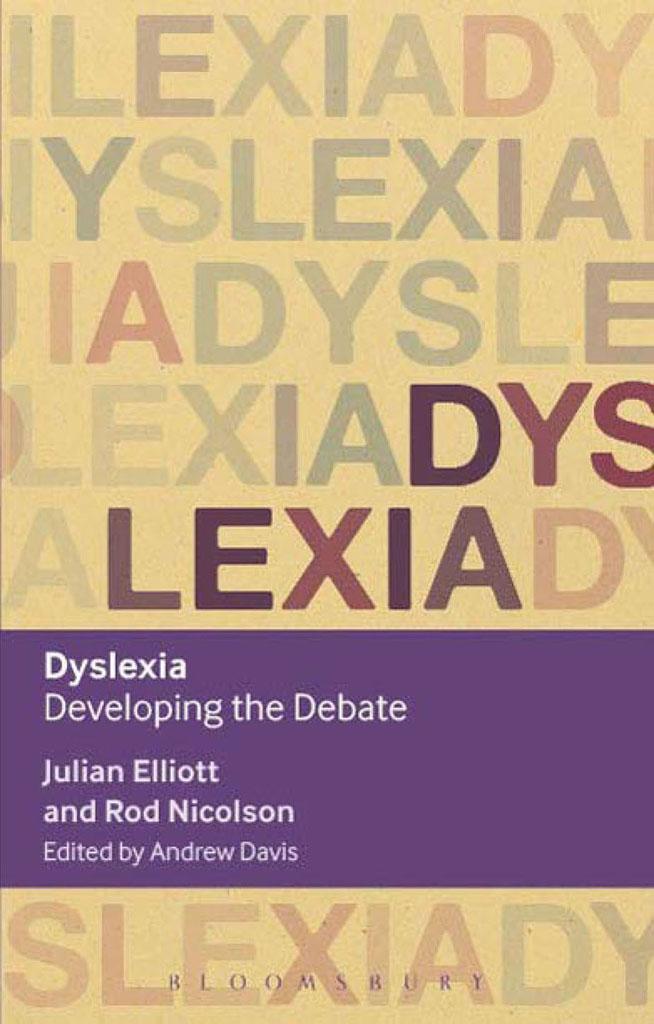
Dyslexia is often presented as a clearly delineated condition that can be diagnosed on the basis of appropriate cognitive tests with corresponding forms on intervention. However, this approachable text explores the issues behind this assertion in bringing together leading figures in the field to debate dyslexia.
Julian Elliott shows that understandings and usage of the dyslexia label vary substantially with little consensus or agreement and in putting forward his critique draws upon research in several disciplinary fields to demonstrate the irrationality of these arguments. Roderick I. Nicolson demonstrates that current approaches to understanding, identification and support of dyslexia are catastrophically flawed in terms of their failure to consider the developmental nature of dyslexia. He develops two themes: first that the underlying cause of dyslexia is 'delayed neural commitment' for skills and neural circuits, and second that the cause of the reading disability is the introduction of formal instruction before the dyslexic child's neural circuits for executive function are sufficiently developed. He argues that a more effective and cost-effective approach to identification and support involves 'assessment for dyslexia' rather than 'of dyslexia'. Elliott and Nicolson respond to the points each other raise before Andrew Davis investigates how far the key claims of Elliott and Nicolson can withstand close conceptual investigation, and explores the inherent limitations of scientific research on this topic, given the value and conceptual issues concerned.
Julian Elliott shows that understandings and usage of the dyslexia label vary substantially with little consensus or agreement and in putting forward his critique draws upon research in several disciplinary fields to demonstrate the irrationality of these arguments. Roderick I. Nicolson demonstrates that current approaches to understanding, identification and support of dyslexia are catastrophically flawed in terms of their failure to consider the developmental nature of dyslexia. He develops two themes: first that the underlying cause of dyslexia is 'delayed neural commitment' for skills and neural circuits, and second that the cause of the reading disability is the introduction of formal instruction before the dyslexic child's neural circuits for executive function are sufficiently developed. He argues that a more effective and cost-effective approach to identification and support involves 'assessment for dyslexia' rather than 'of dyslexia'. Elliott and Nicolson respond to the points each other raise before Andrew Davis investigates how far the key claims of Elliott and Nicolson can withstand close conceptual investigation, and explores the inherent limitations of scientific research on this topic, given the value and conceptual issues concerned.
Betal nemt med kort, Klarna, Apple Pay eller Google Pay. Ikke tilfreds? Du har altid 14 dages fortrydelsesret. Læs mere i vores vilkår. Har du spørgsmål, så send os en mail på hello@memmo.org.
Memmo gør det nemmere at studere – uanset hvor du er i verden. Hos os samler du dine kursusbøger og smarte studieværktøjer ét sted: resuméer, quizzer, podcasts og flashcards. Og så er der Ted, din studieven, der svarer på alt, du undrer dig over. Over 50 000 studerende studerer allerede her – bygget til at hjælpe dig med at lære hurtigere og stresse mindre.