
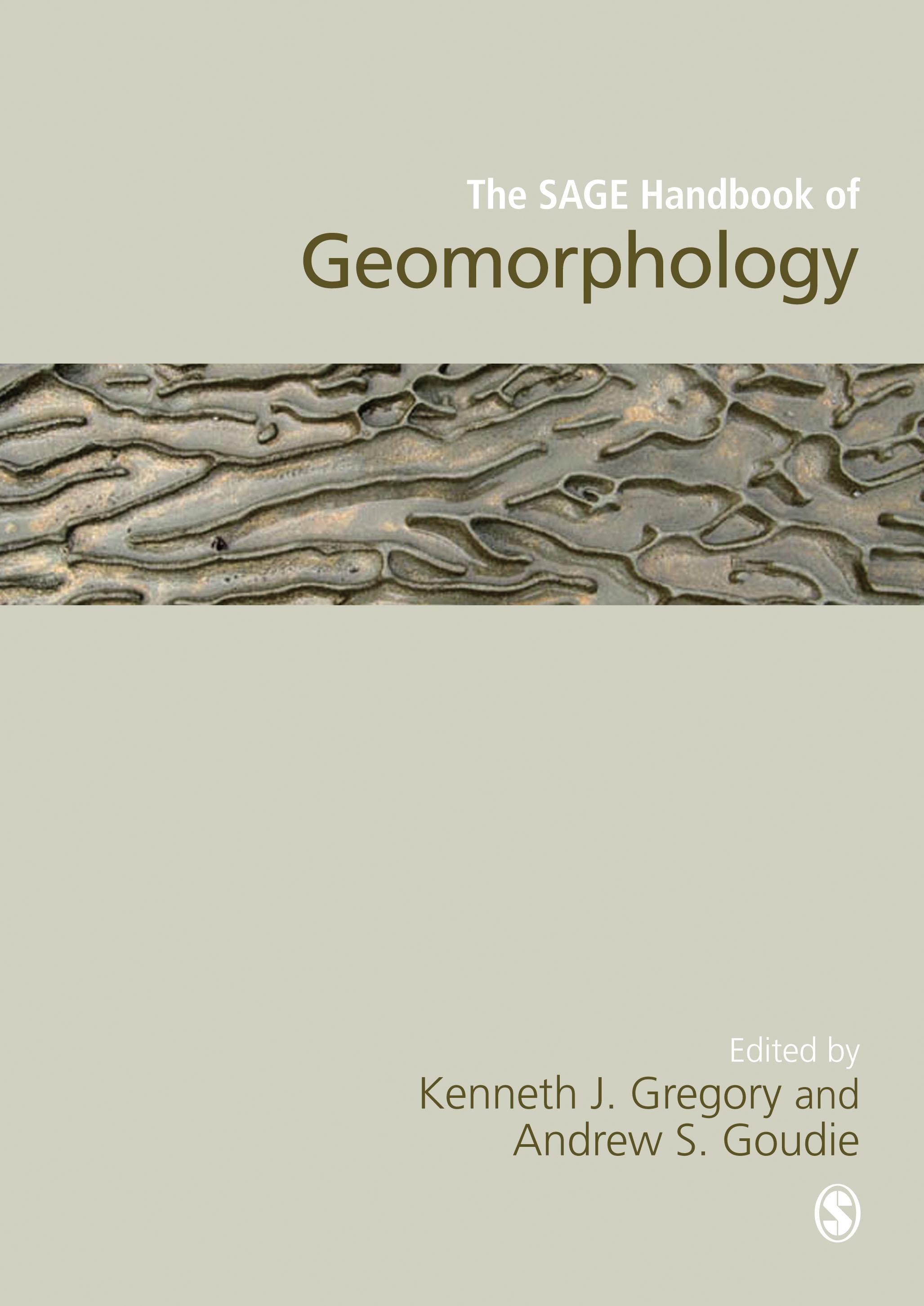
Organized into five substantive sections, the Handbook is an overview of:
• Foundations and Relevance: including the nature and scope of geomorphology; the origins and development of geomorphology; the role and character of theory in geomorphology; geomorphology and environmental management; and geomorphology and society
• Techniques and Approaches: including observations and experiments; geomorphological mapping; the significance of models; process and form; dating surfaces and sediment; remote sensing in geomorphology; GIS in geomorphology; biogeomorphology; human activity
• Process and Environment: including the evolution of regolith; weathering; fluids, flows and fluxes; sediment transport and deposition; hill slopes; riverine environments; glacial geomorphology; periglacial environments; coastal environments; aeolian environments; tropical environments; karst and karst processes
• Environmental Change: including landscape evolution and tectonics; interpreting quaternary environments; environmental change; disturbance and responses to geomorphic systems
• Conclusion: including challenges and perspectives; and a concluding review
The Handbook has contributions from 48 international authors and was initially organized by the International Association of Geomorphologists. This will be a much-used and much-cited reference for researchers in Geomorphology, Physical Geography and the Environmental Sciences.
Betal nemt med kort, Klarna, Apple Pay eller Google Pay. Ikke tilfreds? Du har altid 14 dages fortrydelsesret. Læs mere i vores vilkår. Har du spørgsmål, så send os en mail på hello@memmo.org.
Memmo gør det nemmere at studere – uanset hvor du er i verden. Hos os samler du dine kursusbøger og smarte studieværktøjer ét sted: resuméer, quizzer, podcasts og flashcards. Og så er der Ted, din studieven, der svarer på alt, du undrer dig over. Over 50 000 studerende studerer allerede her – bygget til at hjælpe dig med at lære hurtigere og stresse mindre.