
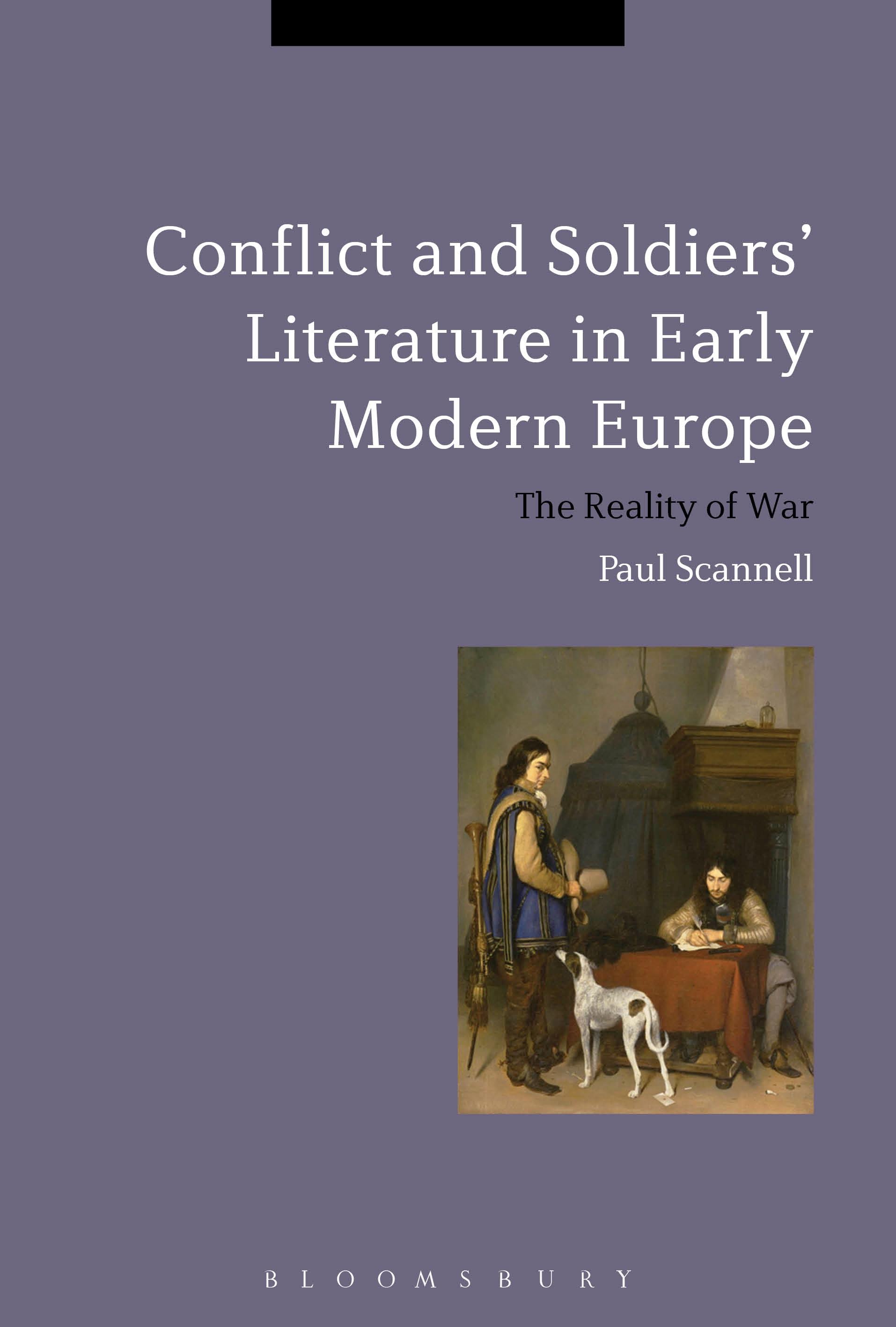
In Conflict and Soldiers' Literature in Early Modern Europe, Paul Scannell analyses the late 16th-century and early 17th-century literature of warfare through the published works of English, Welsh and Scottish soldiers. The book explores the dramatic increase in printed material on many aspects of warfare; the diversity of authors, the adaptation of existing writing traditions and the growing public interest in military affairs.
There is an extensive discussion on the categorisation of soldiers, which argues that soldiers' works are under-used evidence of the developing professionalism among military leaders at various levels. Through analysis of autobiographical material, the thought process behind an individual's engagement with an army is investigated, shedding light on the relevance of significant personal factors such as religious belief and the concept of loyalty. The narratives of soldiers reveal the finer details of their experience, an enquiry that greatly assists in understanding the formidable difficulties that were faced by individuals charged with both administering an army and confronting an enemy.
This book provides a reassessment of early modern warfare by viewing it from the perspective of those who experienced it directly. Paul Scannell highlights how various types of soldier viewed their commitment to war, while also considering the impact of published early modern material on domestic military capability - the 'art of war'.
There is an extensive discussion on the categorisation of soldiers, which argues that soldiers' works are under-used evidence of the developing professionalism among military leaders at various levels. Through analysis of autobiographical material, the thought process behind an individual's engagement with an army is investigated, shedding light on the relevance of significant personal factors such as religious belief and the concept of loyalty. The narratives of soldiers reveal the finer details of their experience, an enquiry that greatly assists in understanding the formidable difficulties that were faced by individuals charged with both administering an army and confronting an enemy.
This book provides a reassessment of early modern warfare by viewing it from the perspective of those who experienced it directly. Paul Scannell highlights how various types of soldier viewed their commitment to war, while also considering the impact of published early modern material on domestic military capability - the 'art of war'.
Betal nemt med kort, Klarna, Apple Pay eller Google Pay. Ikke tilfreds? Du har altid 14 dages fortrydelsesret. Læs mere i vores vilkår. Har du spørgsmål, så send os en mail på hello@memmo.org.
Memmo gør det nemmere at studere – uanset hvor du er i verden. Hos os samler du dine kursusbøger og smarte studieværktøjer ét sted: resuméer, quizzer, podcasts og flashcards. Og så er der Ted, din studieven, der svarer på alt, du undrer dig over. Over 50 000 studerende studerer allerede her – bygget til at hjælpe dig med at lære hurtigere og stresse mindre.