
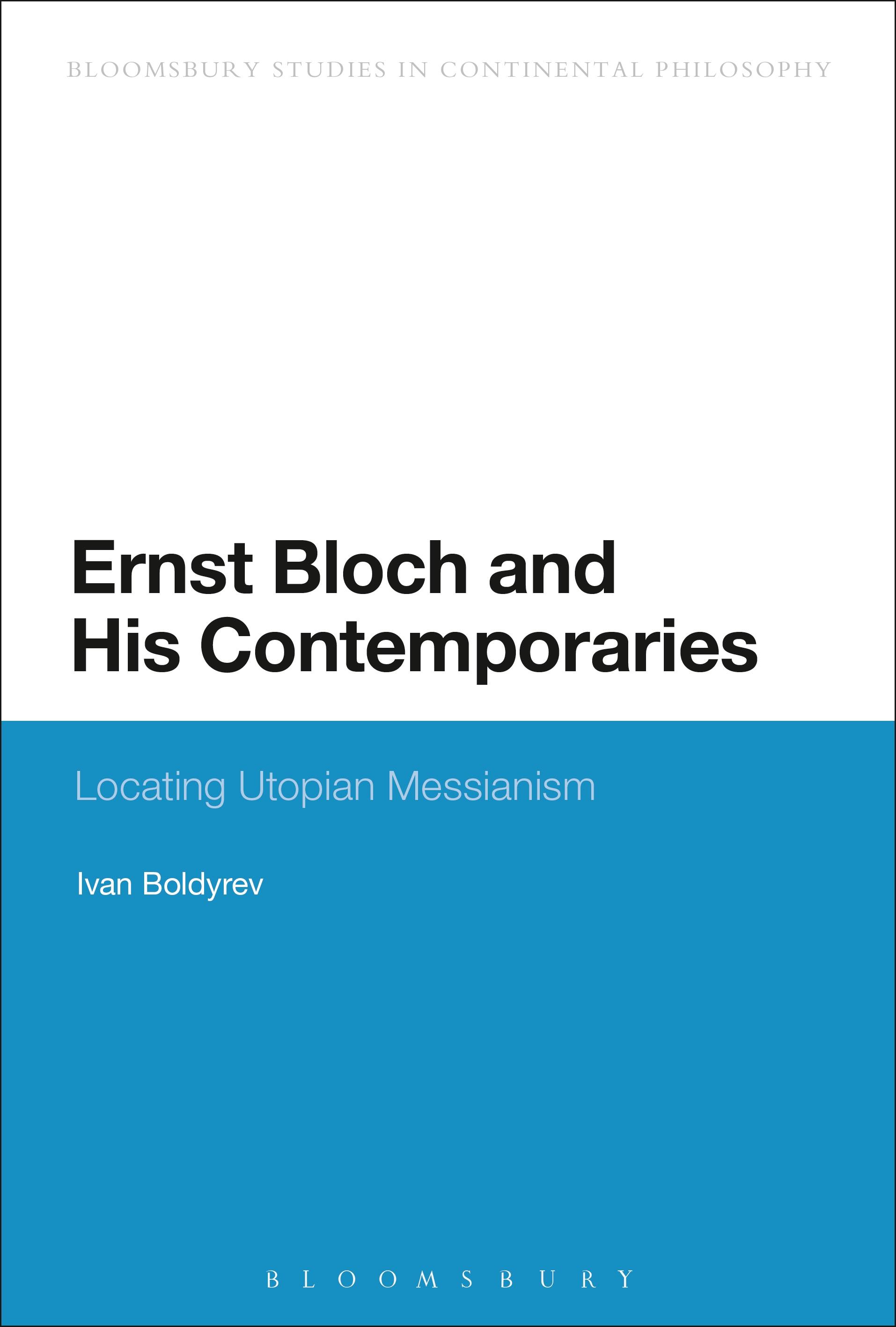
Ernst Bloch and His Contemporaries is a much needed concise yet comprehensive overview of Ernst Bloch's early and later thought. It fills an important gap in research on the history of German thought in the 20th century by reconstructing the contexts of Bloch's philosophy, while focusing on his contemporaries - Georg Lukács, Walter Benjamin, and Theodor Adorno. Ernst Bloch's influential ideas include his theory of utopian consciousness, his resolute inclination to merge aesthetics and politics, rehabilitation of hope, and atheistic conception of Christianity. Although Bloch's major early texts, Spirit of Utopia and Traces, have recently been translated into English, and there has been renewed interest in Bloch over the last 15 years, he is still relatively unknown compared to other left German-Jewish intellectuals. Ivan Boldyrev places Bloch's often enigmatic prose within contexts more familiar to English-speaking readers, and outlines the most important messages in Bloch's legacy still relevant today to European intellectual discourse, in particular aesthetics and philosophy of history.
Betal nemt med kort, Klarna, Apple Pay eller Google Pay. Ikke tilfreds? Du har altid 14 dages fortrydelsesret. Læs mere i vores vilkår. Har du spørgsmål, så send os en mail på hello@memmo.org.
Memmo gør det nemmere at studere – uanset hvor du er i verden. Hos os samler du dine kursusbøger og smarte studieværktøjer ét sted: resuméer, quizzer, podcasts og flashcards. Og så er der Ted, din studieven, der svarer på alt, du undrer dig over. Over 50 000 studerende studerer allerede her – bygget til at hjælpe dig med at lære hurtigere og stresse mindre.