
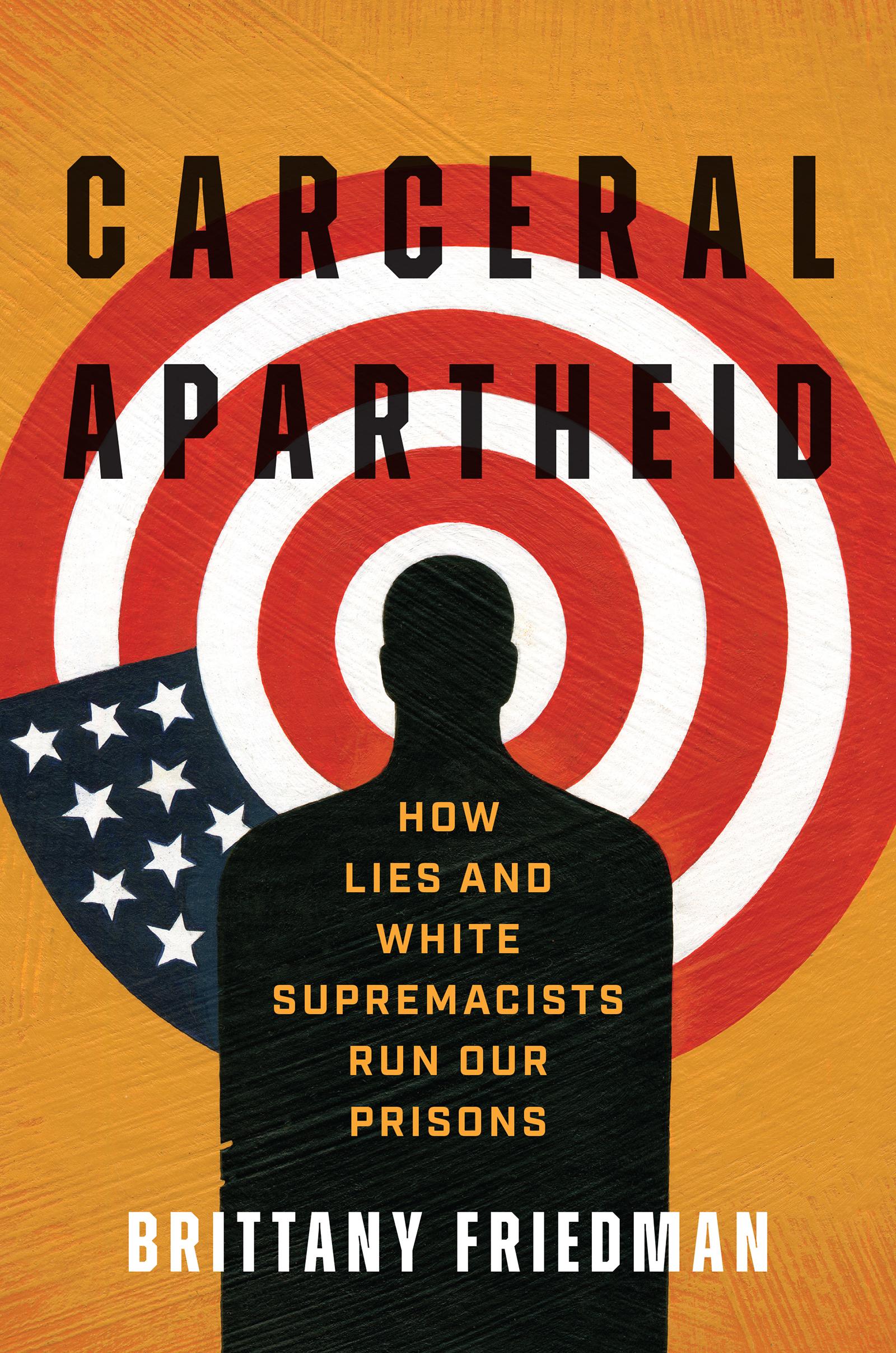
It is impossible to deny the impact of lies and white supremacy on the institutional conditions in US prisons. There is a particular power dynamic of racist intent in the prison system that culminates in what Brittany Friedman terms carceral apartheid. Prisons are a microcosm of how carceral apartheid operates as a larger governing strategy to decimate political targets and foster deceit, disinformation, and division in society.
Among many shocking discoveries, Friedman shows that, beginning in the 1950s, California prison officials declared war on imprisoned Black people and sought to identify Black militants as a key problem, creating a strategy for the management, segregation, and elimination of these individuals from the prison population that continues into the present day. Carceral Apartheid delves into how the California Department of Corrections deployed various official, clandestine, and at times extralegal control techniques—including officer alliances with imprisoned white supremacists—to suppress Black political movements, revealing the broader themes of deception, empire, corruption, and white supremacy in American mass incarceration. Drawing from original interviews with founders of Black political movements such as the Black Guerilla Family, white supremacists, and a swath of little-known archival data, Friedman uncovers how the US domestic war against imprisoned Black people models and perpetuates genocide, imprisonment, and torture abroad.
Among many shocking discoveries, Friedman shows that, beginning in the 1950s, California prison officials declared war on imprisoned Black people and sought to identify Black militants as a key problem, creating a strategy for the management, segregation, and elimination of these individuals from the prison population that continues into the present day. Carceral Apartheid delves into how the California Department of Corrections deployed various official, clandestine, and at times extralegal control techniques—including officer alliances with imprisoned white supremacists—to suppress Black political movements, revealing the broader themes of deception, empire, corruption, and white supremacy in American mass incarceration. Drawing from original interviews with founders of Black political movements such as the Black Guerilla Family, white supremacists, and a swath of little-known archival data, Friedman uncovers how the US domestic war against imprisoned Black people models and perpetuates genocide, imprisonment, and torture abroad.
Betal nemt med kort, Klarna, Apple Pay eller Google Pay. Ikke tilfreds? Du har altid 14 dages fortrydelsesret. Læs mere i vores vilkår. Har du spørgsmål, så send os en mail på hello@memmo.org.
Memmo gør det nemmere at studere – uanset hvor du er i verden. Hos os samler du dine kursusbøger og smarte studieværktøjer ét sted: resuméer, quizzer, podcasts og flashcards. Og så er der Ted, din studieven, der svarer på alt, du undrer dig over. Over 50 000 studerende studerer allerede her – bygget til at hjælpe dig med at lære hurtigere og stresse mindre.
Du kan måske også lide
Køb bogen0