
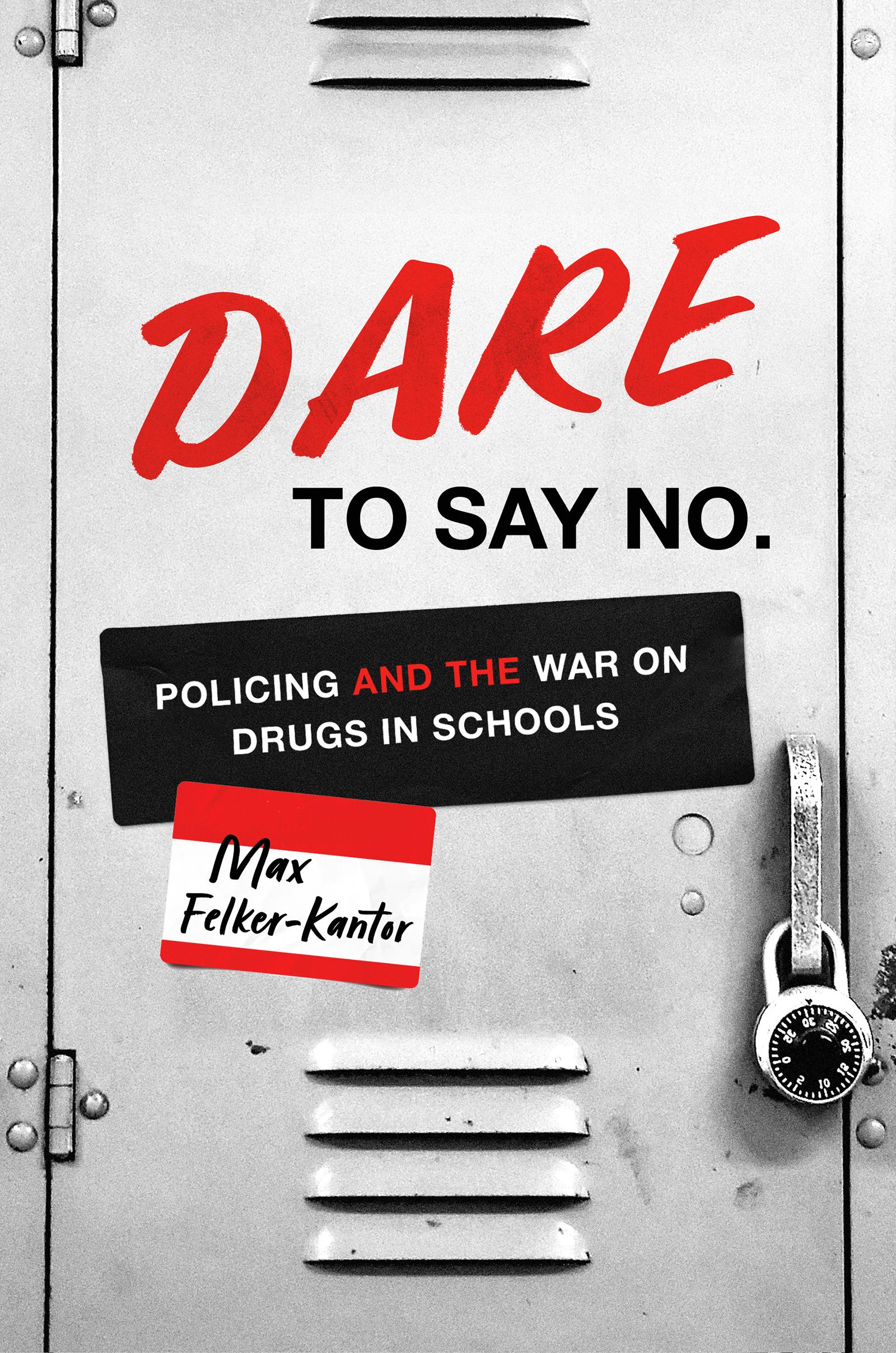
With its signature “DARE to keep kids off drugs” slogan and iconic t-shirts, DARE (Drug Abuse Resistance Education) was the most popular drug education program of the 1980s and 1990s. But behind the cultural phenomenon is the story of how DARE and other antidrug education programs brought the War on Drugs into schools and ensured that the velvet glove of antidrug education would be backed by the iron fist of rigorous policing and harsh sentencing.
Max Felker-Kantor has assembled the first history of DARE, which began in Los Angeles in 1983 as a joint venture between the police department and the unified school district. By the mid-90s, it was taught in 75 percent of school districts across the United States. DARE received near-universal praise from parents, educators, police officers, and politicians and left an indelible stamp on many millennial memories. But the program had more nefarious ends, and Felker-Kantor complicates simplistic narratives of the War on Drugs. He shows how policing entered US schools and framed drug use as the result of personal responsibility, moral failure, and poor behavior deserving of punishment rather than something deeply rooted in state retrenchment, the abandonment of social service provisions, and structures of social and economic inequality.
Max Felker-Kantor has assembled the first history of DARE, which began in Los Angeles in 1983 as a joint venture between the police department and the unified school district. By the mid-90s, it was taught in 75 percent of school districts across the United States. DARE received near-universal praise from parents, educators, police officers, and politicians and left an indelible stamp on many millennial memories. But the program had more nefarious ends, and Felker-Kantor complicates simplistic narratives of the War on Drugs. He shows how policing entered US schools and framed drug use as the result of personal responsibility, moral failure, and poor behavior deserving of punishment rather than something deeply rooted in state retrenchment, the abandonment of social service provisions, and structures of social and economic inequality.
Betal nemt med kort, Klarna, Apple Pay eller Google Pay. Ikke tilfreds? Du har altid 14 dages fortrydelsesret. Læs mere i vores vilkår. Har du spørgsmål, så send os en mail på hello@memmo.org.
Memmo gør det nemmere at studere – uanset hvor du er i verden. Hos os samler du dine kursusbøger og smarte studieværktøjer ét sted: resuméer, quizzer, podcasts og flashcards. Og så er der Ted, din studieven, der svarer på alt, du undrer dig over. Over 50 000 studerende studerer allerede her – bygget til at hjælpe dig med at lære hurtigere og stresse mindre.
Du kan måske også lide
Køb bogen0