
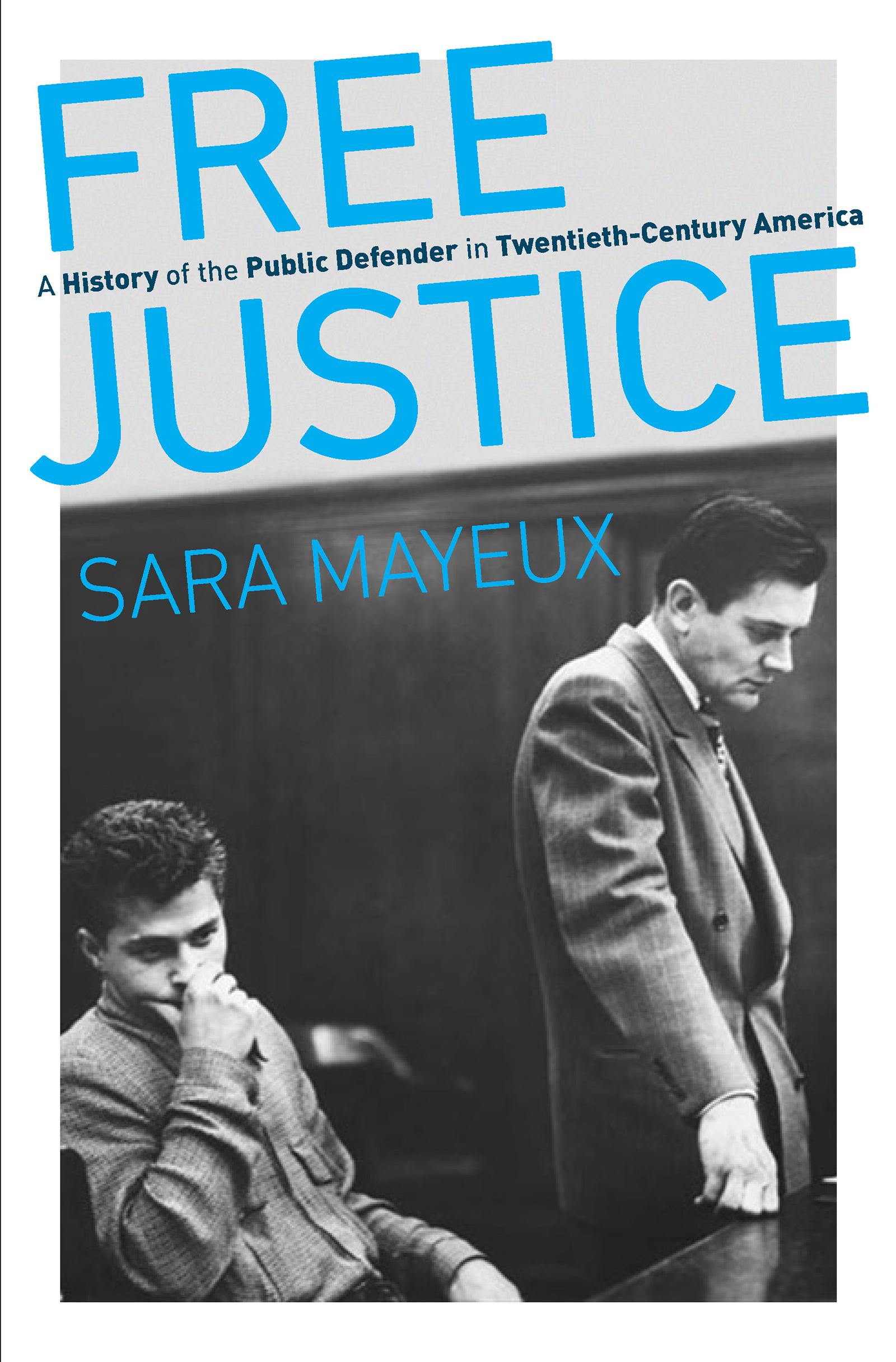
Every day, in courtrooms around the United States, thousands of criminal defendants are represented by public defenders — lawyers provided by the government for those who cannot afford private counsel. Though often taken for granted, the modern American public defender has a surprisingly contentious history — one that offers insights not only about the “carceral state,” but also about the contours and compromises of twentieth-century liberalism.
First gaining appeal amidst the Progressive Era fervor for court reform, the public defender idea was swiftly quashed by elite corporate lawyers who believed the legal profession should remain independent from the state. Public defenders took hold in some localities but not yet as a nationwide standard. By the 1960s, views had shifted. Gideon v. Wainwright enshrined the right to counsel into law and the legal profession mobilized to expand the ranks of public defenders nationwide. Yet within a few years, lawyers had already diagnosed a “crisis” of underfunded, overworked defenders providing inadequate representation — a crisis that persists today. This book shows how these conditions, often attributed to recent fiscal emergencies, have deep roots, and it chronicles the intertwined histories of constitutional doctrine, big philanthropy, professional in-fighting, and Cold War culture that made public defenders ubiquitous but embattled figures in American courtrooms.
First gaining appeal amidst the Progressive Era fervor for court reform, the public defender idea was swiftly quashed by elite corporate lawyers who believed the legal profession should remain independent from the state. Public defenders took hold in some localities but not yet as a nationwide standard. By the 1960s, views had shifted. Gideon v. Wainwright enshrined the right to counsel into law and the legal profession mobilized to expand the ranks of public defenders nationwide. Yet within a few years, lawyers had already diagnosed a “crisis” of underfunded, overworked defenders providing inadequate representation — a crisis that persists today. This book shows how these conditions, often attributed to recent fiscal emergencies, have deep roots, and it chronicles the intertwined histories of constitutional doctrine, big philanthropy, professional in-fighting, and Cold War culture that made public defenders ubiquitous but embattled figures in American courtrooms.
Betal nemt med kort, Klarna, Apple Pay eller Google Pay. Ikke tilfreds? Du har altid 14 dages fortrydelsesret. Læs mere i vores vilkår. Har du spørgsmål, så send os en mail på hello@memmo.org.
Memmo gør det nemmere at studere – uanset hvor du er i verden. Hos os samler du dine kursusbøger og smarte studieværktøjer ét sted: resuméer, quizzer, podcasts og flashcards. Og så er der Ted, din studieven, der svarer på alt, du undrer dig over. Over 50 000 studerende studerer allerede her – bygget til at hjælpe dig med at lære hurtigere og stresse mindre.
Du kan måske også lide
Køb bogen0