
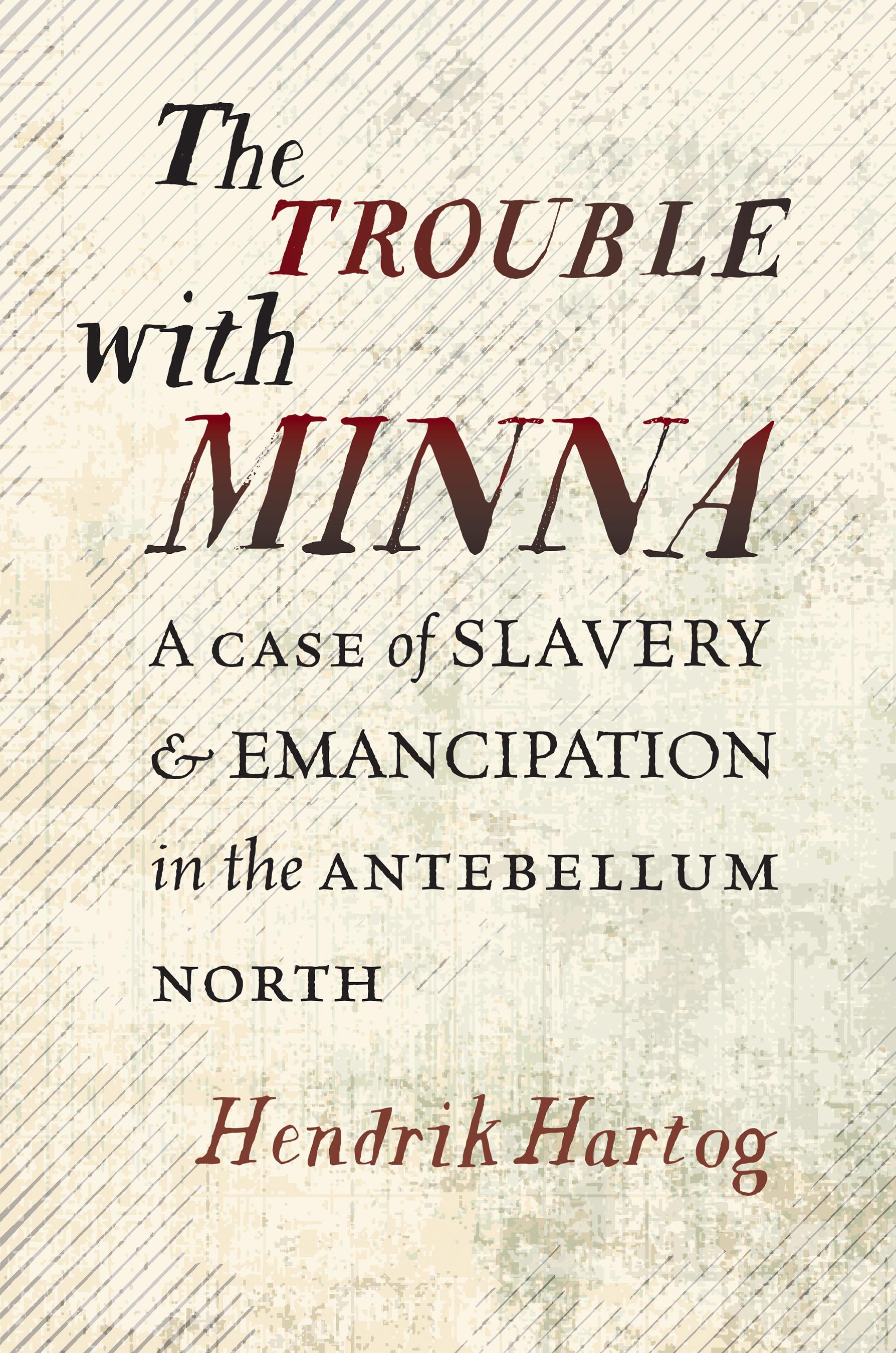
In this intriguing book, Hendrik Hartog uses a forgotten 1840 case to explore the regime of gradual emancipation that took place in New Jersey over the first half of the nineteenth century. In Minna’s case, white people fought over who would pay for the costs of caring for a dependent, apparently enslaved, woman. Hartog marks how the peculiar language mobilized by the debate—about care as a “mere voluntary courtesy”—became routine in a wide range of subsequent cases about “good Samaritans.” Using Minna’s case as a springboard, Hartog explores the statutes, situations, and conflicts that helped produce a regime where slavery was usually but not always legal and where a supposedly enslaved person may or may not have been legally free.
In exploring this liminal and unsettled legal space, Hartog sheds light on the relationships between moral and legal reasoning and a legal landscape that challenges simplistic notions of what it meant to live in freedom. What emerges is a provocative portrait of a distant legal order that, in its contradictions and moral dilemmas, bears an ironic resemblance to our own legal world.
Betal nemt med kort, Klarna, Apple Pay eller Google Pay. Ikke tilfreds? Du har altid 14 dages fortrydelsesret. Læs mere i vores vilkår. Har du spørgsmål, så send os en mail på hello@memmo.org.
Memmo gør det nemmere at studere – uanset hvor du er i verden. Hos os samler du dine kursusbøger og smarte studieværktøjer ét sted: resuméer, quizzer, podcasts og flashcards. Og så er der Ted, din studieven, der svarer på alt, du undrer dig over. Over 50 000 studerende studerer allerede her – bygget til at hjælpe dig med at lære hurtigere og stresse mindre.